

ⓘ Educational Disclosure:
This article is for educational and informational purposes only. It does not constitute financial, legal, tax, or lending advice. SaveXpert and its authors are not licensed financial advisors. Financial data and regulations change frequently. Always consult a qualified financial professional before making any financial decisions.
The highest credit score possible is 850 under both the FICO and VantageScore models, which rank creditworthiness on a scale of 300 to 850. According to FICO’s published scoring documentation, borrowers with scores of 800 or above consistently qualify for the same top-tier interest rates as those with a perfect 850 — making the “exceptional” tier functionally equivalent to perfection for most lenders. The Consumer Financial Protection Bureau (CFPB) confirms that credit scores above 800 typically unlock the most favorable loan terms available.
What This Research Found
- 850 is the ceiling for both FICO and VantageScore — but reaching 800+ earns the same lender treatment as a perfect score, including the best available interest rates.
- The CFPB’s 2025 medical debt rule was struck down by a federal court on July 11, 2025. There is no nationwide ban on medical debt appearing on credit reports.
- Credit bureau voluntary policies still protect consumers: paid medical debts are removed; unpaid balances under $500 are not reported; larger balances get a 12-month buffer before reporting begins.
- Student loans help your credit when paid on time — they build payment history and diversify your credit mix. Federal loans don’t report delinquency until 90 days late; private lenders report at 30 days.
- Payment history (35% of your FICO Score) is the single largest factor — automating every payment is the highest-leverage action available.
- Paying down balances before your statement closing date — not the due date — can cut your reported utilization and show score improvements within one billing cycle.
- Time To Read: 6 Minutes
Table of Contents
1. The Credit Score Scale: What 850 Actually Means
2. Medical Debt and Your Credit Score in 2026
3. Do Student Loans Affect Your Credit Score?
I spent several hours going through FICO’s published scoring documentation, the CFPB’s regulatory filings, and the credit bureaus’ current policy pages — and the most clarifying thing I found is how little difference there is between a perfect 850 and the 800s that most people realistically reach.
About 1.76% of Americans carry an 850. That’s a vanishingly small fraction. But here’s what my research turned up: borrowers in the 800–849 range get virtually the same mortgage rates, credit card offers, and loan terms as the rare perfect-score holder. The “exceptional” tier is the tier that matters — not the single number at its ceiling.
I also found that a lot of people are carrying unnecessary anxiety about medical debt and student loans silently wrecking their credit. The rules around medical debt changed significantly in 2025 — and then changed again in ways that surprised even people following the news closely. Here’s what I found:
What the highest credit score possible actually is — and why 800+ is the real goal.
What happened to the CFPB’s medical debt rule, and what consumer protections still exist in 2026.
How student loans interact with your credit score — for better and for worse.
The three highest-leverage moves for raising a score, based on what the scoring model actually rewards.
The Credit Score Scale: What 850 Actually Means
Two scoring models dominate U.S. lending decisions: FICO and VantageScore. Both use the same 300-to-850 scale, and both top out at 850. The question worth asking isn’t “can I reach 850?” — it’s “how much does it actually matter?”
FICO vs. VantageScore: Two Models, Same Maximum
Credit Scoring Models and Their Score Ranges
| Credit Scoring Model | Score Range | Highest Possible Score |
|---|---|---|
| FICO Score 8 (most widely used by lenders) | 300–850 | 850 |
| VantageScore 3.0 | 300–850 | 850 |
| VantageScore 4.0 | 300–850 | 850 |
Note: Some industry-specific FICO models — built for auto lending or credit cards — use different ranges. For standard mortgage, credit card, and personal loan decisions, it’s almost always a 300–850 model.
Some specialized FICO models built for specific industries—such as auto lending, for example—may use different ranges. However, for the everyday mortgage, credit card, or personal loan application, lenders are almost always looking at a score that caps at 850.
How the Score Ranges Break Down
Credit Score Tiers — FICO Model
| Credit Rating | Score Range | What It Typically Means for Borrowers |
|---|---|---|
| Poor | 300–579 | Significant difficulty qualifying for standard loans; secured cards often required to rebuild |
| Fair | 580–669 | Subprime lending terms; higher interest rates; limited product access |
| Good | 670–739 | Eligible for most mainstream credit products at reasonable rates |
| Very Good | 740–799 | Better-than-average rates; preferred loan terms on most products |
| Exceptional | 800–850 | Top-tier rates; best available terms; lenders compete for this borrower |
Why You Don’t Actually Need a Perfect 850
Think of the “exceptional” band the way you’d think of an A+ on an exam. Scoring 98 and scoring 100 both earn the same grade — your teacher doesn’t treat them differently. Lenders work the same way.
Once a borrower crosses into the 800s, they’ve already demonstrated everything lenders actually care about: a long track record of on-time payments, low credit utilization, diverse account types, and minimal negative marks. Whether that signal arrives at 815 or 850, the outcome is typically the same: the best available rate.
What I found in FICO’s own published materials is that there’s no meaningful pricing difference between 800 and 850. The real milestone worth targeting is the move from “very good” (740–799) into “exceptional” (800+) — that’s where the rate advantages become substantive and measurable.
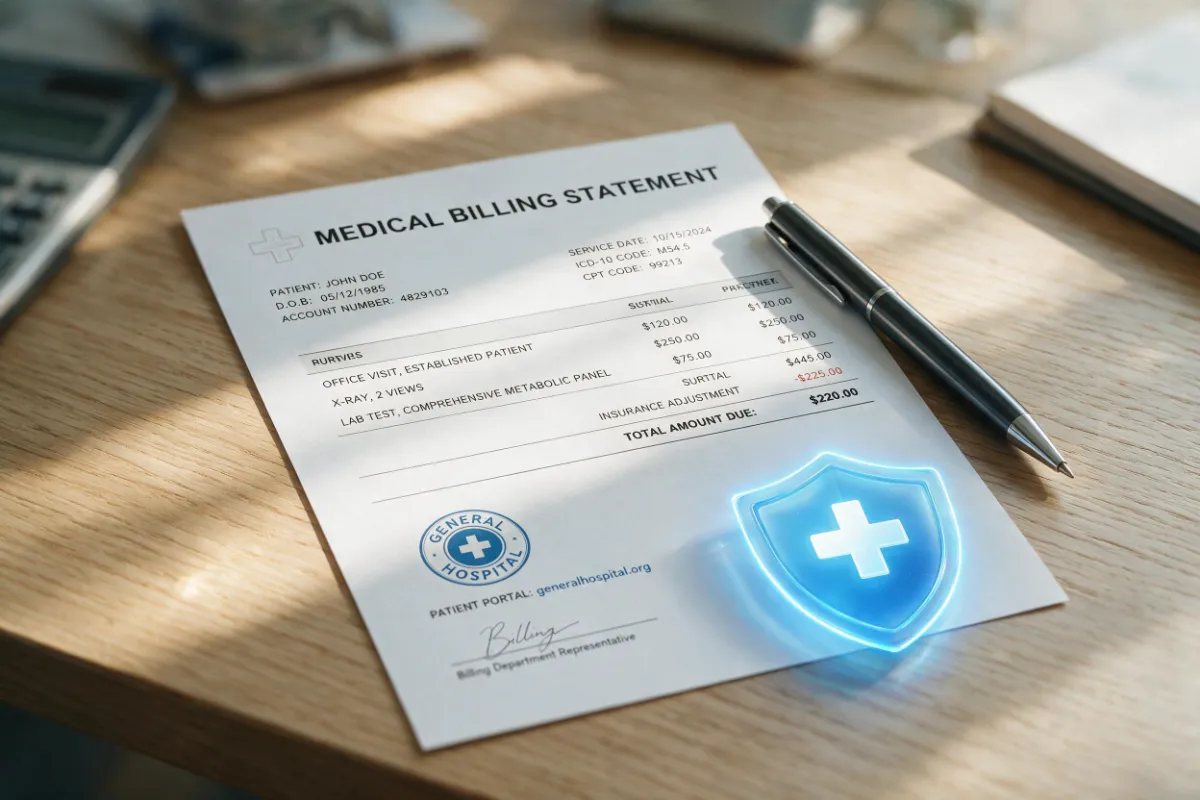
Medical Debt and Your Credit Score in 2026
Medical debt is one of the most anxiety-inducing items that can appear on a credit report, partly because it often arrives without warning. A hospital stay, an out-of-network provider, an insurance dispute that drags on for months — and suddenly there’s a collection account threatening seven years of damage.
The current rules are more consumer-friendly than they’ve ever been. But there’s a significant complication that anyone following this topic needs to know.
What Happened to the CFPB’s Medical Debt Rule
In January 2025, the Consumer Financial Protection Bureau (CFPB) finalized a rule under Regulation V that would have removed most medical debt from consumer credit reports entirely — and blocked creditors from using medical debt in lending decisions. For anyone tracking consumer finance policy, this looked like a transformative change.
It never went into effect. On July 11, 2025, the U.S. District Court for the Eastern District of Texas vacated the rule. The court found that the CFPB had exceeded its statutory authority and that the rule conflicted with the Fair Credit Reporting Act (FCRA). As of the date of this research, there is no nationwide federal rule protecting consumers from medical debt on their credit reports.
What the Credit Bureaus’ Voluntary Policies Actually Say
Here’s where the picture gets more encouraging. Between 2022 and 2023, the three major credit bureaus — Equifax, Experian, and TransUnion — adopted voluntary policy changes to how they handle medical debt. Those changes are still in place today:
Paid medical debt is removed
Once a medical collection account is paid or settled, it comes off the credit report — regardless of what the original balance was.
Unpaid balances under $500 are not reported
Small medical collections don’t appear on consumer credit reports at all.
Larger balances get a 12-month buffer
Medical collections of $500 or more can still be reported — but only after sitting in collections for a full year. That window exists to allow insurance disputes and billing errors to be resolved before any credit damage occurs.
These policies are voluntary commitments, not law — so they could theoretically change. But as of August 2026, they represent a meaningful floor of protection for consumers dealing with medical debt.
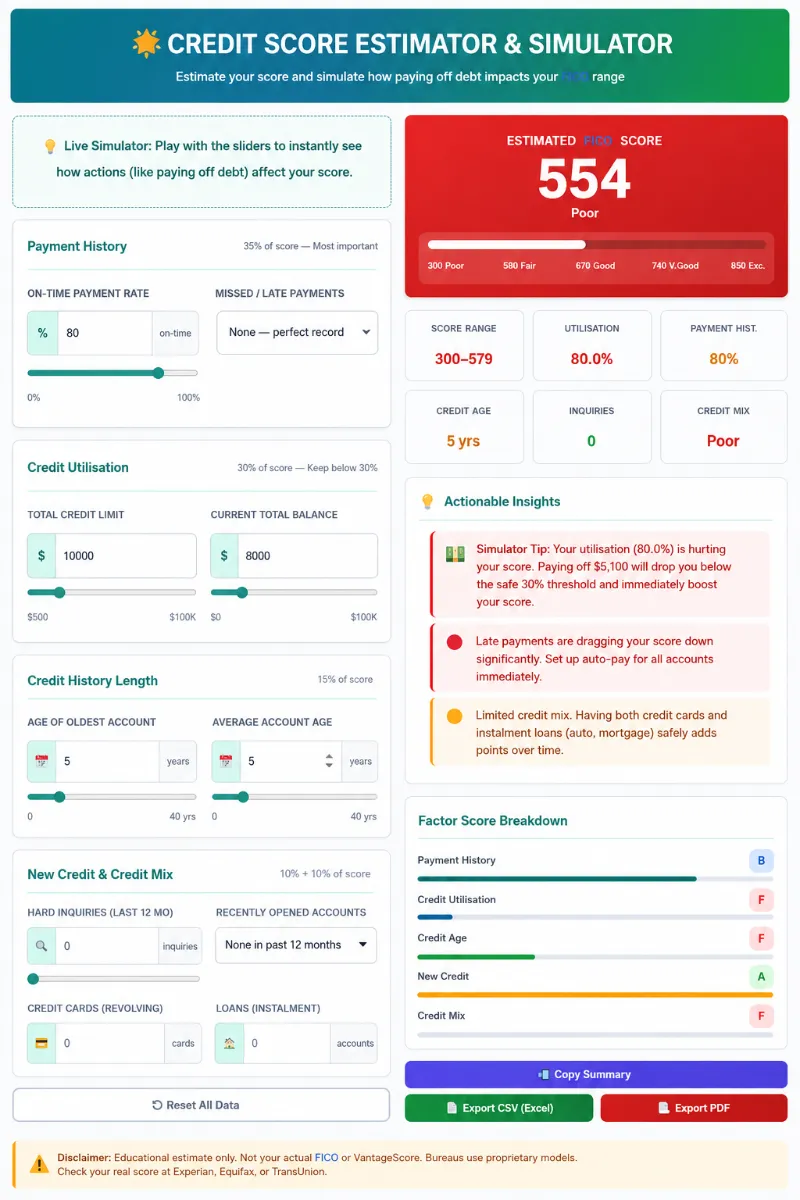
Estimate your score from the two most important factors.
How to Dispute a Medical Collection That Shouldn’t Be There
If a medical collection appears on a credit report and doesn’t comply with these policies — because it’s already paid, under $500, less than a year old, or belongs to someone else — consumers have the right to dispute it. The Fair Credit Reporting Act (FCRA) requires bureaus to investigate disputes within 30 days and remove inaccurate information they cannot verify.
The starting point is AnnualCreditReport.com — the only federally authorized source for free credit reports from all three bureaus. Pull all three, read through every account, and dispute directly with whichever bureau is reporting the error.
💰 Try the SaveXpert Credit Score Estimator
The SaveXpert Credit Score Estimator provides an estimated score range based on your financial habits and identifies which factors have the most room to improve.
Educational note: Calculator results are estimates for educational purposes only.

Do Student Loans Affect Your Credit Score?
Student loans have a reputation problem. Many borrowers carry them as a source of financial dread, and that dread sometimes extends to their credit — an assumption that the loans themselves are silently dragging the score down. What I found in the data doesn’t support that assumption. The balance itself isn’t the issue. What matters is how the loan is managed.
Having Student Loans Isn’t the Problem — Mismanaging Them Is
Student loans are installment accounts. The moment a servicer reports them to the bureaus, they become a working part of the borrower’s credit profile. Managed responsibly, they contribute positively in three ways:
Payment history:
Every on-time payment adds a positive data point to the most heavily weighted factor in the FICO model — 35% of the score.
Credit mix:
According to FICO’s published factor breakdown, responsibly managing both revolving (credit cards) and installment (loans) accounts produces a stronger credit profile than either type alone.
Credit history length:
Long-standing loans extend the average age of a credit file, which factors positively into the score over time.
Why Payment History Makes or Breaks Your Score
Payment history accounts for 35% of the FICO Score — more than any other single factor. Every on-time student loan payment reinforces the score. Every missed payment chips away at it and can stay on the report for up to seven years.
That’s why staying current on student loans matters so much, even when balances feel overwhelming. The payment record itself — separate from the balance — is the primary credit contribution these accounts make.
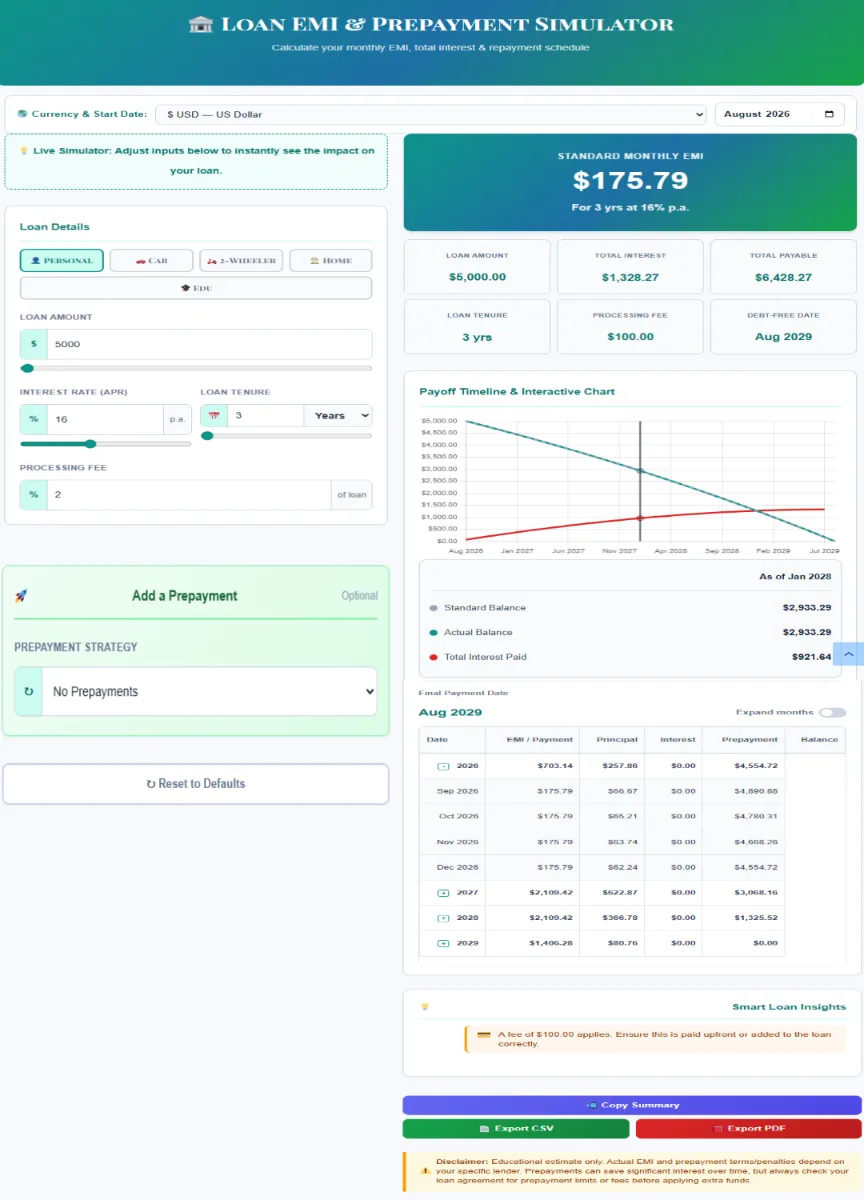
Estimate your monthly EMI and total interest in seconds.
Federal vs. Private Loans: The 30-Day vs. 90-Day Difference
This distinction matters more than most people realize. Private student lenders typically report a delinquency once a borrower is 30 days past due — the same standard that applies to credit cards and personal loans. Federal student loan servicers, by contrast, generally don’t report a delinquency until 90 days of non-payment have elapsed.
Federal loans also don’t enter default until approximately 270 days of missed payments, at which point the full outstanding balance can become immediately due. That 90-day window before credit reporting begins gives federal borrowers a meaningful buffer when cash flow becomes difficult — time to contact a servicer, explore alternative repayment options, or enroll in an income-driven plan before any credit damage occurs.
💰 Try the SaveXpert Loan EMI Calculator
The SaveXpert Loan EMI Calculator estimates monthly repayment amounts and total interest for any loan scenario — useful for understanding affordability before taking on debt or refinancing.
Educational note: Calculator results are estimates for educational purposes only.
Deferment, Forbearance, and Income-Driven Repayment Plans
For federal borrowers enrolled in approved deferment, forbearance, or an Income-Driven Repayment (IDR) plan, the loan is generally reported as current or “no payment due” — not delinquent. These authorized statuses protect the payment history portion of the credit score even during periods when standard payments aren’t being made.
The critical distinction: authorized non-payment through an approved program is a fundamentally different situation from simply ignoring a bill. One triggers credit protection; the other triggers delinquency reporting. Borrowers who are struggling should contact their servicer before missing a payment — not after.
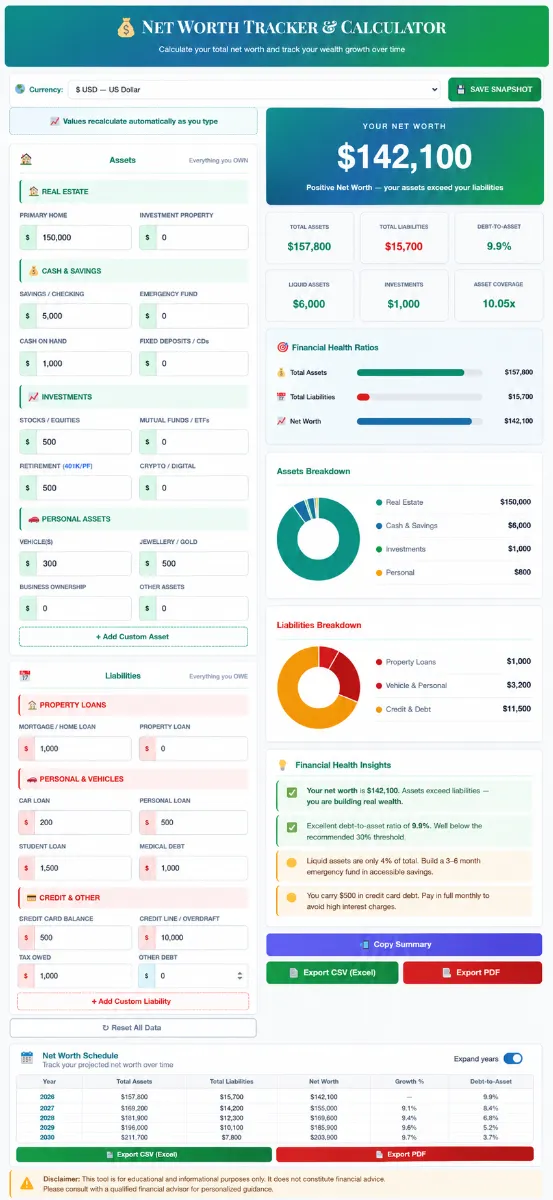
Enter your top assets and debts to see your net worth.
Three Moves That Actually Raise Your Score
There’s no shortcut to an excellent credit score. A decade of clean credit history can’t be manufactured overnight. But there are specific actions that produce results faster than most people expect — and three of them carry significantly more weight than everything else combined.
1. Automate Every Payment — No Exceptions
Payment history is 35% of the FICO Score, and it’s the one factor where a single mistake can cause disproportionate damage. Research from FICO indicates that one 30-day late payment can drop a score meaningfully — sometimes 50 to 100 points — and remains on the credit report for seven years.
What the data consistently supports: setting up autopay for every recurring payment through the lender’s or bank’s system. Even autopay for the minimum payment amount provides the critical safety net — the account stays current while additional manual payments can be made separately. Payment reminder notifications add a second layer of protection at no cost.
2. Cut Credit Utilization Below 10%
Most guidance cites 30% as the safe utilization threshold. That’s accurate for maintaining “good” credit. Reaching “exceptional” typically requires pushing below 10%.
The timing is the key insight here. Credit card issuers report balances to the bureaus on the statement closing date — not the payment due date. A borrower who carries a $900 balance on a $3,000-limit card during the month, but pays it down to $200 before the statement closes, will have a reported utilization of under 7% — regardless of what the balance looked like mid-cycle. This approach can produce visible score improvements within a single billing cycle, making it one of the fastest-acting levers available to consumers.
3. Audit Your Credit Reports for Errors
Errors on credit reports are more common than most people expect. Duplicate accounts, incorrect balances, paid collections still showing as open, accounts that belong to someone with a similar name — these quietly suppress scores without the consumer knowing they exist.
Pulling free reports from AnnualCreditReport.com — the federally authorized source under the FCRA — and reviewing every account line by line is the only way to catch them. Bureaus must investigate disputes within 30 days. Removing even one significant incorrect negative mark can move a score meaningfully in that same window.
💰 Try the SaveXpert Loan EMI Calculator
Credit score is one data point in a larger financial portrait. The SaveXpert Net Worth Calculator tracks assets and liabilities together — useful for understanding where credit health fits within overall financial progress.
Educational note: Calculator results are estimates for educational purposes only.
“Good credit is less about chasing a perfect number and more about consistent habits over time. The borrowers who reach 800+ almost always got there the same way: they paid on time, kept balances low, and didn’t apply for credit they didn’t need.”
— Kevin Brown, Lead Researcher at SaveXpert.com
Frequently Asked Questions
Ans: No. While 850 is the highest credit score possible, FICO’s published research indicates that borrowers with scores of 800 or higher generally qualify for the same top-tier rates. Lenders treat the upper end of the “exceptional” range as functionally equivalent to a perfect score for most lending products — mortgages, auto loans, and credit cards included.
Ans: According to the Consumer Financial Protection Bureau (CFPB), most conventional mortgages require a minimum FICO score of 620, while FHA loans are available to borrowers with scores as low as 500 (with a 10% down payment) or 580 (for a 3.5% down payment). Higher scores typically unlock lower interest rates and more favorable loan terms — a difference that compounds significantly over the life of a 30-year mortgage.
Ans: Under the voluntary policies currently maintained by Equifax, Experian, and TransUnion, unpaid medical collections under $500 are not reported on consumer credit reports. If such an account appears on a report, it falls outside these voluntary standards and can be disputed directly with the reporting bureau. The dispute process is governed by the Fair Credit Reporting Act (FCRA).
Ans: Generally, no. When a borrower is enrolled in an approved deferment, forbearance, or Income-Driven Repayment (IDR) plan, the loan is typically reported as current or “no payment due” — not delinquent. These programs protect the payment history portion of the credit score. Interest may continue to accrue depending on the plan type, but the credit record itself is preserved as long as the enrollment is active and properly processed.
Ans: Improvements to credit utilization — specifically paying down balances before the statement closing date — can appear within a single billing cycle, typically 30 to 45 days after the new balance is reported. Payment history improvements accumulate gradually over months and years. Negative marks from late payments can remain on credit reports for up to seven years, which is why prevention is significantly more effective than recovery when it comes to payment history.
Ans: Consumers can obtain free credit reports from all three major bureaus at AnnualCreditReport.com — the only federally authorized source under the FCRA. Disputes can be filed directly with Equifax, Experian, or TransUnion online, by mail, or by phone. Under the FCRA, bureaus are required to investigate disputes within 30 days and must remove or correct inaccurate information that cannot be verified. The CFPB’s credit reporting resource page provides additional guidance on the dispute process.