ⓘ Educational Disclosure:
This article is for educational and informational purposes only. It does not constitute financial, legal, tax, or lending advice. SaveXpert and its authors are not licensed financial advisors. Financial data and regulations change frequently. Always consult a qualified professional regarding your specific situation.
Fixing bad credit takes 30 to 60 days for early score improvements from reducing credit card utilization, and 12 to 24 months or longer for meaningful recovery from serious negative marks such as missed payments, charge-offs, or collections. Under the Fair Credit Reporting Act (FCRA, 15 U.S.C. § 1681), accurate negative information can remain on a credit report for up to seven years — no credit repair company can legally remove it early. The Consumer Financial Protection Bureau (CFPB) confirms that the dispute process is free and available directly to consumers.
What This Research Found
- 30–60 days: Utilization improvements reflect within one or two billing cycles — the fastest-moving factor available to most borrowers.
- 3–6 months: Consecutive on-time payments begin building positive payment history momentum.
- 12–24+ months: Moving a 500 score into the fair range (580–669) takes sustained, consistent effort across this window.
- 7–10 years: The FCRA statutory reporting limit for most accurate negative marks — these cannot be legally removed early, regardless of who promises otherwise.
- The CFPB’s $2.7 billion judgment against Lexington Law and CreditRepair.com (August 2023) confirmed: no company can legally erase accurate, verified negative data before the reporting period expires.
- DIY credit repair is free — the FCRA dispute process is a legal right available directly through AnnualCreditReport.com and each bureau’s dispute portal.
- Time To Read: 6 Minutes
Table of Contents
1. How Long Does Credit Repair Actually Take?
2. The FCRA Rules That Govern Your Credit Report
3. DIY Credit Repair vs. the “Instant Fix” Myth
I went through the CFPB’s enforcement database, FCRA statutes, FICO’s published factor research, and Experian’s consumer data reporting guidance trying to answer one question: what does credit repair actually look like in practice, and how long does it take?
The honest answer is: it depends entirely on what caused the damage. A maxed-out credit card can move within 30 to 60 days of being paid down. Recovering from missed payments, a charge-off, or a collection sitting on a report for years — that’s a 12-to-24-month project, minimum. And some accurate negative marks can legally stay there for up to seven years, no matter what a credit repair company promises.
Here’s what this research covers:
The realistic timelines for each stage of credit recovery, based on CFPB and FICO data.
The exact FCRA rules governing how long negative items can stay on a credit report.
Why the CFPB’s landmark enforcement case proved credit repair promises are often illegal.
The four credit-building tools that research consistently shows work for rebuilding a 500 score.
How Long Does Credit Repair Actually Take?
There’s no single timeline that fits every situation. What’s dragging a score down determines how long it takes to bring it back up. FICO and CFPB data point to three distinct recovery windows, each driven by different factors in the scoring model.
Credit Repair Timeline — What to Expect at Each Stage
| Timeline | What Typically Drives It | Realistic Outcome |
|---|---|---|
| 30–60 Days | Paying down revolving credit card balances | Utilization improvement reflects in score; early movement possible |
| 3–6 Months | Consistent on-time payments; no new negative marks | Early positive payment history momentum begins accumulating |
| 12–24+ Months | Rebuilding from deep subprime (around 500) | Realistic path into the fair credit range (580–669) |
| 7–10 Years | Waiting for accurate negative marks to expire | FCRA statutory limit — the clock, not effort, |
30–60 Days: Utilization Updates Appear First
Credit utilization — the ratio of revolving balances to credit limits — is one of the few places in the FICO model where the score responds relatively quickly. Card issuers send updated account balances to Equifax, Experian, and TransUnion at the end of each billing cycle, typically once per month.
Experian’s published guidance confirms that a paid-down credit card balance can take up to two billing cycles — 30 to 60 days — to fully register across all three credit reports. The practical implication: paying a balance down from 80% utilization to 10% can show visible score movement within a single billing cycle, even while older negative marks continue aging in the background.
The critical timing detail: issuers report balances on the statement closing date, not the payment due date. Paying down a balance before the statement closes — not just before the due date — produces a lower reported utilization number for that cycle.
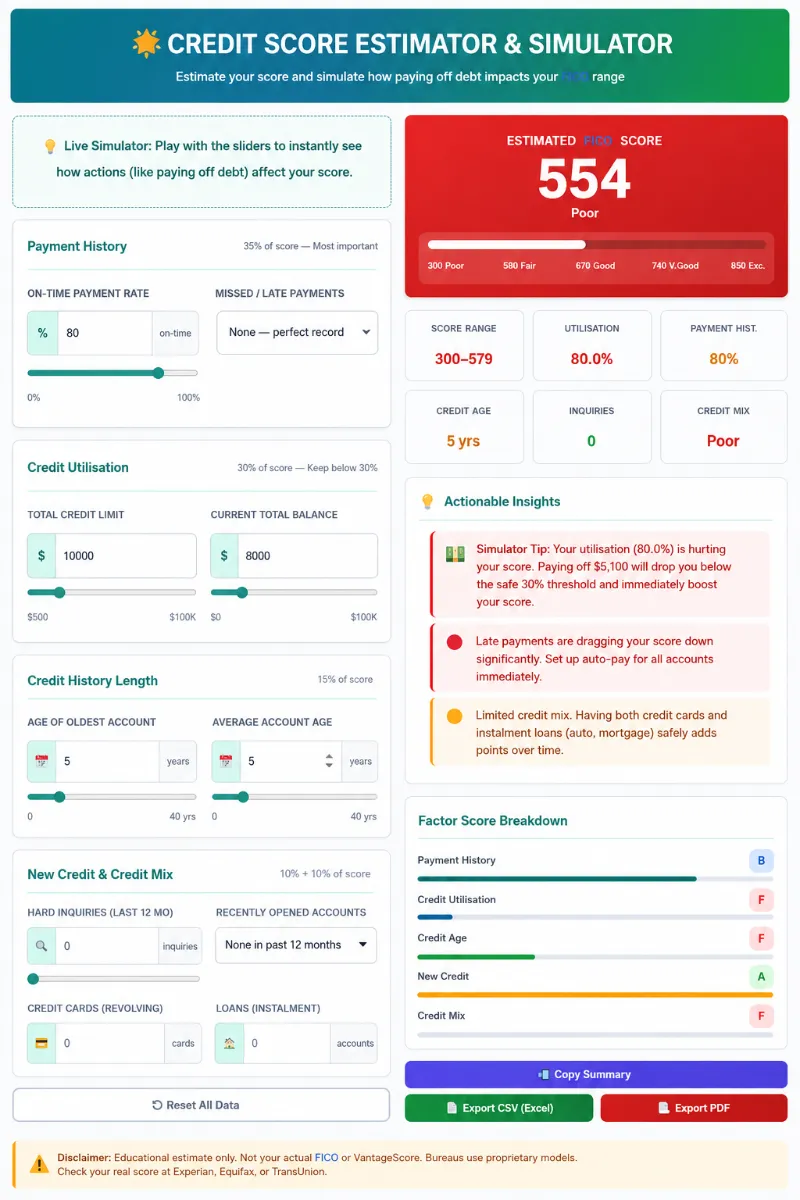
Estimate your score from the two most important factors.
3–6 Months: Building Positive Momentum
Payment history accounts for 35% of the FICO Score — the largest single factor. Three to six months of consecutive on-time payments begin adding positive data points to that factor, creating early momentum even when older negative marks are still present on the report.
The keyword there is “consecutive.” A pattern of on-time payments broken by a single late one resets the clock on recent history. What the scoring model rewards is consistency over time, not perfection at any one moment.
📊 Try the SaveXpert Credit Score Estimator
The SaveXpert Credit Score Estimator provides an estimated score range based on payment history, utilization, and account mix — useful for understanding where a score currently stands and what factors have the most room to move
Educational note: Calculator results are estimates for educational purposes only.
12–24+ Months: Rebuilding From a 500 Score
A score below 580 falls into what the CFPB classifies as deep subprime — what FICO labels “very poor.” Moving from a 500 into the fair credit range (580–669) requires new positive data to accumulate against a backdrop of aging negative information. The scoring algorithm evaluates the entire credit history, not just recent activity.
What the data shows: this process takes 12 to 24 months of consistent, sustained effort across all three primary factors — payment history, utilization, and account diversity. Going from 500 to 550 is real progress worth acknowledging, even if it feels slow. The foundation has to be built before the structure can rise.
Moving from a 500 to a 700+ score realistically takes a minimum of 24 months of consistent positive activity — with no new negative marks during that window.

The FCRA Rules That Govern Your Credit Report
Understanding the legal rules around credit reporting is what separates consumers who wait out a legitimate negative mark from those who successfully remove an inaccurate one. These are two very different situations — and the Fair Credit Reporting Act (FCRA) treats them differently.
How Long Negative Information Can Stay on a Report
Under FCRA Section 605 (15 U.S.C. § 1681c), every type of adverse item has a legally defined maximum reporting period:
FCRA Negative Item Reporting Limits
| Negative Item | Maximum Reporting Period | Clock Starts From |
|---|---|---|
| Late Payments | 7 years | Date of the delinquency |
| Collections | 7 years | Original date of first delinquency (+ 180-day adjustment) |
| Charge-offs | 7 years | Original date of first delinquency |
| Chapter 13 Bankruptcy | 7 years (bureaus voluntarily remove at 7; statutory limit is 10) | Filing date |
| Chapter 7 Bankruptcy | 10 years | Filing date |
| Dispute Investigation Window | 30 days (extendable to 45 with added documentation) | Date dispute is received by bureau |
Civil judgments and most public records also cap at 7 years. The three major bureaus generally remove Chapter 13 at 7 years voluntarily, though the statutory maximum is 10.
Why the Seven-Year Clock Isn’t Always Straightforward
For collections and charge-offs, the FCRA ties the clock to the original date of first delinquency — with a 180-day statutory adjustment period. This is a critical consumer protection. Subsequent events — the debt being sold to a new collection agency, transferred between servicers, partially paid, or re-listed under a different account number — do not restart the reporting clock.
This protection exists specifically to prevent “debt re-aging,” a tactic some collectors have used to make old debts appear fresh and extend the reporting window beyond what the FCRA permits. If a collection account appears on a report with a recent “open date” that doesn’t reflect the actual original delinquency, that is potentially a dispute-worthy error.
How to Dispute an Error Under the FCRA
When a credit report contains inaccurate, incomplete, or unverifiable information, consumers have a legal right to dispute it under FCRA 15 U.S.C. § 1681i(a)(1). The process works as follows:
1. Pull all three reports:
From AnnualCreditReport.com — the federally authorized source — and identify the specific error.
2. File a dispute:
Directly with the credit bureau reporting the error (Equifax, Experian, or TransUnion), clearly identifying the account and the nature of the inaccuracy.
3. The 30-day investigation window opens:
The bureau has 30 days to verify the entry with the original data furnisher.
4. Extension to 45 days:
Is possible if additional supporting documentation is submitted during the initial 30-day window, per CFPB guidelines.
5. Resolution:
If the disputed information is inaccurate, incomplete, or cannot be verified, the bureau must correct or delete it.
Valid grounds for dispute include accounts resulting from identity theft, incorrect balances or credit limits, falsely reported late payments, duplicate collection accounts for the same underlying debt, and negative records that have already exceeded their FCRA reporting limit.

DIY Credit Repair vs. the “Instant Fix” Myth
One of the most persistent myths in personal finance is that a credit repair company has access to some mechanism that individual consumers don’t — a back channel to the bureaus, a proprietary dispute system, a way to delete accurate negative items early. That mechanism does not exist. The law makes this explicit, and federal regulators have enforced it directly.
What the CFPB’s $2.7 Billion Judgment Against Lexington Law Proved
In August 2023, the CFPB secured a landmark $2.7 billion federal court judgment against Progrexion Marketing, Lexington Law, and CreditRepair.com. The enforcement action addressed allegations including the illegal collection of advance telemarketing fees and deceptive claims about the companies’ ability to automate credit restoration.
The ruling included a 10-year telemarketing ban on the entities involved. The CFPB’s position was clear: promising guaranteed deletion of accurate negative data is a deceptive practice under federal law. The judgment is one of the largest in CFPB history, and its message to the credit repair industry was unambiguous.
⚠️ What No Company Can Legally Do: No credit repair service can remove accurate, verified negative information from a credit report before the FCRA reporting period expires. Any company making that guarantee — for any fee — is making a claim that contradicts federal law. The FCRA dispute process applies only to inaccurate, outdated, or unverifiable information.
What DIY Credit Repair Actually Covers — and What It Doesn’t
Consumers have the complete legal right to do everything a credit repair company does — for free. The dispute process is open to anyone with access to AnnualCreditReport.com and the individual bureau portals. No fee, no intermediary, no middleman required.
What DIY Credit Repair Can and Cannot Accomplish
| Information Type | What the Dispute Process Can Do |
|---|---|
| Inaccurate or unverifiable information | Eligible for modification or deletion under FCRA § 1681i — file a dispute with the reporting bureau |
| Accurate, verified negative marks within reporting period | Cannot be removed early — must age off under the statutory 7- or 10-year limit |
| Accurate negative marks past the reporting period | Can be disputed and removed — bureaus are required to delete information that exceeds the FCRA limit |
Disputing accurate information repeatedly and in bad faith is not an effective strategy — and the FCRA’s “frivolous or irrelevant” provision allows bureaus to decline to investigate such disputes. The focus of any legitimate dispute should be on what’s genuinely wrong: errors, inaccuracies, and time-expired items.
What Actually Works to Rebuild a 500 Credit Score
A 500 credit score is not a floor with nowhere to go. It’s a starting point with a known path forward. What the data consistently shows is that the same four tools — used consistently and patiently — account for the vast majority of documented credit recovery from deep subprime scores.
Reduce Credit Utilization Below 10%
Revolving credit utilization accounts for approximately 30% of the FICO Score — the second-largest single factor. FICO’s published research consistently shows that borrowers in the highest score tiers carry far lower utilization than those in lower tiers:
Utilization Bands and Scoring Impact
| Utilization Band | Research Finding |
|---|---|
| 30% or higher | Increasingly negative impact on score outcomes |
| Under 30% | Standard recommended baseline; improves on higher bands |
| Under 10% | Consistently correlated with optimal scoring outcomes |
| 0% (no reported balance) | Not necessarily optimal — active low-balance usage signals responsible management |
The mechanism that most people miss: card issuers report balances on the statement closing date, not the due date. Paying a balance down before the statement closes produces a lower reported utilization figure — and the scoring model reads what was reported, not what the balance looked like mid-cycle.
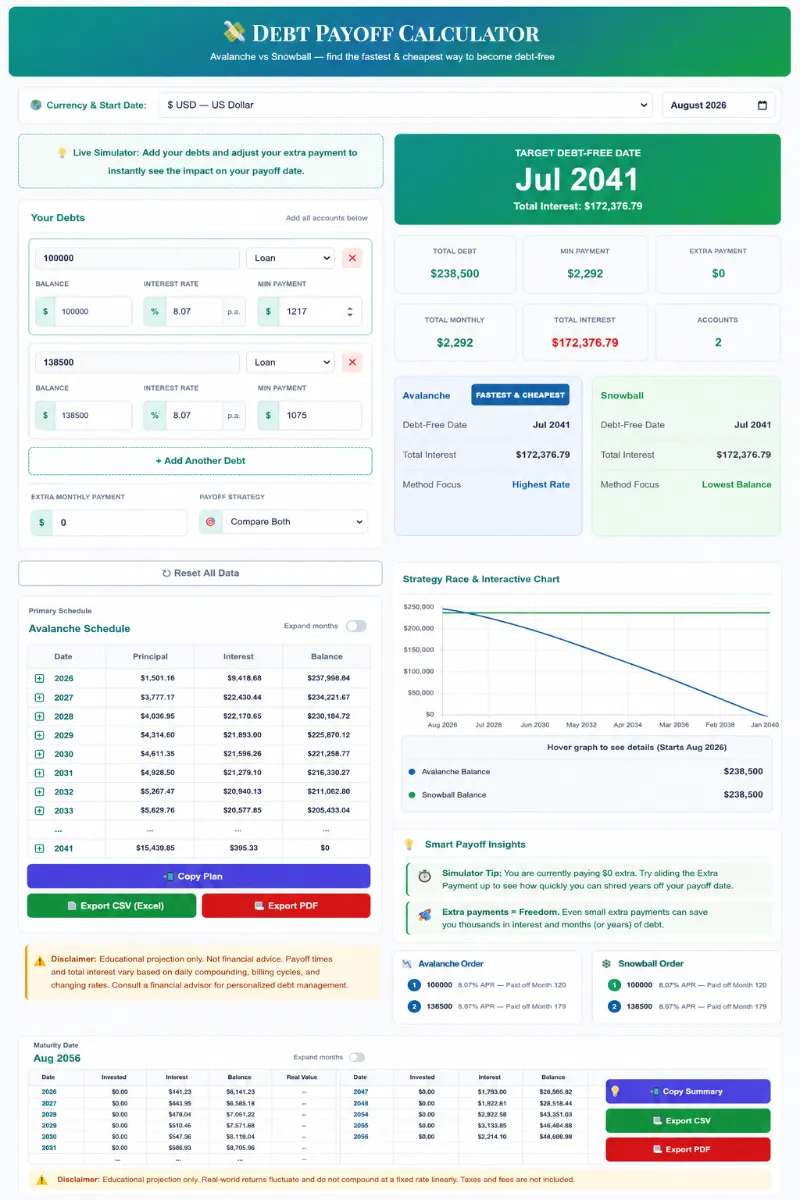
Find out exactly how long it takes to become debt-free.
Open a Secured Credit Card
A secured credit card requires a cash deposit that becomes the credit limit — typically starting at $200 to $500. The issuers report monthly payment activity to all three bureaus the same way they would for a standard revolving account. For consumers with thin or damaged credit files, this creates a new stream of positive payment history reporting from day one.
What matters is how the card is used: a small recurring charge paid in full before the statement closes produces the optimal combination of active use, low reported utilization, and consistent on-time payment history.
Become an Authorized User on a Well-Managed Account
Being added as an authorized user on an account with a long, clean payment history and low utilization can add a positive reporting line to the credit file — depending on the scoring model the lender uses. FICO Score 8 considers authorized user accounts; some older industry-specific models handle them differently.
This approach works best when the primary cardholder has years of clean history. The authorized user doesn’t need to use or even possess the physical card — the account’s history simply appears on their report.
Use a Credit-Builder Loan
Credit-builder loans work differently from standard loans: the borrowed amount is held in a separate account while the borrower makes monthly payments. Those payments are reported to the bureaus as installment debt throughout the loan term. When the term ends, the borrower receives the funds — and has added a track record of on-time installment payments plus credit mix diversity to their file.
CFPB research on credit-builder loans has found that borrowers without existing debt who take out credit-builder loans see meaningful score improvements. The product is specifically designed for the scenario where someone is trying to build or rebuild from a damaged file.
📈 Try the SaveXpert Debt Payoff Calculator
The SaveXpert Debt Payoff Calculator estimates how different monthly payment amounts change payoff timelines — useful for modeling how quickly revolving balances can be reduced toward the utilization thresholds that matter for scoring.
Educational note: Calculator results are estimates for educational purposes only.
What Works vs. What Backfires
Credit Repair: Strategies That Help vs. Strategies That Harm
| Strategies Supported by Research | Strategies That Backfire |
|---|---|
| Automating payments so no due date is missed | Letting new accounts go late while focusing on old ones |
| Paying balances before the statement closing date | Carrying balances at or near credit limits |
| Disputing genuinely inaccurate or expired entries | Filing repeated bad-faith disputes on accurate data |
| Using secured cards and credit-builder loans strategically | Paying high fees to credit repair companies for promises they can’t legally keep |
| Waiting out accurate negative marks while building positive history | Closing old credit accounts, which reduces average credit age |
“The people who successfully rebuild their credit aren’t doing anything secret. They’re consistent, they’re patient, and they stop believing the timeline can be hacked. The scoring model rewards exactly what it measures: time and behavior.”
— Kevin Brown, Lead Researcher at SaveXpert.com
Frequently Asked Questions
Ans: Yes. According to CFPB and FICO research, rebuilding a 500 credit score requires consistent on-time payments, keeping credit card utilization below 10%, disputing any genuinely inaccurate negative marks, and sustained effort over time. Moving from 500 into the fair credit range (580–669) realistically takes 12 to 24 months of consistent activity with no new negative marks during that period.
Ans: Not automatically. Under the FCRA, paying an accurate collection account does not delete the record before the 7-year reporting limit. However, FICO 9 and VantageScore 3.0 and 4.0 ignore paid collection accounts when calculating scores — so paying it off still improves the score even if the mark remains visible on the report.
Ans: No. The CFPB‘s enforcement record is clear. In August 2023, the CFPB secured a $2.7 billion federal court judgment against Lexington Law and CreditRepair.com, which included allegations of deceptive claims about their ability to remove accurate information from credit reports. The FCRA dispute process applies to inaccurate, outdated, or unverifiable information only — not to legitimately reported negative marks within the reporting window.
Ans: Under the Fair Credit Reporting Act (15 U.S.C. § 1681i), credit reporting agencies must complete dispute investigations within 30 days of receiving the dispute. If additional documentation is submitted during that initial 30-day window, the investigation period may extend to 45 days. Information that cannot be verified by the original furnisher must be corrected or deleted from the report.
Ans: Card issuers report updated balances to the credit bureaus on or after the statement closing date — typically once per month. A lower reported utilization ratio can translate into a score improvement as early as the following billing cycle, roughly 30 to 45 days after the balance is paid down. The key is paying before the statement closing date, not just the payment due date, to ensure the lower balance is what gets reported.
Ans: A charge-off occurs when a creditor writes off a delinquent account as a loss — typically after around 180 days of non-payment. The debt still legally exists after a charge-off and can be sold to a third-party debt collector. A collection account is created when that collector purchases or is assigned the charged-off debt and begins reporting it separately. Both are negative marks that can remain on a credit report for up to 7 years from the original date of first delinquency under the FCRA — and the clock is the same for both, running from the original delinquency, not from when the debt was sold.