

ⓘ Educational Disclosure:
This article is for educational and informational purposes only. It does not constitute financial, legal, tax, lending, or investment advice. SaveXpert and its authors are not licensed financial advisors, CPAs, attorneys, or tax advisors. All data comes from publicly available government and institutional sources. Always consult a qualified professional before making investment decisions.
How do you negotiate a year-end raise in 2026? The BLS Employment Cost Index shows private-sector wages grew 3.1% nominally in the 12 months ending June 2026 — but real private-industry wage growth fell 0.4% after inflation. The Atlanta Fed Wage Growth Tracker showed 3.8% wage growth in July 2026, with job changers averaging 4.4% vs. 3.6% for job stayers. The research-backed approach combines documented individual accomplishments with this labor-market context. An academic field study of 3,858 workers found salary negotiators improved compensation by 12.45% on average. Pew survey data show 66% of people who were asked received at least a partial increase.
Key Takeaways
- Problem: Workers struggle to secure raises that actually beat inflation during annual reviews — and many walk in without knowing what the labor-market data actually says.
- Solution: BLS data shows private-sector wages grew 3.1% nominally in 2026 — but fell 0.4% in real terms. The most effective approach combines documented individual performance with the broader wage-growth context the BLS provides.
- Result: Academic research found salary negotiators improved compensation by 12.45% on average. Pew survey data shows 66% of people who were asked received at least a partial increase. The research supports preparing with specific data — not hoping for a standard annual percentage.
- Source: BLS Employment Cost Index, BLS Current Employment Statistics, Atlanta Fed Wage Growth Tracker
- Time To Read: 8 Minutes
Table of Contents
1. Why Negotiating a Raise in 2026 Looks Different
2. What the BLS Wage Data Shows for 2026
3. Nominal Pay Rose — But Real Wages Tell a Different Story
4. How to Prepare a Salary Negotiation Conversation
5. What to Say When Your Manager Says There’s No Budget
6. Should You Have Another Job Offer Before Negotiating?
7. A Realistic Raise Percentage to Request in 2026
8. What Federal Employment Laws Do and Don’t Require
9. What the Research Shows Works (and What Doesn’t)
If you’re preparing for a year-end raise negotiation in 2026, start with a number the BLS published on August 18: real average hourly earnings fell 0.2% from July 2025 to July 2026. Nominal wages rose 3.1%. Inflation consumed that gain and then some. The question your employer will ask is whether your individual contribution justifies more than what the labor market is averaging. That question gets a better answer when it comes backed by documented evidence.
Why Negotiating a Raise in 2026 Looks Different
The research found something worth naming upfront: no federal agency tracks the best month to ask for a raise, and no official U.S. data establishes year-end as universally better for salary negotiations than other times.
The BLS, IRS, CFPB, and Federal Reserve don’t publish success rates for annual performance review negotiations. Employer budget cycles vary. A December conversation doesn’t automatically carry an advantage over a March one — the research found no official data supporting that assumption.
What the data does show is the broader wage environment a negotiation is entering. And in 2026, that environment has a specific character: wage growth slowed from 3.9% in 2024 to 3.1% by mid-2026, while inflation continued reducing the purchasing power behind those nominal gains.
Third-party career research — flagged as non-federal in the brief — consistently points toward two timing factors more reliable than the calendar month: the employer’s budget cycle and periods immediately following visible individual accomplishments. Both are employer-specific, not universal.
💡 Research note: The most reliable timing signal isn’t the calendar. It’s knowing when your employer’s budget gets written. Some companies finalise headcount and compensation plans in October for the following year; others review in Q1. Finding out your company’s planning cycle before starting the conversation is more valuable than picking a specific month.
What the BLS Wage Data Shows for 2026
I went through the BLS Employment Cost Index, Current Employment Statistics, Current Population Survey, and Occupational Employment and Wage Statistics data cited in the research brief. Here’s what the primary federal data shows:
| BLS Metric | 2026 Figure | Source / Period |
|---|---|---|
| Private-industry wages & salaries increase (nominal) | +3.1% | BLS ECI — 12 months ending June 2026 |
| Total compensation cost increase (including benefits) | +3.3% | BLS ECI — same period |
| Benefit costs increase | +3.8% | BLS ECI — same period |
| Average private-sector hourly earnings | $37.64 | BLS CES — June 2026 |
| Average hourly earnings YoY change | +3.5% | BLS CES — year ending June 2026 |
| Average annual wage (all occupations) | $69,770 | BLS OEWS — May 2025 data |
| Median annual wage (all occupations) | ~$51,000 | BLS OEWS — May 2025 data |
| Median weekly earnings (full-time workers) | $1,251 (~$65,052 annualised) | BLS CPS — Q2 2026 |
| August 2026 unemployment rate | 4.1% | BLS |
| Atlanta Fed Wage Growth Tracker | 3.8% | Atlanta Fed — July 2026 |
Source: BLS Employment Cost Index · BLS Current Employment Statistics · BLS OEWS · BLS CPS Q2 2026 · Atlanta Fed Wage Growth Tracker
The job-changer vs. job-stayer gap
The Atlanta Fed data contains one of the most practically useful findings in the research. In July 2026, workers who changed jobs saw 4.4% wage growth — compared with 3.6% for those who stayed with the same employer. That 0.8 percentage-point gap matters for internal negotiation strategy.
It doesn’t mean every worker should leave. It does mean that internal raises consistently trail the external market in this environment — which changes the reference point a negotiator should use.
The research also notes an important limitation. BLS wage data reflects national aggregate trends across industries and employers. It doesn’t tell an individual employee what their specific employer will approve.

Nominal Pay Rose — But Real Wages Tell a Different Story
This is the finding that changes the framing for any 2026 raise conversation.
The BLS Employment Cost Index reports private-industry wages rose 3.1% nominally over the 12 months ending June 2026. But the same data shows real private-industry wage growth fell 0.4% after adjusting for inflation over that period. Separately, the BLS Current Employment Statistics reports real average hourly earnings decreased 0.2% from July 2025 to July 2026 — published August 18, 2026.
These are two different measures, but they converge on the same finding: inflation reduced the purchasing power of nominal wage gains during this period.
| Measure | Nominal | Real (Inflation-Adjusted) |
|---|---|---|
| Private-industry wage & salary growth (ECI) | +3.1% | –0.4% |
| Average hourly earnings (CES) | +3.5% YoY | –0.2% (July 2025–July 2026) |
Source: BLS ECI · BLS CES — August 18, 2026 release
The practical implication for a negotiation: a raise that matches the 3.1% nominal average doesn’t actually maintain purchasing power in 2026. It maintains the headline number while real compensation declines. Workers who use the nominal figure as their target are negotiating for less than a real pay hold.
⚠️ The benchmark for a meaningful raise is above the nominal average: If inflation eroded 0.4% of real wage growth at the private-industry average of 3.1%, a raise needs to exceed the prevailing inflation rate — not just match the nominal BLS average — to produce real purchasing-power gains. That changes the starting figure for any negotiation framed around “keeping up.”
How to Prepare a Salary Negotiation Conversation
The research doesn’t provide a government-tested script or an officially endorsed set of tactics. BLS, IRS, CFPB, and the Federal Reserve don’t track success rates for annual review negotiations — salary negotiation sits outside their statistical mandates.
What the research does provide is evidence from academic and survey sources that preparation and asking both matter.
| Study / Source | Finding | Notes |
|---|---|---|
| Academic field experiment (Harvard/Brown/UCLA) | Negotiators improved compensation by 12.45% on average (~$27,000/yr) | 3,858 tech job seekers; not federal research |
| Pew Research survey (cited in brief) | 28% received full request; 38% received partial — ~66% total success | Survey data; not applicable to all contexts |
| Fidelity survey (cited in brief) | 85% who negotiated received at least part of the increase | Survey data; wide confidence range |
Source: Academic study (Harvard/Brown/UCLA), Pew Research, Fidelity survey — all cited as non-federal research in the brief
The research also points toward a practical conversation structure that keeps discussion tied to measurable information:
Current responsibilities:
What the role actually involves now compared to the job description or title. Expanded scope without a compensation adjustment is a documented misalignment.
Documented accomplishments with metrics:
Revenue generated, costs reduced, projects delivered, KPIs exceeded. Numbers anchor the conversation to verifiable outcomes rather than effort or tenure.
Labor-market context:
The BLS 3.1% nominal benchmark, the Atlanta Fed 4.4% job-changer rate, and the real-wage decline data give the manager specific public data rather than a perceived request.
This structure doesn’t guarantee an outcome. No research the brief cited establishes a tactic that produces a specific success rate for internal year-end raises across all industries and employers.
What to Say When Your Manager Says There’s No Budget
The research brief identifies this as a common scenario — and gives a specific framing for it.
When an employer cites no budget, that’s typically an internal business decision, not a federal compliance matter. No federal law requires annual raises, mandates a raise discussion, or prohibits citing budget constraints.
The most productive response the research supports is a future-focused question: What specific milestones and which budget cycle would make a compensation adjustment possible?
This does two things. It shifts the conversation from a rejection to a plan. And it creates a follow-up timeline that’s employer-specific rather than calendar-driven — which the research consistently finds more relevant to outcomes than general year-end timing.
Third-party career research cited in the brief describes annual review and planning periods as windows when raises “get written.” That means a December conversation may actually be after the planning window has closed for some employers — making the follow-up conversation in Q1 (when next year’s planning begins) more actionable than the year-end review itself.
Estimate your tax, effective rate, and take-home pay.
Should You Have Another Job Offer Before Negotiating?
The research brief doesn’t establish that an outside offer is required before negotiating internally. It does show several things about what outside offers do and don’t accomplish.
Research cited in the brief found that fewer than 1% of job offers were rescinded because candidates negotiated during hiring. Separately, workers who accepted the first offer without negotiating represented 58% of job seekers — while those who negotiated improved starting compensation by an average of 7.4%.
An outside offer provides external market data — concrete evidence of what another employer values a comparable role at. But the research brief doesn’t establish that an outside offer automatically produces a successful internal raise. And it explicitly doesn’t recommend obtaining one as a prerequisite.
The Atlanta Fed data adds relevant context. Job changers saw 4.4% wage growth vs. 3.6% for job stayers in July 2026. That gap is real — but it reflects the aggregate outcome for people who actually changed jobs, not for people who used an offer as leverage and stayed.
💡 Research note: An outside offer is market data. It’s most useful as evidence of external valuation, not as an ultimatum. The research doesn’t support an ultimatum strategy — it supports a data-driven conversation. Whether an outside offer fits into that depends on the specific employer relationship and career goals, neither of which a national dataset can evaluate.

A Realistic Raise Percentage to Request in 2026
The research doesn’t establish a single correct percentage. Here’s what the data actually provides as reference points:
| Data Point | Figure | Source |
|---|---|---|
| BLS private-sector nominal wage growth | 3.1% | BLS ECI — 12 months ending June 2026 |
| BLS average hourly earnings growth | 3.5% YoY | BLS CES |
| Atlanta Fed overall wage tracker | 3.8% | Atlanta Fed — July 2026 |
| Atlanta Fed — job changers specifically | 4.4% | Atlanta Fed — July 2026 |
| Wage growth in 2024 (prior year comparison) | 3.9% | BLS ECI |
| Third-party 2026 pay-raise budget surveys | 3.4%–3.6% | Multiple non-federal salary surveys |
Source: BLS ECI · BLS CES · Atlanta Fed · Third-party salary surveys (non-federal)
What this table shows: the national average benchmark runs 3.1%–3.8% across the main federal measures. Employer budget surveys suggest 3.4%–3.6%. Job changers saw 4.4%.
What it doesn’t show is what any individual employer will approve. An employer considers performance, internal pay structures, role scope, company finances, and its budget cycle — not the BLS benchmark. A worker with documented above-average performance has a reasonable case for a request above the national average. One whose role has expanded significantly has a separate argument for a structural adjustment rather than a standard annual percentage.
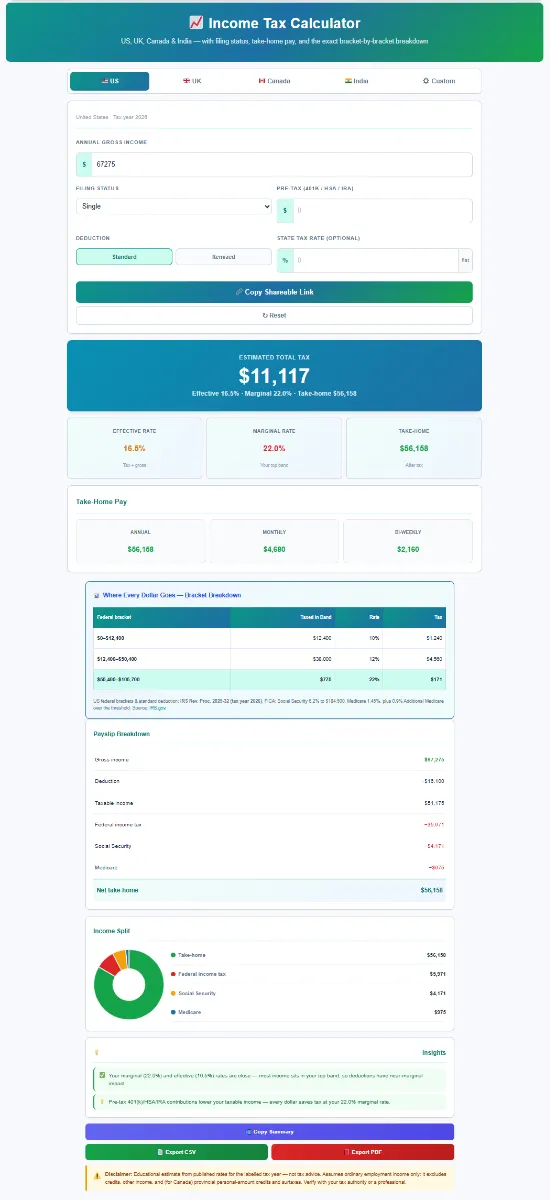
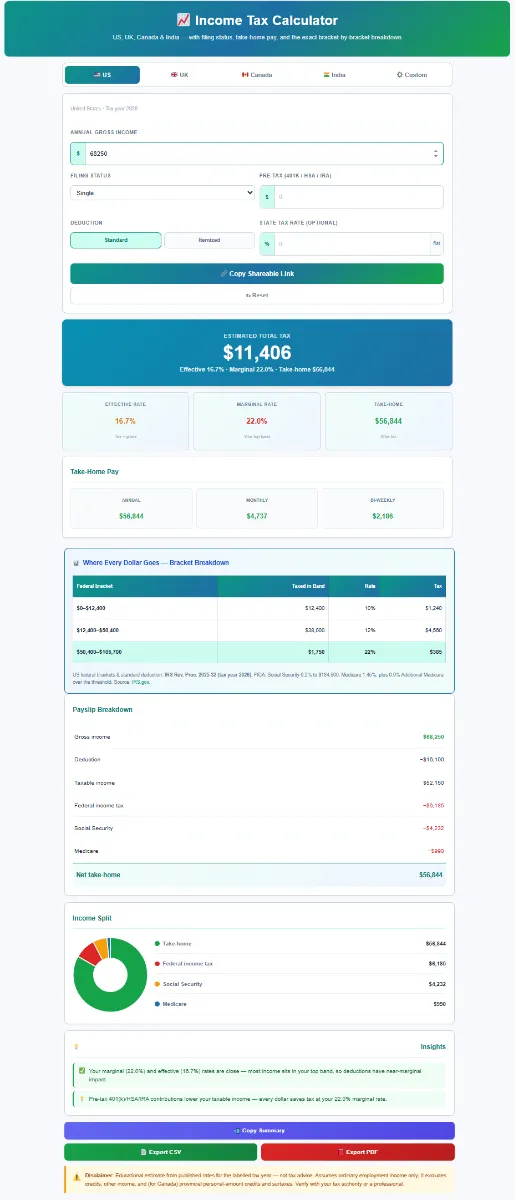
💰 Know the After-Tax Number: SaveXpert Income Tax Calculator
I ran two raise scenarios through the Income Tax Calculator to see the after-tax difference. On a $65,000 salary, a 3.5% raise ($2,275 gross) produces roughly $1,600 in additional take-home pay annually after federal income tax and FICA — about $133/month. A 5% raise ($3,250 gross) produces roughly $2,286 annually — about $190/month. Before entering a salary conversation, knowing the after-tax dollar difference between asking for 3.5% versus 5% makes the target concrete rather than abstract.
Educational note: Calculator figures are approximate and depend on filing status, deductions, and state taxes. The illustration uses a single-filer, standard deduction scenario at the 22% federal bracket. Source: BLS ECI
What Federal Employment Laws Do and Don’t Require
The research identified several federal laws relevant to compensation — and was specific about what each does and doesn’t cover in a raise negotiation context.
| Law | What It Covers | Relevant to Raise Negotiation? |
|---|---|---|
| Fair Labor Standards Act (FLSA) | Federal minimum wage, overtime, recordkeeping | No — doesn’t require annual raises or mandate review discussions |
| National Labor Relations Act (NLRA) | Protects employees discussing wages with coworkers | Yes — you have a legal right to discuss your pay; relevant to market research |
| Equal Pay Act | Prohibits sex-based wage discrimination for equal work | Potentially — if pay disparity is the basis for a raise request |
| Title VII (Civil Rights Act) | Prohibits discrimination in compensation decisions | Potentially — if discrimination is a factor in compensation decisions |
| Internal Revenue Code | All raises are taxable income | Tangentially — no rules govern timing or amounts |
Source: DOL — FLSA · NLRB · EEOC
The clearest practical point: when a manager says there’s no budget, that’s an employer business decision — not a federal compliance issue. No federal law requires a raise discussion, mandates that an employer grant one, or sets a minimum annual increase. The legal protections that exist are about discrimination and the right to discuss wages — not about compelling an employer to approve a specific raise request.
What the Research Shows Works (and What Doesn’t)
What the BLS, Atlanta Fed, and cited research consistently supports
Entering the conversation with specific documented accomplishments and external market data.
The academic field experiment found a 12.45% average improvement for negotiators. Pew data shows 66% of people who asked received something. The common thread across all cited evidence is that asking — with preparation — produces better outcomes than not asking.
Framing the request around real compensation, not just nominal percentage.
If the employer references the 3.1% BLS average as sufficient, the response is that real wages fell 0.4% at that level in 2026. A raise matching the nominal average is a real-terms pay cut at prevailing inflation. This isn’t a complaint — it’s a verifiable fact from federal data.
Understanding the employer’s budget timeline before the conversation.
The research found no federal basis for treating December as universally optimal. Knowing the company’s planning calendar — typically from an HR or manager conversation — produces better timing than assuming January budgets create a universal window.
Running the after-tax calculation before setting a target.
The difference between a 3.5% and a 5% raise looks significant on paper — but the after-tax take-home difference may be $50–$60/month on an average salary. Knowing that number prevents negotiating for a percentage change that feels meaningful but produces minimal real-cash impact.
What the data says doesn’t work
Using the nominal BLS average as the basis for the request.
At 3.1% nominal wage growth with negative real wage growth, a 3.1% raise doesn’t maintain purchasing power in 2026. The research frame for a meaningful raise is above the inflation-adjusted real-wage level — not the nominal average.
Assuming year-end is universally the best time to ask.
No federal source establishes this. Budget cycles vary. In some organisations, compensation decisions for the following year are finalised before the December review. The timing question is employer-specific, not calendar-universal.
Not asking because you expect rejection.
Research cited in the brief found 58% of workers accepted first salary offers without negotiating. Among those who did negotiate, the Fidelity survey found 85% received at least something. Fewer than 1% of job offers were rescinded for negotiating. The research consistently suggests the downside risk of asking is lower than most workers assume.

Bottom Line: 5 Steps to Negotiate Your Year-End Raise
1. Anchor your request above the nominal BLS average — because 3.1% doesn’t maintain real purchasing power:
BLS data shows real private-industry wages fell 0.4% at the 3.1% nominal level. A raise matching the nominal average is a real-terms pay cut. Use the Atlanta Fed’s 3.8% overall tracker and the 4.4% job-changer figure as the context for a request that actually maintains or improves real compensation. For above-average performance, start above that range.
2. Prepare three numbers before the conversation: your documented accomplishments, the BLS/Atlanta Fed benchmarks, and the after-tax take-home difference:
Documented results with metrics tie the request to measurable outcomes. The BLS/Atlanta Fed figures provide external labor-market context. The Income Tax Calculator shows what different raise percentages actually mean in monthly take-home — keeping the conversation grounded in real dollars rather than headline percentages.
3. Find out your employer’s budget timeline before scheduling the conversation:
The research found no federal basis for December being universally optimal. Some employers finalise next-year compensation plans in October or November — making a December conversation after-the-fact. Ask HR or your manager when compensation planning happens for the next cycle. That answer is more valuable than any calendar suggestion.
4. If you hear “no budget” — ask what milestones and which planning cycle would make a raise possible, then follow up in writing:
A no-budget response is an employer business decision, not a legal ceiling. The most productive response is a specific question: what measurable outcomes and what timeline would make a compensation adjustment possible? Following up in writing creates a record and signals the request is ongoing, not dropped.
5. Know your NLRA right to discuss wages with coworkers — it’s federal law, and it’s relevant to market research:
The National Labor Relations Act protects employees’ right to discuss compensation with coworkers. If you’re trying to understand what similar roles at your company pay internally, asking a trusted colleague is legally protected. That internal benchmark, combined with the BLS external data, gives a more complete picture of where your current pay sits before any negotiation conversation starts.
“When I went through the BLS Employment Cost Index and cross-referenced it with the Atlanta Fed Wage Growth Tracker, the most important finding wasn’t the 3.1% nominal wage growth figure. It was the gap between nominal and real. Private-industry wages rose 3.1% — and fell 0.4% after inflation. That means the benchmark for a meaningful raise in 2026 isn’t 3.1%. It’s whatever keeps purchasing power from declining. Workers who walk into a review negotiating for 3% are negotiating to stand still.”
— Kevin Brown, Lead Researcher at SaveXpert.com
Frequently Asked Questions
Ans: No federal agency tracks an optimal month for raise negotiations, and the research found no official U.S. data establishing year-end as universally superior to other periods. Third-party career research — flagged as non-federal in the brief — consistently points toward two timing factors more reliable than the calendar: the employer’s internal budget cycle and periods immediately following visible individual accomplishments. Finding out when your company finalises compensation plans for the following year is more practically useful than targeting December or January based on general advice.
Ans: The BLS Employment Cost Index shows private-industry wages and salaries increased 3.1% nominally over the 12 months ending June 2026 — down from 3.9% in 2024. Adjusted for inflation, real private-industry wage growth fell 0.4% over the same period. BLS also reports average hourly earnings rose 3.5% year-over-year, while real average hourly earnings fell 0.2% from July 2025 to July 2026. The Atlanta Fed Wage Growth Tracker showed 3.8% overall wage growth in July 2026, with job changers at 4.4% versus 3.6% for job stayers.
Ans: The research points toward three elements: documented individual accomplishments with measurable metrics, external labor-market data (BLS benchmark, Atlanta Fed job-changer rate), and an understanding of the employer’s budget cycle. An academic field experiment involving 3,858 technology workers found salary negotiators improved compensation by 12.45% on average. Pew survey data show 66% of people who were asked received at least a partial increase. The research doesn’t provide a government-endorsed script, but consistently supports preparation over spontaneous requests.
Ans: No federal data establishes a legally mandated or universally “correct” raise percentage. The BLS reports 3.1% nominal private-sector wage growth, while the Atlanta Fed Wage Growth Tracker shows 3.8% overall and 4.4% for job changers. Third-party salary surveys put employer pay-raise budgets at 3.4%–3.6%. Because real wages fell 0.4% at the 3.1% nominal level in 2026, a raise matching the nominal average doesn’t maintain purchasing power. Workers with documented above-average performance have a reasonable basis for requesting above the national average.
Ans: An employer citing no budget is making an internal business decision — not invoking a federal compliance limitation. No federal law requires employers to give raises or mandates that a budget-based refusal be reconsidered. The research-supported response is a forward-looking question: what specific milestones and which budget cycle would make a compensation adjustment possible? Asking that question, documenting the conversation, and following up in writing turns a rejection into a planned next step with a timeline tied to the employer’s own planning calendar.
Ans: Several federal laws touch compensation — but none require an employer to give a raise or mandate specific negotiation procedures. The FLSA sets federal minimum wage and overtime rules but doesn’t require annual raises. The NLRA protects employees’ right to discuss wages with coworkers. The Equal Pay Act prohibits sex-based wage discrimination for equal work. Title VII addresses employment discrimination in compensation decisions. The IRS treats all raises as taxable income but contains no rules governing negotiation timing. When a manager says “no budget,” that’s typically an employer business decision — not a federal compliance issue.