
ⓘ Educational Disclosure:
This article is for educational and informational purposes only. It does not constitute financial, legal, tax, lending, or investment advice. SaveXpert and its authors are not licensed financial advisors, CPAs, attorneys, or tax advisors. All data comes from publicly available government and institutional sources. Always consult a qualified professional before making investment decisions.
How do you make a holiday spending plan for 2026? According to CFPB holiday guidance, a functional plan follows four sequential steps: (1) set a budget based on available funds — not a national average; (2) list every anticipated purchase across all seasonal categories, including gifts, travel, food, decorations, charitable giving, tips, and activities; (3) decide the exact payment method for each category before shopping begins; and (4) create a repayment plan for any credit that will be used. The Federal Reserve’s household research found that 46% of credit-card owners carried a balance at least once during 2024 — a figure that shows why the payment and repayment decisions matter as much as the spending total itself.
Key Takeaways
- Problem: Most households treat holiday spending as a gift budget — missing travel, meals, decorations, charitable giving, tips, and activities that make the season genuinely expensive. The result is credit-card balances that arrive in January without a repayment plan.
- Solution: CFPB holiday guidance identifies four pre-shopping steps: set a budget from available funds, list every purchase category, decide the payment method for each, and build a repayment plan when credit will be used. The research supports treating this as a sequence, not a checklist to skim.
- Result: The Federal Reserve found that 46% of credit-card owners carried a balance at least once during 2024. Credit-card balances hit $1.2 trillion in Q3 2025 — an all-time high. A holiday plan built from cash-flow capacity — not national averages or available credit — is the only version that avoids contributing to those numbers.
- Source: CFPB Holiday Spending Plan Guidance · Federal Reserve G.19 Consumer Credit
- Time To Read: 8 Minutes
Table of Contents
1. The Credit Card Balance Data Behind Holiday Spending
2. Why Holiday Costs Are Harder to Control Than a Gift Budget
3. Step 1: Build From Available Money, Not a National Average
4. Step 2: Include Every Seasonal Expense, Not Just Gifts
5. Step 3: Turn the Total Into Monthly or Weekly Savings
6. Step 4: Decide How Each Purchase Gets Paid Before Shopping Starts
7. Step 5: Treat BNPL as Debt Repayment, Not Extra Spending Power
8. The 2026 Borrowing-Cost Context
9. What IRS Rules Don’t Do: Tax Deductions and Holiday Spending
10. What the Research Shows Works
Credit-card balances hit $1.2 trillion in the third quarter of 2025 — an all-time high in the Federal Reserve’s household credit reporting. The holiday season runs straight into Q4. The Fed also found that 46% of credit-card owners carried a balance at least once during 2024. A holiday spending plan doesn’t start with a gift list. It starts with understanding that available credit doesn’t mean a purchase fits your cash flow — and that the season’s real cost is wider than most people plan for.
The Credit Card Balance Data Behind Holiday Spending
Two Federal Reserve data points frame the research before anything else.
| Data Point | Figure | Source & Date |
|---|---|---|
| Total US credit-card balances (all-time high) | $1.2 trillion | Federal Reserve household credit data, 2025:Q3 |
| Credit-card owners who carried a balance at least once | 46% | Federal Reserve Economic Well-Being report, 2024 |
| Adults who could cover a $400 emergency (cash or equivalent) | 63% | Federal Reserve household research, 2025 |
| Adults with three months of emergency savings | 55% | Federal Reserve household research, 2025 |
| Total consumer credit growth rate (July 2026, SAAR) | 4.2% | Federal Reserve G.19 Consumer Credit |
| Revolving credit growth rate (July 2026, SAAR) | 2.5% | Federal Reserve G.19 Consumer Credit |
Source: Federal Reserve G.19 Consumer Credit · Federal Reserve — Economic Well-Being of U.S. Households 2025
The $1.2 trillion and 46% figures aren’t measures of holiday spending. They’re measures of credit-card debt accumulation across all spending contexts. What they show is the environment a holiday plan has to work within: many households are already carrying balances before November, and available credit is not the same as available income.
The 37% of adults who couldn’t cover a $400 emergency from cash or savings, and the 45% without three months of emergency reserves, provide the baseline for understanding why holiday planning that treats available credit as spending capacity creates real financial risk.

Why Holiday Costs Are Harder to Control Than a Gift Budget
Gift spending is the most visible holiday expense. It’s rarely the only one. The research brief and CFPB guidance both identify this as the primary reason holiday costs regularly exceed what people planned.
| Holiday Expense Category | Examples | Often Missing From Gift-Only Budget? |
|---|---|---|
| Gifts | Family, friends, coworkers, teachers, service workers | Rarely — this is what most people plan for |
| Travel | Flights, gas, accommodation for seasonal visits | Frequently — especially when trips are “expected” rather than planned |
| Food & meals | Holiday meals, hosting costs, restaurant visits | Often — grocery bills rise significantly in November–December |
| Decorations | Tree, lights, seasonal décor, wrapping supplies | Usually — treated as minor but accumulates |
| Charitable giving | Planned donations, seasonal appeals, workplace collections | Often — giving can be reactive rather than planned |
| Activities & entertainment | Events, shows, school activities, subscriptions | Frequently — treated as non-budget spending |
| Tips & gratuities | Year-end tips for recurring service workers | Almost always — rarely appears in advance planning |
Source: CFPB Holiday Spending Plan Guidance · Northwestern Mutual 2026 holiday guidance
A household that plans $800 for gifts and nothing for the other six categories will spend somewhere between $1,200 and $2,000+ in reality — which is exactly why CFPB guidance treats the purchase list as a pre-shopping step, not an afterthought.
Step 1: Build From Available Money, Not a National Average
The starting point for a holiday spending plan isn’t a benchmark figure. It’s the amount of income or savings available after regular obligations are met.
Two reference figures circulate in holiday spending coverage. Neither should become a personal budget:
| Reference Figure | What It Measures | What It Doesn’t Measure |
|---|---|---|
| BLS average annual consumer unit expenditure: $78,535 (2024) | Full-year total spending across all consumer units | Holiday spending specifically — this is a 12-month average, not a seasonal target |
| NerdWallet 2025 survey: $1,107 average planned gift spend | Self-reported planned gift spending from one survey | Total holiday costs — travel, meals, decorations, activities all sit outside this figure (private survey; methodology flagged for verification) |
Source: BLS — Consumer Expenditures 2024 · NerdWallet 2025 Holiday Spending Report (private survey)
The 63%/55% Fed household data matters here for a specific reason: a holiday plan that draws down emergency savings to hit a national average creates a second problem alongside the spending one. The research supports keeping emergency reserves intact and building the holiday plan from the money available after those reserves are protected.
CFPB guidance describes the budget as a written allocation across categories. The writing step matters because it makes the total visible before purchases start — rather than after December’s credit-card statement arrives.
See how long it takes to reach your target.
Step 2: Include Every Seasonal Expense, Not Just Gifts
Once the total available amount is established, the next step is distributing it across every category that will actually generate spending — not just the gift line.
🎄 Holiday Spending Plan — Category Worksheet
| Category | Planned Amount | Payment Method |
|---|---|---|
| Gifts (family, friends, coworkers) | $_______ | _______________ |
| Travel (flights, gas, accommodation) | $_______ | _______________ |
| Food & holiday meals | $_______ | _______________ |
| Decorations & supplies | $_______ | _______________ |
| Charitable giving | $_______ | _______________ |
| Activities & entertainment | $_______ | _______________ |
| Tips & year-end gratuities | $_______ | _______________ |
| TOTAL | $_______ | Compare to Step 1 |
The worksheet makes the total visible before shopping starts. If the category total exceeds the available amount from Step 1, the gap shows up on paper — not on a January credit-card statement. Each category also needs a payment method assigned at this stage, not at checkout.
The BLS carries an important note here: annual expenditure figures aren’t holiday-specific, and some subcategories show high variance across households. That makes BLS averages poor substitutes for a household’s own category totals. The only useful number is the household’s own planned amount per category — not a population average.
Step 3: Turn the Total Into Monthly or Weekly Savings
Once you have a category total, the research-supported method for reaching it without credit is straightforward: divide the total by the months remaining before spending begins.
| Planning Start Month | Months Available | $900 Target / Month | $1,200 Target / Month | $1,800 Target / Month |
|---|---|---|---|---|
| June | 6 months | $150 | $200 | $300 |
| July | 5 months | $180 | $240 | $360 |
| August | 4 months | $225 | $300 | $450 |
| September | 3 months | $300 | $400 | $600 |
| October | 2 months | $450 | $600 | $900 |
| November | 1 month | $900 | $1,200 | $1,800 |
Calculation from research: total ÷ months remaining = monthly savings target. Source methodology: CFPB Holiday Spending Plan Guidance
The table shows the mathematical consequence of delayed planning: waiting until October to start a $1,200 target produces a $600/month savings requirement. Waiting until November makes it $1,200 in a single month — which is the scenario that pushes most households toward credit.
This is what private holiday-budget guidance calls a “sinking fund” — spreading a known future expense across earlier months rather than absorbing it all at once. Bankrate’s 2025 survey found only 24% of holiday shoppers expected to budget for the holidays. The savings timeline table is the clearest illustration of what that 76% faces by not starting early.
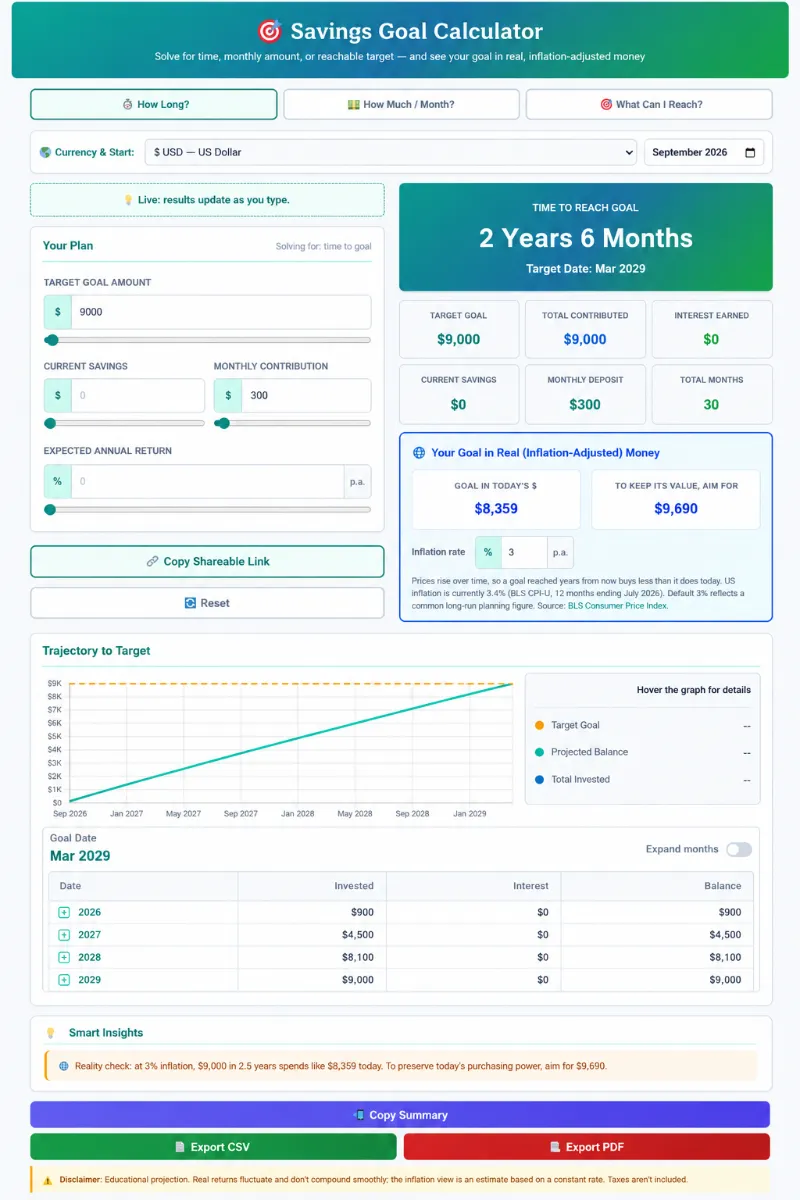
🎯 Set the Monthly Target: SaveXpert Savings Goal Calculator
A 2026 holiday total can convert into a recurring weekly or monthly savings amount based on months remaining before spending starts. The Savings Goal Calculator does that conversion — enter your planned seasonal total and your start date, and it shows the per-period amount needed to reach the target without credit. Use this before finalising your category totals so the monthly savings figure is realistic against your cash flow.
Educational note: Calculator models scenarios for informational purposes only. Source: CFPB Holiday Spending Plan Guidance
Step 4: Decide How Each Purchase Gets Paid Before Shopping Starts
CFPB guidance identifies the payment decision as a pre-shopping step — not a checkout-screen decision made under time pressure or promotional influence. This is the step most commonly skipped, and the 46% balance-carrying rate shows what that produces.
Assigning a payment method to each category
| Payment Method | How It Works in a Holiday Plan | Key Risk to Plan For |
|---|---|---|
| Cash or savings (direct) | Set aside the category amount before spending begins; no repayment obligation | Draws down liquid savings — check emergency reserve impact first |
| Credit card (paid in full by statement) | Purchase now, pay the full balance by the due date — no interest if cleared | Requires confirmed cash flow to cover the balance within the billing cycle |
| Credit card (carried balance) | Purchase now, repay over multiple months — interest applies on the carried amount | The Federal Reserve found 46% of cardholders carried a balance in 2024; plan the repayment timeline before purchasing |
| BNPL (pay-in-four) | Split purchase into four instalments — typically 0% interest but creates a debt obligation | Multiple simultaneous BNPL schedules overlap — see Step 5 |
Source: CFPB Holiday Spending Plan Guidance · CFPB — Credit Cards
The CFPB states that consumers must make at least the minimum credit-card payment by the due date. Paying only the minimum leaves a balance outstanding, extends the repayment period, and generates interest on that balance. Regulation Z (12 CFR Part 1026) governs credit-card disclosures including APR, finance charges, payment terms, and minimum-payment information. It generally requires a billing due date at least 21 days after the statement is mailed or delivered.
💡 Research flag — Regulation Z verification: The research brief flags the exact current Reg Z text for editorial verification before publication. The 21-day billing-period rule is a longstanding feature of Regulation Z but should be confirmed against current CFPB Regulation Z guidance at CFPB.gov before citing as current regulatory text.

Enter your income and top expenses to see where you stand.
Step 5: Treat BNPL as Debt Repayment, Not Extra Spending Power
CFPB research found that more than one-fifth of consumers with a credit record used Buy Now, Pay Later loans in 2022 — and that many BNPL users held simultaneous loans from multiple lenders at the same time.
That last detail is the planning issue. A single BNPL instalment feels small. Multiple simultaneous BNPL schedules from holiday shopping create overlapping repayment obligations that accumulate across January, February, and March — after the season has ended and the purchases have been used or given away.
| BNPL Feature | What the CFPB Research Shows | Holiday Planning Implication |
|---|---|---|
| Usage rate (2022) | 21%+ of consumers with credit records used BNPL | Common enough that multiple household members may have separate BNPL schedules |
| Simultaneous loans | Many BNPL users held loans from multiple lenders at once | Each new BNPL purchase in the holiday season adds a repayment obligation to existing ones |
| Interest structure | Pay-in-four is typically 0% interest | 0% interest doesn’t mean no debt — CFPB classifies pay-in-four as closed-end instalment loans |
| Typical structure | Four or fewer instalments; first payment often due at checkout | The upfront payment reduces the apparent savings on a holiday purchase |
Source: CFPB — Consumer Use of BNPL and Other Unsecured Debt
⚠️CFPB withdrew its 2024 BNPL Interpretive Rule on May 12, 2025: The CFPB’s interpretive guidance on BNPL products changed in 2025. When planning around BNPL for 2026 holiday spending, verify current product-specific terms and legal treatment against Regulation Z and the specific BNPL product’s terms — not guidance documents that may have been withdrawn. Source: CFPB — Regulation Z
The research-supported approach is to enter each BNPL payment schedule into the holiday plan as a repayment obligation — alongside any credit-card balances that will carry past December. The total repayment picture for January through March is part of the holiday plan, not something that appears after it ends.
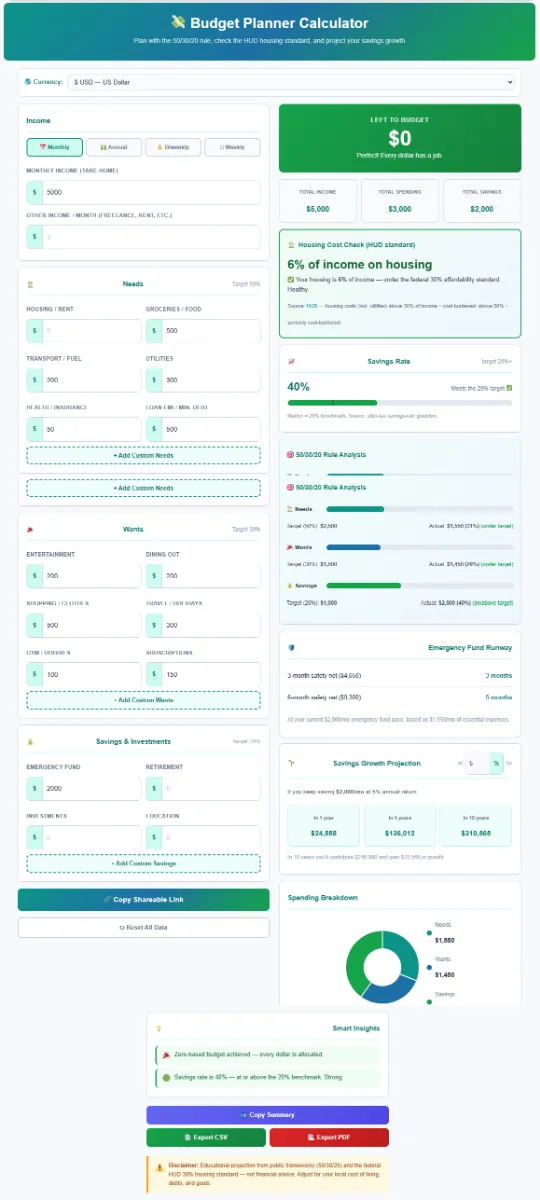
💰 Check Whether the Plan Fits: SaveXpert Budget Planner Calculator
I ran a holiday scenario through the Budget Calculator by comparing available income, regular monthly expenses, savings, and seasonal category totals. The output showed whether the planned holiday amount fits the cash-flow picture before any purchases begin — including what January’s picture looks like if credit carries into the new year. Use it to check the plan, not just the spending total.
Educational note: Calculator models scenarios for informational purposes only. Source: Federal Reserve G.19 Consumer Credit
The 2026 Borrowing-Cost Context
The Federal Reserve raised the federal-funds target range by 0.25 percentage point on September 16, 2026, to 3.75%–4.00%. The reserve-balances rate became 3.90% effective September 17, 2026.
That decision doesn’t directly set an individual’s credit-card APR. The research brief treats it as broader borrowing-cost context — the environment in which any holiday credit use will carry balances. Credit-card APRs are set by individual issuers and reflect the federal funds rate alongside issuer-specific pricing; the target range is a floor-level signal, not a card-specific rate.
What the G.19 data does show directly: total consumer credit was growing at a 4.2% seasonally adjusted annual rate in July 2026, with revolving credit (including credit cards) at 2.5% and nonrevolving credit at 4.8%. Holiday spending sits in a consumer-credit environment that was already expanding before the Q4 season.
What IRS Rules Don’t Do: Tax Deductions and Holiday Spending
This is a clarification the research brief specifically flags because holiday spending content sometimes implies a tax connection that doesn’t exist for most households.
| IRS Figure or Rule | What It Does | What It Doesn’t Do |
|---|---|---|
| 2026 standard deduction: $16,100 (single/MFS) | Reduces taxable income for filers who don’t itemise | Does not create a holiday spending allowance or deduction category |
| 2026 standard deduction: $24,150 (head of household) | Reduces taxable income for eligible filers | Not a holiday budget — this is an annual income-tax calculation input |
| 2026 standard deduction: $32,200 (married filing jointly) | Reduces taxable income for joint filers | Not a holiday budget — no connection to seasonal spending decisions |
| Personal holiday gift deductibility | No general federal income-tax deduction exists for personal gifts | Source: IRS Publication 17 — verify current version before publishing |
Source: IRS — 2026 Tax Inflation Adjustments · IRS Publication 17
The standard deduction figures don’t create a holiday spending budget or allowance. They affect how taxable income is calculated — a separate calculation that happens after the tax year ends. Holiday spending decisions happen in November and December; their tax implications (if any) depend on the nature of the spending, not the standard deduction amount. Tax deductions shouldn’t form the basis of a holiday spending target.
What the Research Shows Works
A written category plan, not a gift budget.
CFPB guidance treats the purchase list as a pre-shopping step. A gift budget that doesn’t account for travel, meals, decorations, giving, activities, and tips will underestimate the season every time. Writing down every category before shopping begins is the mechanism that makes the total visible before it becomes a balance.
Starting earlier rather than later.
The savings timeline table is the clearest illustration of why early planning reduces credit dependence. A $1,200 holiday target divided by six months is $200/month. Divided by two months, it’s $600/month. The math doesn’t change — but the cash-flow requirement does, and later starts to push more households toward credit as the only viable option.
Assigning a payment method to each category before checkout.
The research brief consistently shows this step gets skipped. CFPB guidance places the payment decision before shopping. The 46% balance-carrying rate shows what happens when it becomes a checkout-screen decision made under promotional pressure instead.
Counting BNPL repayments as obligations in the plan — not as separate “small” payments.
CFPB research on simultaneous BNPL loans shows that individual instalment amounts feel manageable. The aggregate of multiple schedules running into January, February, and March is the number that matters — and it’s the number most people don’t calculate before they start accumulating BNPL purchases.
Protecting emergency savings from the holiday plan.
The Federal Reserve found 55% of adults had three months of emergency savings and 63% could cover a $400 emergency. A holiday plan that draws down emergency reserves to hit a spending target trades one financial protection for a seasonal celebration. The research supports building the holiday plan from money available after emergency reserves are kept intact.

Bottom Line: 5-Step Holiday Spending Checklist
1. Set the budget from available cash flow — not from a national average:
The BLS’s $78,535 annual consumer-unit figure and NerdWallet’s $1,107 gift-spend survey are context, not personal limits. CFPB guidance is clear: the starting point is available income or savings after regular obligations and emergency reserves. Available credit is not the same as available funds — and the 46% balance-carrying rate shows what using credit as a budget baseline produces.
2. Build every expense category into the plan before shopping starts:
Gifts are one line. The worksheet in Step 2 covers the full list: travel, meals, decorations, charitable giving, activities, and tips. A plan that accounts only for gifts will underestimate the season by a material amount every year. Writing down every category and assigning a dollar amount before purchases begin is the step that converts a spending intention into a plan.
3. Divide the category total by the months remaining — right now:
The savings timeline table shows that every month of delay raises the per-month savings target. A $1,200 plan in October requires $600/month; the same plan in June requires $200/month. Run the Savings Goal Calculator with your category total and today’s date to find your per-period savings target. Then check that target against the Budget Calculator to confirm it fits your monthly cash flow.
4. Assign a payment method to each category in the worksheet — before any purchase:
The CFPB identifies this as a pre-shopping step. Assigning cash, savings, credit-to-be-paid-in-full, or credit-with-a-repayment-plan to each category before checkout changes the January picture. If a category is assigned to credit, the repayment plan is part of the holiday plan — not a post-January problem.
5. Add up every BNPL repayment schedule and credit balance that will run into January — before you start spending:
CFPB research shows many BNPL users held simultaneous loans from multiple lenders. Individually, each instalment looks small. In aggregate, three or four overlapping BNPL schedules plus carried credit-card balances produce a January repayment obligation that competes with regular expenses. Enter every known repayment into the plan before the season starts so the full picture is visible in advance.
“The Fed figure that most changed how I read holiday budgeting advice was the $1.2 trillion credit-card balance milestone in Q3 2025. That’s not spending data — it’s debt data. It tells me that at a household level, the holiday season regularly converts spending intentions into balances that carry into January and beyond. CFPB guidance treats that transition as preventable with a specific four-part process: set a budget, list purchases, decide payment methods, create a repayment plan. The sequence is obvious when you read it. The data suggests most people skip most of it.”
— Kevin Brown, Lead Researcher at SaveXpert.com
Frequently Asked Questions
Ans: According to CFPB holiday guidance, a functional plan follows four steps in sequence: set a budget from available funds (not a national average), list every anticipated purchase across all categories, decide the payment method for each category before shopping starts, and build a repayment plan for any credit that will be used. The Federal Reserve found 46% of credit-card owners carried a balance in 2024 — a figure that shows why the repayment step matters as much as the budget total.
Ans: CFPB holiday guidance and Northwestern Mutual’s 2026 holiday research both identify expenses well beyond gifts. A complete plan covers: gifts (family, friends, coworkers), travel and accommodation, holiday meals and hosting costs, decorations and seasonal supplies, charitable giving, seasonal activities and entertainment, and year-end tips for service workers. A household that plans only for gifts will miss several of those categories and face a larger-than-planned total at the end of the season.
Ans: Federal sources don’t publish a single official average for holiday spending. The BLS’s $78,535 average annual consumer-unit expenditure covers a full year — not the holiday season. Private survey data from NerdWallet’s 2025 report found shoppers planned to spend an average of $1,107 on gifts specifically — which doesn’t include travel, meals, decorations, or other seasonal categories. The research brief flags that survey for methodology verification before treating $1,107 as a universal benchmark. The only useful figure for any household is its own category-by-category total.
Ans: The Federal Reserve’s 46% balance-carrying finding shows what happens when a plan relies on available credit as spending capacity. The research-supported approach is to assign a specific payment method to each category before any purchase is made — not at the checkout screen. Tracking actual spending against the written category amounts as purchases happen (rather than reviewing at the end of December) is the mechanism for catching overruns before they become January balances. The Budget Calculator is useful for a mid-season check of whether actual spending still fits the plan.
Ans: CFPB guidance and Northwestern Mutual’s 2026 research both point to the same categories: travel costs that feel inevitable rather than planned, grocery bills for holiday meals (which can double in November and December for households hosting visitors), seasonal decorations, charitable giving that happens reactively in response to appeals rather than as a planned line item, and year-end tips for service workers. The category worksheet in Step 2 is designed to make these visible before spending starts — because all of them show up in January’s accounting whether or not they were in the plan.
Ans: Federal sources don’t set a required start date. CFPB guidance puts budget-setting, purchase-listing, payment decisions, and repayment planning all before purchases begin — meaning planning should happen before the shopping season, not during it. The savings timeline in Step 3 shows the mathematical consequence of delayed starts: a $1,200 target requires $200/month if started in June but $600/month if started in October. Bankrate’s 2025 survey found only 24% of holiday shoppers expected to budget in advance. The earlier a plan starts, the smaller the per-period savings requirement — and the lower the probability that credit fills the gap.