
ⓘ Educational Disclosure:
This article is for educational and informational purposes only. It does not constitute financial, legal, tax, or student-loan advice. SaveXpert and its authors are not licensed financial aid professionals. Federal student loan rules, repayment plans, and forgiveness eligibility can change rapidly. Always verify current requirements directly at StudentAid.gov or with your loan servicer before making any repayment or borrowing decisions.
The big beautiful bill student loan changes drew attention fast and generated almost as much confusion as coverage. Some headlines described the law as eliminating student-loan forgiveness entirely. Others focused only on the new income-driven repayment plan. The official Education Department material tells a more specific story.
Key Takeaways
- Problem: Borrowers are struggling to understand how new federal borrowing limits, adjusted repayment structures, and shifting forgiveness timelines will affect their student debt obligations.
- Solution: The big beautiful bill student loan changes restructure the system by introducing a $257,500 lifetime borrowing limit and shifting repayment to the Tiered Standard plan or the new Repayment Assistance Plan (RAP), per the Education Department’s final-rule fact sheet.
- Result: Most new borrowers transition into these two structured plans. Existing SAVE borrowers face a phased transition well before the 2028 statutory sunset. Federal student-loan forgiveness is restructured, not eliminated, under the new rules.
- Source: Education Department Final-Rule Fact Sheet (Public Law 119-21) · Congress.gov H.R.1
- Time To Read: 6 Minutes
Table of Contents
1. The $257,500 Lifetime Limit Is One of the Biggest Changes
2. The New Repayment Plans Replace a Much Larger Menu
3. Student Loan Forgiveness Is Changing, Not Disappearing
4. SAVE Borrowers Face an Earlier Transition Than the 2028 Sunset Suggests
5. FAFSA Changes Focus on Specific Family Assets
6. Married Borrowers Face a Separate Set of Rules
8. What Americans Can Realistically Expect
In short: the big beautiful bill student loan changes restructure federal borrowing and repayment starting July 1, 2026. According to the Education Department’s final-rule fact sheet, the law introduces new aggregate lifetime limits, transitions borrowers to the Tiered Standard or Repayment Assistance Plan, and modifies existing forgiveness timelines. New borrowers generally move into the Tiered Standard plan or the new Repayment Assistance Plan (RAP), while SAVE, PAYE, and ICR face a July 1, 2028 statutory sunset. SAVE borrowers, however, began transitioning earlier in 2026.
The $257,500 Lifetime Limit Is One of the Biggest Changes
One number stood out immediately: $257,500. The Education Department says borrowers who receive a loan made on or after July 1, 2026 face a new aggregate lifetime federal loan limit, subject to exceptions. The same rule changes several annual and program-specific borrowing limits
| Borrower Type | Annual Limit | Aggregate Limit |
|---|---|---|
| Graduate students (new borrowers) | $20,500 | $100,000 |
| Professional students (new borrowers) | $50,000 | $200,000 |
| Parent PLUS | $20,000/year | $65,000/dependent |
| All new borrowers (lifetime aggregate) | — | $257,500 |
Source: Education Department — Final-Rule Fact Sheet · Public Law 119-21. Applies to loans made on or after July 1, 2026.
The new rules don’t simply change federal student loan repayment rules — they also change how much federal debt some borrowers can take on in the first place. The enacted law, Public Law 119-21, created these changes on July 4, 2025.
The law also creates an interim exception for students already enrolled before July 1, 2026. The Education Department says qualifying borrowers can receive an exception for three years or the expected time to earn the credential, whichever period comes first. A graduate student already enrolled before the effective date may fall under the interim rules rather than immediately facing the new borrowing caps.
⚠️ New vs. existing borrowers: These limits apply to loans made on or after July 1, 2026. Borrowers who received all their federal loans before that date are not subject to the new aggregate limits for existing balances. The interim exception provides some protection for students enrolled before July 1, 2026 — but only for three years or until credential completion. Verify your specific situation at StudentAid.gov.
Compare two loans side-by-side to find the cheaper option.
The New Repayment Plans Replace a Much Larger Menu
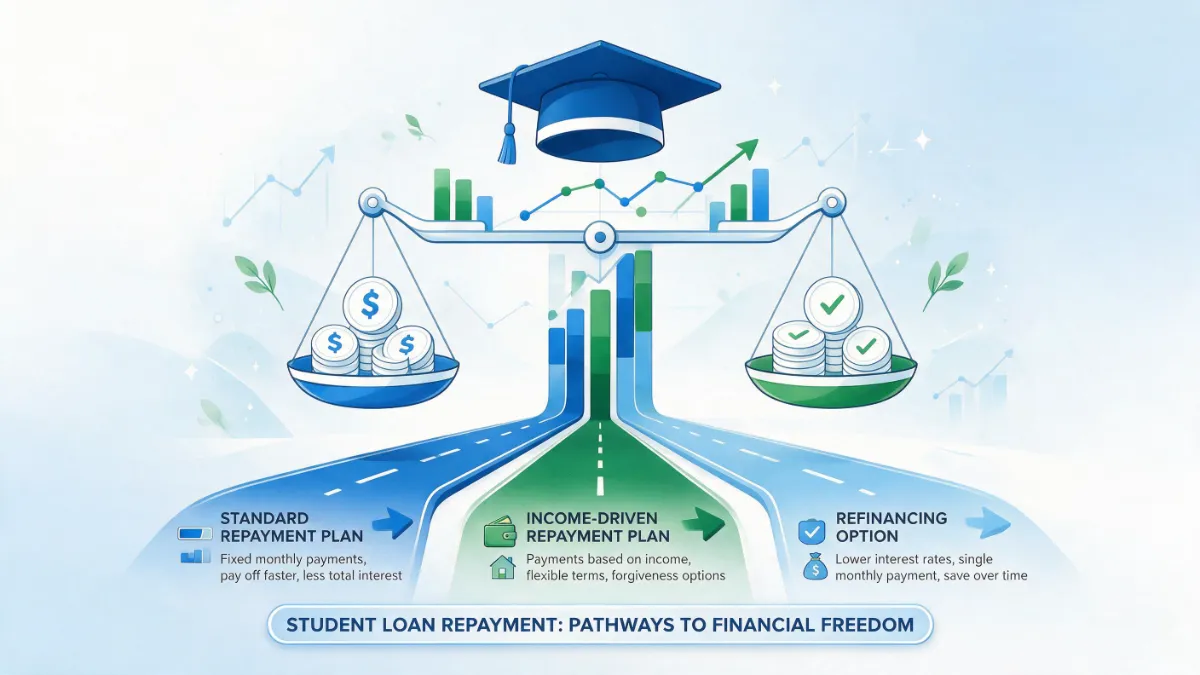
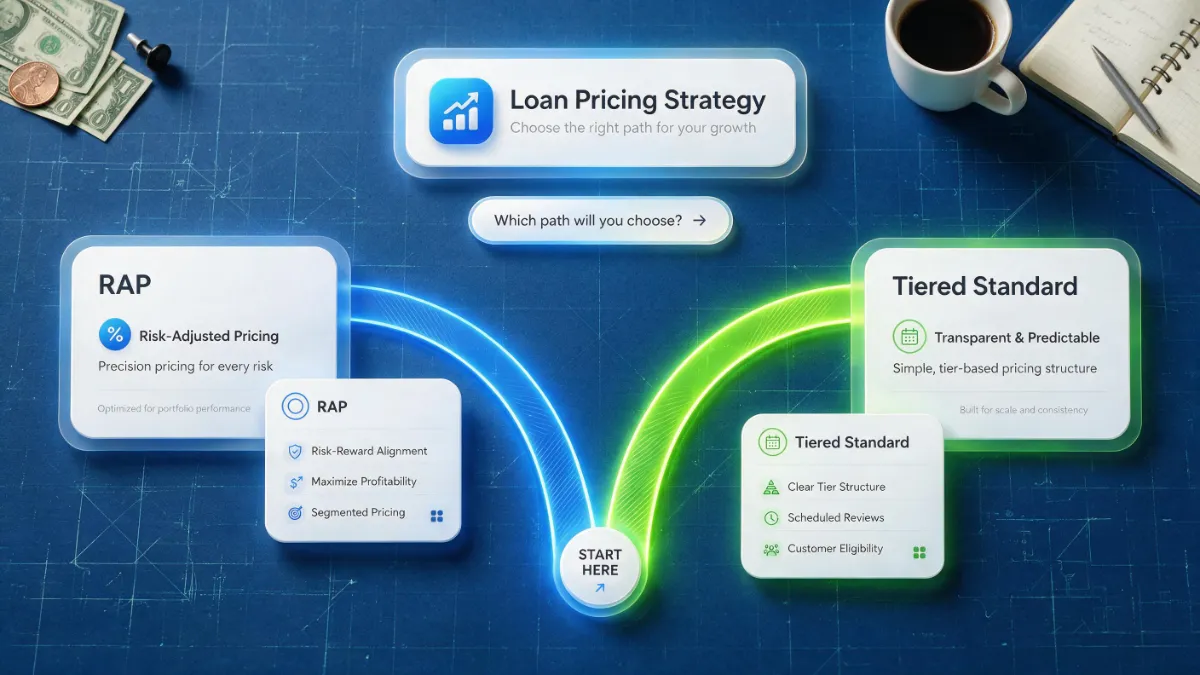
The research found two principal new repayment options for new federal borrowers: the Tiered Standard plan and the Repayment Assistance Plan (RAP). The Education Department says these options became available beginning July 1, 2026.
Tiered Standard Repayment Terms
| Outstanding Principal Balance | Repayment Term | Minimum Monthly Payment |
|---|---|---|
| Below $25,000 | 10 years | $50 |
| $25,000 – $49,999 | 15 years | $50 |
| $50,000 – $99,999 | 20 years | $50 |
| $100,000 or more | 25 years | $50 |
Source: Education Department — Final-Rule Fact Sheet. Repayment term based on outstanding principal at repayment entry.
RAP uses income instead of balance to set the monthly obligation. The Education Department describes payments ranging from 1% to 10% of income, depending on the borrower’s income level. The formula also reduces the payment by $50 per dependent each month, with a $10 minimum monthly payment.
The research also found an unusual RAP feature: when an on-time payment reduces principal by less than $50, the government may contribute up to $50 toward principal. Qualifying on-time RAP payments can also prevent unpaid interest from accumulating when the payment doesn’t cover accruing interest. That creates a practical difference between simply making a low payment and understanding how the new formula treats interest over time.
💰 Model Your Numbers with SaveXpert’s Loan Calculators
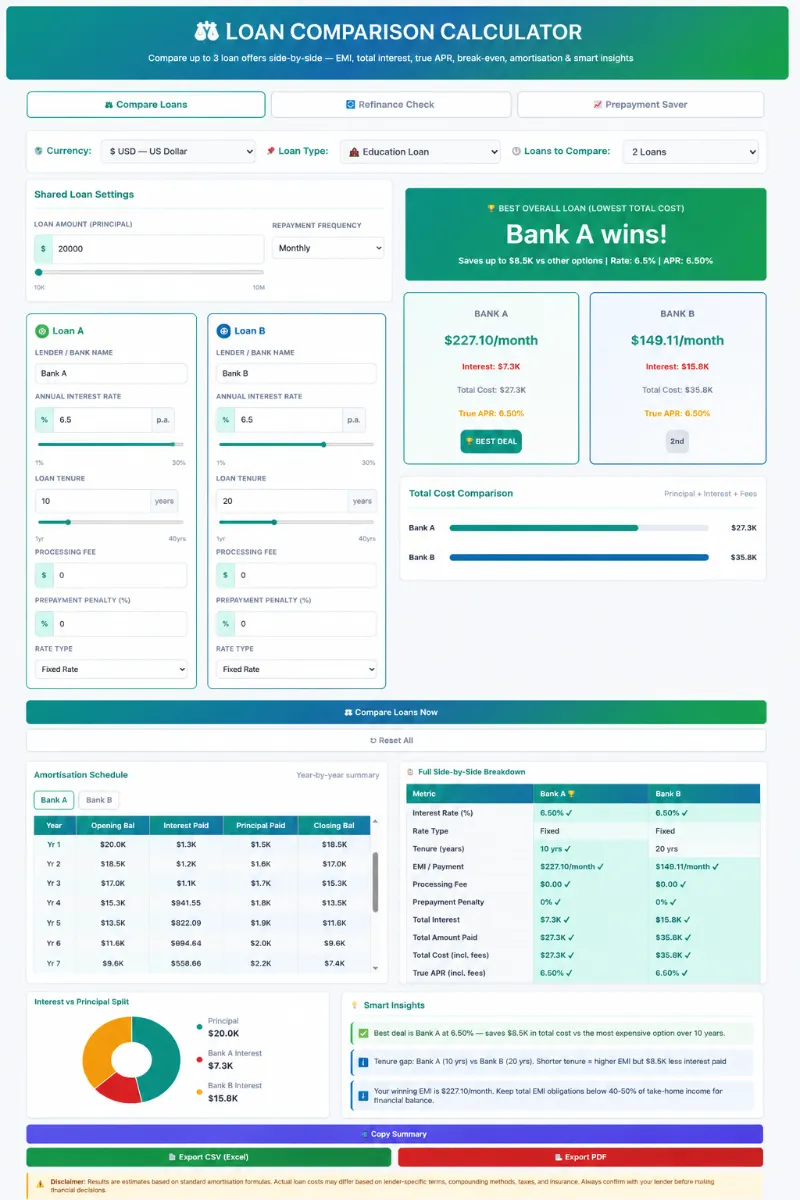
I ran a hypothetical borrower with different balances through SaveXpert’s Loan Comparison Calculator. A $20,000 balance falls into a 10-year Tiered Standard term; a $100,000+ balance gets 25 years. RAP instead bases the monthly obligation on income and dependents — a fundamentally different calculation. Enter your actual balance, income, and dependent count to see which structure works better for your situation.
Educational note: These calculators model hypothetical scenarios. For official plan details, visit StudentAid.gov.
Find out exactly how long it takes to become debt-free.

Student Loan Forgiveness Is Changing, Not Disappearing
The most common claim I found repeated was that the bill eliminates student-loan forgiveness. The official material doesn’t support that broad statement.
The Federal Student Aid office states that RAP provides forgiveness after 30 years (360 monthly payments) for eligible remaining balances. The law also allows qualifying RAP payments to count toward Public Service Loan Forgiveness. The more accurate finding is narrower: the big beautiful bill student loan changes dictate which repayment paths remain available and how borrowers reach forgiveness — it doesn’t erase every forgiveness route.
Public Law 119-21 does not repeal every existing federal discharge or forgiveness category. The regulations at 34 C.F.R. § 685.212 continue to cover statutory loan discharge categories.
💡 IRS tax treatment: IRS Publication 970 states that married taxpayers filing separately cannot claim the federal student-loan-interest deduction. The 2025 deduction phaseouts run from $85,000 to $100,000 for single, head-of-household, and qualifying-surviving-spouse filers, and from $170,000 to $200,000 for married taxpayers filing jointly. The IRS explains that the broad American Rescue Plan exclusion for certain discharged student debt applied to discharges from 2021 through 2025. Public Law 119-21 separately extended tax-free treatment for certain discharges caused by death or total permanent disability.
SAVE Borrowers Face an Earlier Transition Than the 2028 Sunset Suggests
This point created the biggest timing confusion in the research.
The law schedules SAVE, PAYE, and ICR to sunset on July 1, 2028. But the Education Department started moving SAVE borrowers toward other legal repayment plans in 2026. On March 27, 2026, the Education Department confirmed SAVE borrowers would receive at least 90 days to select a legal repayment plan after receiving notice. A SAVE borrower cannot treat July 1, 2028 as a guaranteed date for remaining on SAVE. The transition is already underway.
Several events led to this outcome in sequence:
December 9, 2025:
The Education Department announced a proposed settlement intended to end the SAVE Plan.
March 27, 2026:
The Education Department confirmed SAVE borrowers would receive at least 90 days’ notice to select a new legal repayment plan.
April 30, 2026:
The Education Department announced the final student-loan rule — most major provisions took effect July 1, 2026; rehabilitation, deferment, and forbearance changes moved to July 1, 2027.
Consumer finance publications reported that some SAVE borrowers saw higher payments during this transition period, though those reports don’t establish a universal payment increase for every borrower. Individual payment impacts depend on the specific loan balance, income, and which plan the borrower transitions into.
FAFSA Changes Focus on Specific Family Assets
The FAFSA changes work differently from the repayment changes — and they apply to a later award year.
The Education Department’s February 13, 2026 FAFSA development announcement said the 2027–28 FAFSA process would implement new asset exclusions for certain family farms, family-owned businesses with fewer than 100 full-time employees, and commercial fishing operations. The final implementation language should be confirmed at StudentAid.gov before the 2027–28 award year — these rules can depend on the form year and implementation guidance. The research does not support a broader claim that the law excludes every family business or farm from FAFSA asset calculations.
The same legislation also connects to Pell Grant and workforce education changes. The Education Department’s March 6, 2026 Workforce Pell announcement described eligible programs with 150 to 599 instructional hours and durations from eight weeks to fewer than 15 weeks. The Workforce Pell final rule was announced May 18, 2026. Federal Student Aid lists the maximum Federal Pell Grant for the 2026–27 award year at $7,395.
💡 Research note: The FAFSA asset exclusions apply starting with the 2027–28 award year — not 2026–27. Families with farms, small businesses, or commercial fishing operations should verify their eligibility under the new exclusions directly at StudentAid.gov when the 2027–28 FAFSA opens.
Married Borrowers Face a Separate Set of Rules
Marriage adds another layer to the new repayment system that interacts with both the Education Department rules and IRS tax rules — and those two rule sets don’t always point in the same direction.
The Education Department’s final-rule fact sheet says RAP payments for married borrowers can receive proration when both spouses hold eligible student debt. The purpose is to avoid counting the same joint household income twice across two separate borrowers.
ED rulemaking materials state that a borrower filing separately excludes the spouse’s AGI from the RAP payment calculation and generally limits dependents to those claimed on the borrower’s return. The operative language in 34 C.F.R. § 685.209 governs the specific calculation — borrowers should verify the current regulatory text and their specific situation before selecting a filing status strategy based solely on repayment impact.
⚠️ Tax and repayment interact separately: IRS Publication 970 states that married taxpayers filing separately cannot claim the student-loan-interest deduction. The repayment calculation (ED) and the interest deduction (IRS) operate under separate rules. The research found no official source showing that filing separately always creates a lower total household financial burden — the repayment saving and the lost deduction must both be calculated for the specific household.
What the Data Shows Works
Based on what I found in the Education Department’s published material, several findings stand out that should affect how borrowers approach the new system.
Qualifying on-time RAP payments can prevent unpaid interest from accumulating,
when the payment doesn’t cover all accrued interest — a meaningful feature for lower-income borrowers who might otherwise see their balance grow despite making payments.
RAP can provide a government principal-reduction benefit of up to $50,
when an on-time payment reduces principal by less than $50. This contribution isn’t available under the Tiered Standard plan.
Qualifying RAP payments count toward PSLF,
preserving a forgiveness route for eligible public-service borrowers. PSLF still requires 120 qualifying payments.
The new rehabilitation rules allow a borrower to rehabilitate a defaulted loan twice over that loan’s lifetime.
The general requirement involves nine on-time voluntary payments. The same rule limits general forbearance to nine months within a 24-month period, subject to applicable exceptions.
These findings don’t predict an individual borrower’s outcome. They show how the published rules treat payments, interest, rehabilitation, and forgiveness — information that matters before selecting a repayment plan.

What Americans Can Realistically Expect
The big beautiful bill student loan changes operate across several dates rather than one single deadline. Understanding the sequence matters as much as understanding the rules.
| Date | Event |
|---|---|
| July 4, 2025 | Public Law 119-21 signed |
| December 9, 2025 | ED announced proposed settlement to end SAVE Plan |
| February 13, 2026 | ED announced 2027–28 FAFSA asset exclusions (family farms, small businesses, fishing) |
| March 6, 2026 | ED announced Workforce Pell program rules |
| March 27, 2026 | ED confirmed SAVE borrowers would receive 90+ days’ notice to select a legal plan |
| April 30, 2026 | ED announced the final student-loan rule |
| May 18, 2026 | ED announced Workforce Pell final rule |
| July 1, 2026 | Main repayment and borrowing limit provisions take effect |
| July 1, 2027 | Rehabilitation, deferment, and forbearance changes take effect |
| July 1, 2028 | Statutory sunset of SAVE, PAYE, and ICR plans |
Source: Education Department Final-Rule Fact Sheet · ED SAVE Transition Announcement
The new system depends heavily on loan balance, income, family size, loan type, program type, and borrower status. Those variables determine which rules apply — so broad claims about one universal payment outcome don’t fit the official data. The research shows a major restructuring of federal student borrowing and repayment, not the end of federal student-loan forgiveness.
The Bottom Line: 5-Step Student Loan Action Plan
What should you actually do if these changes affect your loans? Here is what the Education Department and IRS data supports as a practical sequence:
1. Determine which rules apply to your situation first:
The new limits ($257,500 lifetime, $20,500 graduate annual, $50,000 professional annual) apply to loans made on or after July 1, 2026. Borrowers enrolled before that date with prior Direct Loans may qualify for the three-year interim exception. Verify your status at StudentAid.gov’s OBBBA page.
2. If you’re on SAVE, act before you receive a notice — don’t wait for 2028:
The Education Department began transitioning SAVE borrowers to legal plans in 2026. Once you receive notice, you have at least 90 days to select a plan. Review available plans at StudentAid.gov now so you can make an informed choice when that notice arrives.
3. Model both Tiered Standard and RAP with your real numbers before choosing:
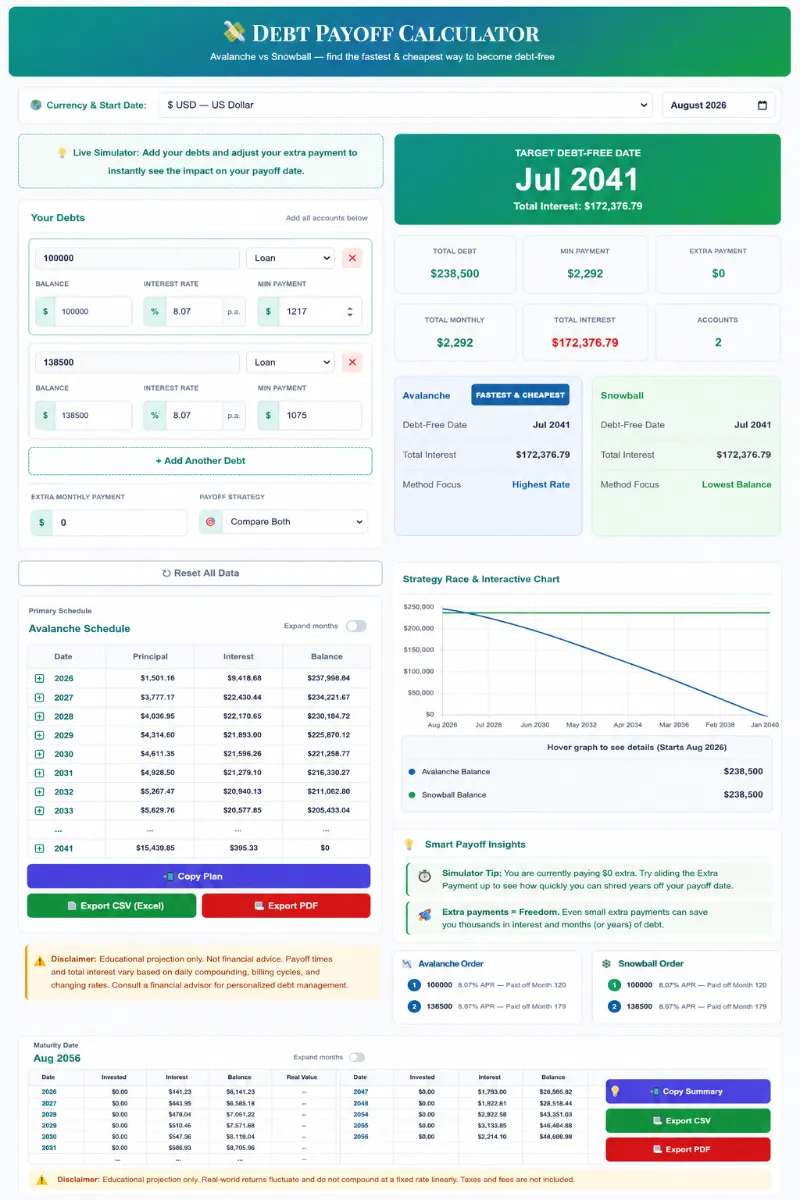
Tiered Standard ties repayment term to balance; RAP ties monthly payment to income and dependents. Use SaveXpert’s Loan Comparison Calculator and Debt Payoff Calculator to compare these under your specific assumptions.
4. If PSLF is part of your long-term plan, verify your payment count and confirm RAP qualifies:
Qualifying RAP payments count toward Public Service Loan Forgiveness. PSLF still exists under the new rules. Confirm your employer qualifies and that your payments are being counted — a plan change can affect qualifying payment status.
5. If you’re married, calculate both the repayment impact and the IRS deduction impact before changing filing status:
Filing separately may lower your RAP payment by excluding your spouse’s AGI — but IRS Publication 970 says married-filing-separately borrowers cannot claim the student-loan-interest deduction. Both effects must be calculated together for your household.
After going through the statute, Education Department implementation material, Federal Student Aid information, and IRS publications: the big beautiful bill student loan changes represent a major restructuring of federal student borrowing and repayment, not the end of student-loan forgiveness. The practical next step is comparing the repayment structures with your actual loan balance and income, then confirming current rules at StudentAid.gov.
“When I went through the Education Department’s final-rule fact sheet, the Federal Student Aid material, and the IRS publications, the most important finding was about timing. The SAVE Plan’s statutory sunset is July 1, 2028. But the Education Department started moving SAVE borrowers toward other legal repayment plans in 2026. Those are two different dates for the same group of borrowers — and the gap between them is where most of the confusion about these changes actually lives.”
— Kevin Brown, Lead Researcher at SaveXpert.com
Frequently Asked Questions
Ans: According to the Education Department’s final-rule fact sheet, the big beautiful bill student loan changes introduce a $257,500 lifetime borrowing limit and restructure repayment into the Repayment Assistance Plan (RAP) and Tiered Standard plan starting July 1, 2026. The legislation also phases out SAVE, PAYE, and ICR by July 1, 2028 with transitions beginning earlier in 2026, adjusts FAFSA asset calculations for certain family-owned businesses starting with the 2027–28 award year, and creates new Workforce Pell eligibility for qualifying short-term programs.
Ans: No — not entirely. Federal Student Aid confirms that RAP provides forgiveness after 30 years (360 monthly payments) for eligible remaining balances. Qualifying RAP payments also count toward Public Service Loan Forgiveness. Public Law 119-21 does not repeal all federal discharge or forgiveness categories — 34 C.F.R. § 685.212 continues to cover statutory loan discharge provisions. What changed is which repayment paths remain available and how borrowers reach forgiveness.
Ans: According to the Education Department’s February 2026 announcement, the 2027–28 FAFSA implements specific asset exclusions for certain family farms, commercial fishing operations, and family-owned businesses with fewer than 100 full-time employees. These changes take effect with the 2027–28 award year — not 2026–27. Families should verify their specific situation at StudentAid.gov when the 2027–28 form opens.
Ans: The Education Department data shows SAVE borrowers face a statutory sunset on July 1, 2028 — but the transition began much earlier. The Education Department’s March 2026 announcement confirmed SAVE borrowers would receive at least 90 days’ notice to select a new legal repayment plan, with the transition process starting in 2026. A SAVE borrower should not treat July 1, 2028 as a guaranteed date for remaining on SAVE.
Ans: According to ED rulemaking materials, married borrowers filing separately exclude their spouse’s AGI from the RAP payment calculation but generally can only claim dependents listed on their own return. The operative language appears in 34 C.F.R. § 685.209. Separately, IRS Publication 970 establishes that married taxpayers filing separately cannot claim the federal student-loan-interest deduction. The repayment impact and the tax impact must both be calculated for a specific household before changing filing status.
Ans: According to the Education Department’s final-rule fact sheet, RAP bases monthly payments on income — ranging from 1% to 10% of the borrower’s income depending on income level. The formula subtracts $50 per dependent per month, with a $10 floor as the minimum monthly payment. When an on-time RAP payment reduces principal by less than $50, the government may contribute up to $50 toward principal. Qualifying on-time RAP payments prevent unpaid interest from accumulating when the payment doesn’t cover all accruing interest. RAP provides forgiveness of any eligible remaining balance after 30 years (360 monthly payments).