ⓘ Educational Disclosure:
This article is for educational and informational purposes only. It does not constitute financial, legal, tax, lending, or investment advice. SaveXpert and its authors are not licensed financial advisors, CPAs, attorneys, or tax advisors. All data comes from publicly available government and institutional sources. Always consult a qualified professional before making investment decisions.
What are the buy now pay later risks the CFPB warns about? The CFPB’s BNPL market research and Federal Reserve data identify three key risks: stacking multiple BNPL obligations that produce overlapping automated debits, missing payments that trigger late fees and bank overdraft charges, and a federal protection gap — BNPL accounts don’t currently carry the same billing-error and dispute rights as credit cards under Regulation Z. The CFPB withdrew the interpretive rule that would have changed that in May 2025. The Federal Reserve found 26% of BNPL users paid late at least once in the prior year, and 11% had a payment trigger an overdraft or NSF fee.
Key Takeaways
- Problem: Holiday shoppers often take out multiple BNPL loans simultaneously without realising how overlapping payment schedules can drain their checking accounts — and without knowing that the CFPB withdrew the rule that would have given BNPL users credit-card-level protections.
- Solution: Map all future payment dates before making any BNPL purchase, verify whether your provider reports to credit bureaus, and compare the protections BNPL provides against what a credit card covers under Regulation Z.
- Result: Federal Reserve data shows 11% of BNPL users had a payment trigger an overdraft or NSF fee — and among late-paying BNPL users, that figure reached 38%. Understanding the full payment schedule before shopping starts reduces that exposure.
- Source: Federal Reserve Consumer & Community Context (August 2026), CFPB BNPL Market Report
- Time To Read: 8 Minutes
Table of Contents
1. The Holiday Problem With Buy Now Pay Later
2. What Buy Now Pay Later Actually Does
3. Does Buy Now Pay Later Affect Your Credit Score?
4. The CFPB Changed the Federal Protection Picture
5. Buy Now Pay Later Risks: What the CFPB Data Shows About Missed Payments
6. BNPL Isn’t Simply “Free” — Here’s What the Data Shows
7. Is Buy Now Pay Later Better Than a Credit Card?
8. What the Research Shows Works (and What Doesn’t)
9. Bottom Line: 5 Steps Before You Split That Holiday Purchase
26% of BNPL users paid late at least once in the prior year. The Federal Reserve also found that 11% had a BNPL payment trigger an overdraft or non-sufficient funds fee. During the holiday season — when most people have more payment obligations than usual — those numbers are worth understanding before a checkout screen shows the first installment and makes everything look affordable.
The Holiday Problem With Buy Now Pay Later
Holiday shopping creates a specific BNPL trap. A purchase can look affordable when the checkout screen shows only the first installment. The remaining payments arrive after the holiday ends — when spending has already happened and there’s less room in the monthly budget to absorb them.
The scale of BNPL adoption during the holiday period is substantial. The Federal Reserve found that 16% of U.S. adults used BNPL in 2025. Experian’s research found that 43% of consumers used or planned to use BNPL for 2025 holiday shopping. And the CFPB’s December 2025 market report counted 53.6 million consumers using BNPL across six major providers in 2023 — with average annual borrowing per user reaching $848.
For someone buying several gifts across multiple retailers, those separate payment schedules can overlap. The CFPB found that BNPL users averaged 6.3 loans per lender in 2023. That’s not one four-payment plan — it’s multiple simultaneous plans, each making automatic withdrawals from the same checking account.
| U.S. adults using BNPL (2025) | 16% | Federal Reserve SHED 2025 |
| Consumers using BNPL for holiday shopping (2025) | 43% | Experian Holiday Survey |
| BNPL consumers across 6 major providers (2023) | 53.6 million | CFPB BNPL Market Report |
| Total BNPL loans originated (2023) | $45.2 billion | CFPB BNPL Market Report |
| Average inflation-adjusted loan size | $135 | CFPB BNPL Market Report |
| Average annual borrowing per user (2023) | $848 | CFPB BNPL Market Report |
| Average loans per lender per user (2023) | 6.3 | CFPB BNPL Market Report |
| Borrowers with multiple simultaneous BNPL transactions | 63% | CFPB BNPL Market Report |
| Borrowers using multiple BNPL providers | 33% | CFPB BNPL Market Report |
Source: Federal Reserve Consumer & Community Context, August 2026 · CFPB BNPL Market Report
What Buy Now Pay Later Actually Does
According to the Federal Reserve, the standard pay-in-four BNPL model splits a retail purchase into four equal payments over six weeks. A $100 purchase means $25 at checkout followed by three $25 payments every two weeks. When the borrower follows the terms exactly, no interest is charged.
The CFPB describes BNPL as a form of credit that divides a retail purchase into smaller installment loans. The loans typically carry no interest when the borrower meets the payment schedule.
The practical issue for holiday shoppers isn’t the structure of one BNPL loan. It’s what happens when several overlap. A shopper might see a $600 total for multiple gifts across different retailers. Each checkout screen may show a much smaller first payment. The research suggests the real problem starts when several future payments land close together — especially when they come from the same checking account automatically.
💡 Research note: The CFPB found that 63% of BNPL borrowers originated multiple simultaneous transactions, and 33% used multiple BNPL providers. That means the majority of BNPL users aren’t managing one four-payment plan — they’re managing several, often without a single consolidated view of the total obligation.
Does Buy Now Pay Later Affect Your Credit Score?
This is one of the biggest points of confusion in the Federal Reserve data — and it matters specifically because the answer changed in 2025.
At the time of the Federal Reserve’s 2025 SHED survey, most BNPL purchases and on-time payments didn’t affect credit histories or credit scores with the three major bureaus. But 53% of BNPL users incorrectly believed on-time payments helped their credit score. Only 14% answered both credit-impact questions correctly.
That awareness gap creates a double problem. Some consumers make BNPL decisions expecting score benefits they won’t receive. Others assume missed BNPL payments are invisible to credit bureaus — which is increasingly wrong.
The provider reporting picture is changing
The research notes that Affirm began reporting all pay-over-time loans to Experian in April 2025 and to TransUnion in May 2025. The credit-reporting treatment now depends on the specific provider and product type.
| Credit Reporting Situation | What the Research Shows |
|---|---|
| General assumption among users | 53% believed on-time payments helped their score — usually incorrect |
| Answered both credit-impact questions correctly | Only 14% of BNPL users (Federal Reserve 2025) |
| Affirm (as of April/May 2025) | Reports all pay-over-time loans to Experian and TransUnion |
| Other providers | Reporting varies — check the provider’s current terms before use |
Source: Federal Reserve Consumer & Community Context · Experian BNPL Research Hub
⚠️ Don’t assume BNPL is invisible to credit bureaus: Checking whether your provider reports — and whether that reporting covers both on-time and late payments — is now a necessary step before taking out a BNPL loan. The answer is no longer uniform across products or providers.
The CFPB Changed the Federal Protection Picture
This is where the CFPB research gets especially important for holiday shoppers — and where the biggest change happened in 2025.
In May 2024, the CFPB issued an interpretive rule that would have treated certain BNPL digital accounts like credit cards under Regulation Z. That would have extended standard credit-card protections to BNPL users — including billing-error resolution rights, dispute protections, and periodic statement requirements.
The CFPB withdrew that rule in May 2025. The agency also announced it would no longer prioritize enforcement actions against BNPL products under Regulation Z.
As a result, BNPL providers aren’t currently classified as “card issuers” under Regulation Z. The federal credit-card protections don’t apply to BNPL accounts in the same way.
| Protection Type | Credit Card (under Regulation Z) | BNPL (post-May 2025) |
|---|---|---|
| Billing-error resolution rights | Yes — federal standard | Not guaranteed under federal law |
| Dispute rights on purchase charges | Yes — federal standard | Depends on provider terms |
| Periodic statement requirements | Yes — required | Not required federally |
| Regulation Z coverage | Yes | No — rule withdrawn May 2025 |
Source: CFPB BNPL Market Report · CFPB May 2025 regulatory update
For a holiday shopper, the practical point is straightforward. Two payment methods can look similar at checkout — one involving a credit card and one involving BNPL — while carrying different federal consumer protections if something goes wrong with the purchase.
Buy Now Pay Later Risks: What the CFPB Data Shows About Missed Payments
The missed-payment data is where the buy now pay later risks the CFPB research tracks become most concrete.
Late fees and their frequency
The CFPB found that 4.1% of BNPL loans were assessed a late fee in 2023, down from 5.2% in 2022. The average late fee on an inflation-adjusted basis was $9.99. The Federal Reserve found that 17% of BNPL users were charged extra because of late payments during the prior year.
The overdraft cascade
The late-fee figure isn’t the biggest risk. Most pay-in-four BNPL payments use automated debits from a checking account. When the account balance falls short at the moment an installment hits — because of rent, a utility bill, or other BNPL payments due in the same week — the result isn’t just a missed BNPL payment. It can trigger a bank overdraft fee on top of the BNPL late fee.
The Federal Reserve reported that 11% of BNPL users had a payment trigger an overdraft or NSF fee. Among users who had already paid late at some point, that figure jumped to 38%.
| BNPL Missed Payment Risk | Figure | Source |
|---|---|---|
| BNPL users who paid late at least once (prior year) | 26% | Federal Reserve 2025 |
| Users charged extra because of late payments | 17% | Federal Reserve 2025 |
| BNPL loans assessed a late fee (2023) | 4.1% (down from 5.2% in 2022) | CFPB BNPL Market Report |
| Average late fee (inflation-adjusted) | $9.99 | CFPB BNPL Market Report |
| BNPL users who had a payment trigger overdraft/NSF fee | 11% | Federal Reserve 2025 |
| Late-paying BNPL users who experienced overdraft/NSF | 38% | Federal Reserve 2025 |
Source: Federal Reserve Consumer & Community Context, August 2026 · CFPB BNPL Market Report
Picture a household with rent, a utility bill, and three BNPL payments due within the same week. The individual installments may look small — $25, $40, $30. The combined automated withdrawals can still produce an overdraft when the timing doesn’t align with the account balance. The research found that late-paying users were nearly four times more likely to incur overdraft fees than BNPL users generally.
Enter your income and top expenses to see where you stand.
BNPL Isn’t Simply “Free” — Here’s What the Data Shows
“No interest” can obscure other costs — and the data shows who bears those costs most often.
The Federal Reserve found that 40% of BNPL users with household income below $25,000 said BNPL was the “only way I could afford it.” Among users earning $100,000 or more, that figure was 15%. That doesn’t mean lower-income users manage BNPL irresponsibly — Experian found that 73% of BNPL users reported making payments on time. But it does show that BNPL serves different purposes across income levels.
When BNPL substitutes for cash the buyer doesn’t have — rather than being used for convenience by a buyer who could pay in full — a missed payment carries more financial weight. The same $9.99 late fee and the potential overdraft charge hit differently depending on the household’s financial cushion.
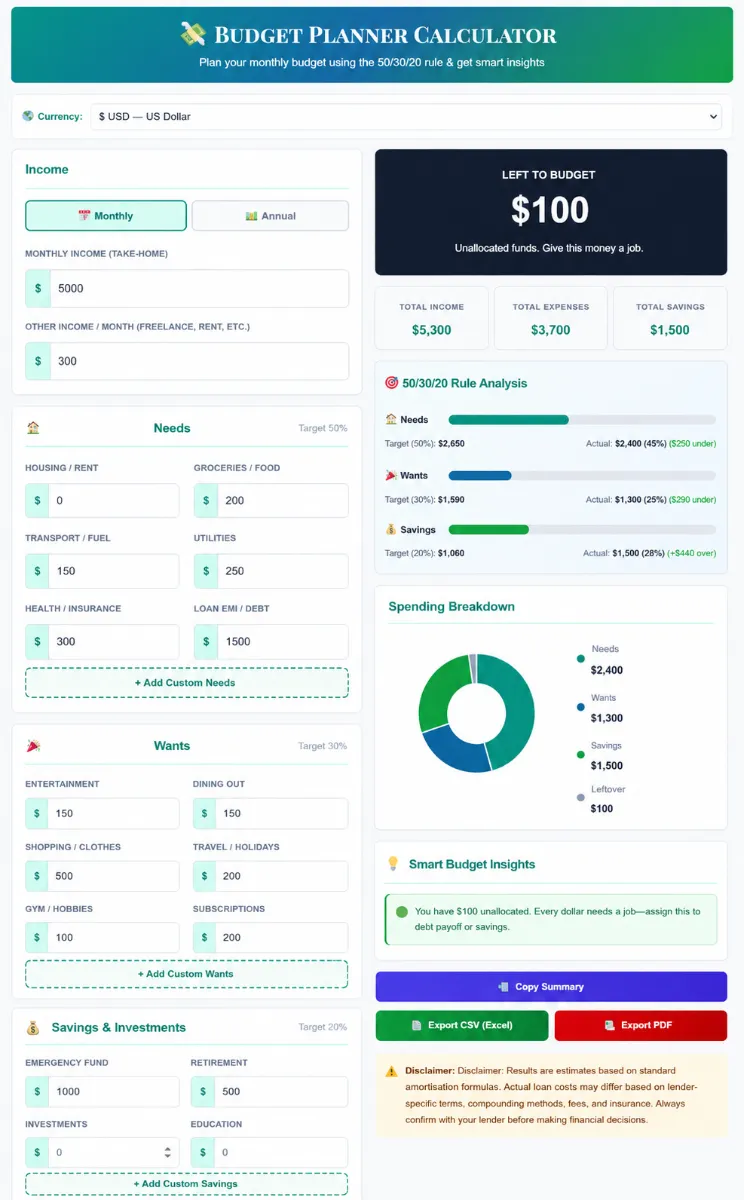
💰 See All Your BNPL Obligations Together: SaveXpert Budget Calculator
I ran a realistic holiday BNPL scenario through the Budget Calculator — several gift purchases split across multiple pay-in-four plans. Here’s what the exercise showed: each individual first payment looked small. Stacked together with upcoming installments, the total automated withdrawals in any given week were significantly larger than any single plan suggested. The calculator makes the full payment schedule visible before shopping starts — not after three BNPL notifications land on the same day.
Educational note: This calculator models spending scenarios for informational purposes only and does not provide personalized financial advice. Source: CFPB BNPL Market Report
Is Buy Now Pay Later Better Than a Credit Card?
The research doesn’t support one universal answer — and the comparison involves more than interest rates.
BNPL can offer a fixed installment structure and avoids interest when the terms are met. The Federal Reserve found that 87% of BNPL users cited spreading out payments as a reason for using the product, and 82% cited convenience. Those are real functional advantages for shoppers who want predictable payment timing without the risk of a revolving credit card balance at 22% APR.
But the protection comparison matters in ways that don’t show up in the interest rate.
| Feature | Credit Card (Regulation Z) | BNPL (post-May 2025) |
|---|---|---|
| Interest rate | 21–22% average APR if balance revolves | 0% when terms met; late fees apply otherwise |
| Fixed payment schedule | Minimum payment required; balance can revolve | Yes — fixed installments |
| Billing-error dispute rights | Federal standard under Regulation Z | Depends on provider — not federally guaranteed |
| Periodic statement requirement | Required by federal law | Not required federally |
| Credit bureau reporting | Yes — all major bureaus | Varies by provider |
| Overdraft risk (checking account) | No — payment from card, not direct debit | Yes — most use automated checking-account debits |
Source: CFPB BNPL Market Report · Federal Reserve G.19
A holiday shopper who pays credit card balances in full each month gets the protections without the interest cost. A shopper who tends to carry balances faces credit card interest rates above 22%. BNPL’s fixed structure and zero-interest terms can be genuinely useful in that context — as long as the payment schedule doesn’t create an overdraft problem.
What the Research Shows Works (and What Doesn’t)
What the data consistently supports
Understanding the full payment obligation before committing.
The CFPB data showing 63% of borrowers have multiple simultaneous BNPL transactions — and 33% use multiple providers — points to a visibility problem more than a spending problem. Mapping all future installment dates across all active BNPL loans before adding another one gives the consumer the same view a single credit card statement would.
Verifying whether your BNPL provider reports to credit bureaus.
The Federal Reserve found only 14% of BNPL users answered both credit-impact questions correctly. Assuming no reporting means missing the fact that some providers now do report. Checking the terms takes less than a minute and prevents decisions based on an incorrect assumption.
Keeping BNPL transactions limited during high-obligation weeks.
The overdraft data is most striking among late-paying users (38% experienced an overdraft or NSF fee). The risk concentrates when multiple BNPL auto-debits land in the same week as rent, utilities, or other fixed costs. Spacing purchases and payment dates where possible reduces that concentration.
Knowing what protections BNPL doesn’t carry.
The CFPB’s withdrawal of the May 2024 interpretive rule means BNPL accounts currently don’t receive the same billing-error and dispute rights credit cards do under Regulation Z. A shopper who experiences a problem with a BNPL-financed purchase has different options than a shopper who used a credit card.
What the data says doesn’t work
Loan stacking — using multiple BNPL loans simultaneously without tracking the schedule.
The research explicitly identifies this pattern as a risk. Sixty-three percent of borrowers originated multiple simultaneous transactions. The problem isn’t that any one loan is too large — it’s that several small automated debits converging on the same account can create an overdraft the consumer didn’t see coming.
Assuming on-time BNPL payments help credit scores.
Fifty-three percent of users made this assumption. For most BNPL products, it was wrong at the time of the survey. The picture is changing by provider — but assuming the benefit without checking the provider’s specific reporting policy leads to decisions based on a false premise.
Treating BNPL as equivalent to a credit card for dispute purposes.
If something goes wrong with a BNPL purchase — a product that doesn’t arrive, a merchant dispute, an unauthorised charge — the consumer’s options are different from what they’d be with a credit card. The Regulation Z protections that govern credit card disputes don’t currently extend to BNPL accounts under the post-2025 regulatory framework.
Bottom Line: 5 Steps Before You Split That Holiday Purchase
1. Map all future payment dates before adding another BNPL loan:
Write down when every active installment hits your checking account. If you already have two or three BNPL plans running, see what week they all land together. The Budget Calculator makes this visible before you commit to another split — not after the notifications arrive.
2. Check whether your BNPL provider reports to credit bureaus:
The Federal Reserve found only 14% of BNPL users correctly understood BNPL’s credit-reporting impact. Some providers now do report — Affirm began reporting to Experian and TransUnion in 2025. A missed payment on a reporting provider goes on your credit file the same as any other missed payment.
3. Understand the protections BNPL doesn’t carry:
The CFPB withdrew the rule that would have extended credit-card-level Regulation Z protections to BNPL in May 2025. Billing-error resolution and dispute rights that apply to credit cards don’t currently apply to BNPL. If a purchase goes wrong, your options differ depending on how you paid.
4. Limit simultaneous BNPL loans to what you can track and cover in the same week:
The 11% overdraft rate among all BNPL users and the 38% among late-paying users isn’t random. It concentrates when multiple auto-debits land together. If three installments hit in one week alongside rent and a utility bill, the account needs enough cushion to cover all of them — not just the biggest one.
5. If you have any doubt about covering an installment, treat it like a bill — not an afterthought:
BNPL auto-debits process the same day whether or not the account is ready. A payment that fails doesn’t automatically reschedule — it often triggers a late fee from the BNPL provider and potentially an overdraft fee from the bank simultaneously. Schedule a calendar reminder for every installment date before the purchase clears.
“What I found when I went through the Federal Reserve’s 2025 data and the CFPB’s BNPL market report is that the most underappreciated risk isn’t the late fee. It’s the overdraft cascade. Eleven percent of BNPL users had a payment trigger an overdraft or NSF fee. Among late payers specifically, that figure was 38%. When you stack several automated debits on the same checking account — which 63% of BNPL borrowers do — a single mistimed payment can set off a chain of bank charges that costs more than the original installment.”
— Kevin Brown, Lead Researcher at SaveXpert.com
Frequently Asked Questions
Ans: According to the Federal Reserve, the standard BNPL pay-in-four model is an installment loan that splits a retail purchase into four equal payments over six weeks. A shopper typically pays 25% at checkout, followed by three additional payments every two weeks. When the borrower follows the terms exactly, no interest is charged. The CFPB’s market report counted 53.6 million consumers using BNPL across six major providers in 2023, with an inflation-adjusted average loan size of $135.
Ans: It depends on the provider and product. At the time of the Federal Reserve’s 2025 survey, most BNPL purchases didn’t affect credit histories with the three major bureaus. But 53% of users incorrectly believed on-time payments improved their score, and only 14% answered both credit-impact questions correctly. That picture is changing: Affirm began reporting all pay-over-time loans to Experian in April 2025 and to TransUnion in May 2025. Check the specific provider’s current reporting policy before making any assumption in either direction.
Ans: The Federal Reserve and CFPB data identify three overlapping risks. First, payment stacking: 63% of BNPL borrowers originate multiple simultaneous transactions, and the overlapping automated debits can drain a checking account before the consumer notices. Second, overdraft exposure: 11% of BNPL users had a payment trigger an overdraft or NSF fee, and among late payers that rate was 38%. Third, a federal protection gap: the CFPB withdrew the rule that would have given BNPL accounts the same billing-error and dispute rights as credit cards under Regulation Z.
Ans: The CFPB’s BNPL market report documented the scale of the product — $45.2 billion in loans across six major providers in 2023 — and the risks within it, including late fees (4.1% of loans), payment stacking, and the consumer confusion around credit reporting. On the regulatory side, the CFPB issued an interpretive rule in May 2024 that would have treated BNPL accounts like credit cards under Regulation Z, then withdrew that rule in May 2025. As a result, BNPL accounts don’t currently carry the same federal consumer protections as credit cards.
Ans: The CFPB data shows that missing a BNPL payment typically results in an immediate late fee, which averaged $9.99 on an inflation-adjusted basis in 2023. Beyond the lender fee, the Federal Reserve found that 26% of users paid late at least once in the prior year, and 17% were charged extra because of it. Because most BNPL payments use automated checking-account debits, a failed payment can also trigger a bank overdraft or NSF fee — the Federal Reserve found that among users who had already paid late, 38% experienced exactly that outcome.
Ans: In May 2024, the CFPB issued an interpretive rule that would have treated certain BNPL digital accounts like credit cards under Regulation Z, extending standard billing-error resolution, dispute rights, and periodic statement protections to BNPL users. The CFPB withdrew that rule in May 2025 and announced it would no longer prioritize enforcement actions against BNPL products under Regulation Z. As a result, BNPL accounts currently don’t carry the same federal consumer protections as traditional credit cards — protections around billing errors and purchase disputes depend on individual provider terms rather than federal law.