
ⓘ Educational Disclosure:
This article is for educational and informational purposes only. It does not constitute financial, legal, tax, lending, or investment advice. SaveXpert and its authors are not licensed financial advisors, CPAs, attorneys, or tax advisors. All data comes from publicly available government and institutional sources. Always consult a qualified professional before making investment decisions.
How do you avoid holiday debt in 2026? According to Federal Reserve and CFPB 2025 Credit CARD Act Report data, the most effective approach combines two steps: set a firm spending limit before any purchase is made, and pay credit card statement balances in full rather than making minimum payments. Average credit card APRs reached 21.22% across all accounts and 22.32% for accounts assessed interest in 2025. Carrying a holiday balance at those rates adds significant cost well into the new year. The CFPB recorded $160 billion in interest charges assessed to consumers in 2024 — up from $105 billion in 2022.
Key Takeaways
- Problem: Americans enter the 2026 holiday season with credit card debt already at $1.28 trillion and average APRs above 21% — conditions where seasonal spending can turn into post-holiday revolving debt that lingers for months.
- Solution: Federal Reserve and CFPB data consistently point to two approaches: setting a strict spending limit before shopping starts and paying credit card statement balances in full rather than making minimum payments.
- Result: Paying statement balances in full eliminates interest charges entirely. Minimum payments at 22.32% APR can extend a $1,000 holiday balance well beyond the next calendar year.
- Source: CFPB 2025 Credit CARD Act Report, Federal Reserve G.19 Consumer Credit Data
- Time To Read: 7 Minutes
Table of Contents
1. Why Holiday Debt Becomes a January Problem
2. How Much Holiday Debt Do Americans Carry Into January?
3. How to Create a Holiday Budget That Actually Works
4. Credit Card or Cash: Which One Creates Less Holiday Debt?
5. What Is a Realistic Amount to Spend on Holiday Gifts?
6. How Long Does It Take to Pay Off Holiday Debt?
7. BNPL: A Newer Risk the Research Flags
8. What the CFPB Data Shows Works (and What Doesn’t)
$1.28 trillion. That was the total credit card balance sitting on American households entering the 2025 holiday season, according to the Federal Reserve Bank of New York. The balance had risen $44 billion in a single quarter. Against that backdrop, the question of how to avoid holiday debt in 2026 isn’t hypothetical — it’s a question about navigating real interest rates on real balances that already exist.
Why Holiday Debt Becomes a January Problem
The mechanics are straightforward. Holiday spending concentrates in a short window — mostly November and December. Credit card balances spike. Then January arrives, the spending stops, and the balance sits there collecting interest at a rate the Federal Reserve’s 2025 G.19 data puts at 22.32% on average for accounts that are actually assessed interest.
The CFPB’s 2025 Credit CARD Act Report found that credit card debt exceeded $1.2 trillion at the end of 2024. About 15% of general-purpose cardholders made only minimum payments — the highest share recorded since at least 2015. Meanwhile, revolving credit grew at a 4.9% annual rate in October 2025.
Here’s what makes this specific to holiday spending. The problem isn’t buying gifts. The problem is when holiday purchases become revolving balances that don’t get paid off. A $1,000 gift purchase paid in full in January costs $1,000. The same purchase carried month-to-month at 22.32% costs significantly more before it’s retired.
| Key Data Point | Figure | Source |
|---|---|---|
| U.S. credit card balances (Q4 2025) | $1.28 trillion | NY Fed Household Debt Report |
| Q4 2025 quarterly balance increase | +$44 billion | Federal Reserve Bank of New York |
| Total credit card debt (end of 2024) | >$1.2 trillion | CFPB 2025 CARD Act Report |
| Cardholders making minimum payments only (2024) | 15% — highest since 2015 | CFPB 2025 CARD Act Report |
| Average APR — all accounts (2025) | 21.22% | Federal Reserve G.19 |
| Average APR — accounts assessed interest (2025) | 22.32% | Federal Reserve G.19 |
| Total interest charged to consumers (2024) | $160 billion | CFPB 2025 CARD Act Report |
| Total interest charged to consumers (2022) | $105 billion | CFPB 2025 CARD Act Report |
Source: Federal Reserve G.19 · CFPB 2025 Credit CARD Act Report · NY Fed Household Debt

How Much Holiday Debt Do Americans Carry Into January?
I spent time going through the Federal Reserve, CFPB, and holiday-spending research looking for a single national average. One important limit stands out: no official source publishes a single national average holiday debt figure carried into January.
But the data gives a clear picture through several pieces that fit together.
NerdWallet’s 2025 Holiday Spending Report found that 31% of 2024 holiday shoppers who used credit cards still hadn’t paid off their balances by fall 2025 — roughly nine months later. That’s a meaningful share carrying seasonal debt well beyond the next quarter.
The NY Fed provides the aggregate movement: credit card balances fell $25 billion between Q4 2025 and Q1 2026, dropping from $1.28 trillion to $1.25 trillion. That post-holiday payoff pattern shows many consumers do clear holiday balances relatively quickly.
So the picture isn’t uniform. Many Americans pay off holiday spending in Q1. A substantial minority — the 31% in NerdWallet’s data — carries those balances for months. The difference between those two groups largely comes down to payment behavior, not purchase amount.
Enter your income and top expenses to see where you stand.
How to Create a Holiday Budget That Actually Works
This is where the research gets specific — and where the gap between intentions and behavior is most visible.
NerdWallet found that only 28% of 2025 holiday shoppers reported having a strict budget for gift spending. Yet PwC reported that 80% of consumers planned to adopt some kind of budgeting strategy during the holiday season. That’s a 52-percentage-point gap between general intention and a specific limit.
The research consistently shows the distinction matters. A broad intention to “spend less” doesn’t create the same boundary as a specific dollar ceiling. The data supports setting the number before shopping starts — not calculating the total after the season ends.
What an actual holiday budget looks like
AICPA survey guidance focuses on two actions before shopping begins: decide who receives gifts and how much each person gets, then track spending as purchases happen.
Consider a household with $900 available for holiday costs. That amount covers gifts, food, travel, decorations, and shipping. Allocating across those categories before shopping starts means each purchase reduces the remaining balance in real time. Buying first and adding it up later doesn’t produce the same outcome.
NerdWallet also found that 31% of holiday shoppers planned purchases in advance specifically to monitor sales. Advance planning lets shoppers watch prices and reduce impulse purchases — both patterns that show up repeatedly in the holiday-debt research.
💡 Research note: NerdWallet found that 63% of Americans said they’d like less gift-focused holiday traditions — but only 20% had actually discussed limiting gift spending with family. Gift expectations can affect holiday spending as much as individual shopping choices. A conversation before the season has more impact than a budget that only one person in the household knows about.
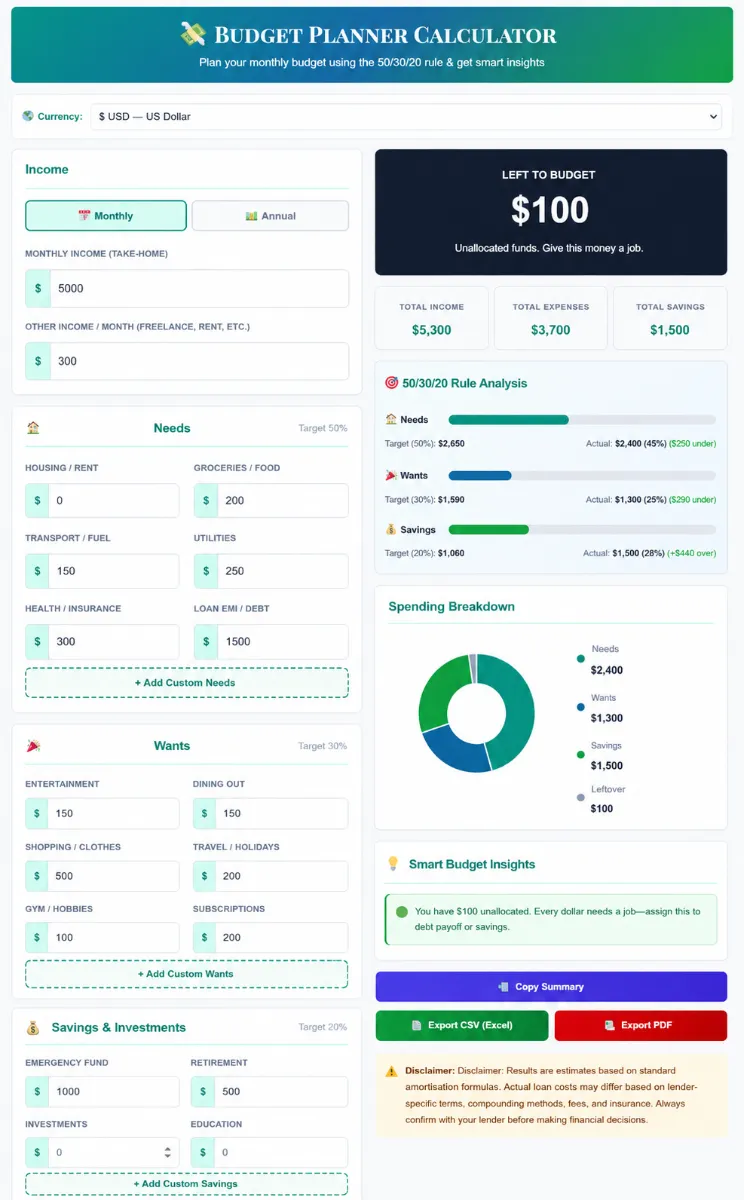
💰 Test Your Holiday Budget Before You Shop: SaveXpert Budget Calculator
I ran a realistic holiday-spending scenario through the Budget Calculator — allocating a fixed total across gifts, food, travel, and other seasonal costs. The exercise showed what most people miss: setting the ceiling first makes each purchase reduce a visible remaining number, rather than leaving the total unknown until the credit card bill arrives. Put your own holiday total in and divide it across categories before the first purchase lands.
Educational note: This calculator models budget scenarios for informational purposes only and does not provide personalized financial advice. Source: CFPB Consumer Credit Trends
Credit Card or Cash: Which One Creates Less Holiday Debt?
The research doesn’t support a simple “credit cards bad, cash good” conclusion. But it does give a clear answer about what separates a useful credit card from one that creates post-holiday debt.
NerdWallet found that 74% of 2025 holiday shoppers planned to use credit cards. Using a card isn’t automatically the problem — the problem is what happens after the purchase. Two shoppers can each charge $500 in gifts. The one who pays the full statement balance in January pays $500. The one who makes minimum payments pays $500 plus months of interest at 22.32%.
| Payment Approach | $1,000 Holiday Balance at 22.32% APR | Outcome |
|---|---|---|
| Pay full statement balance in January | $0 in interest | Holiday spending costs exactly what was purchased |
| Fixed $100/month payment | ~$104 in interest · pays off ~11 months | Resolved by November — modest interest cost |
| Minimum payment only (~2% of balance) | $1,100+ in interest · 78+ months to pay off | Still paying in 2032 for 2026 holiday gifts |
Source: Federal Reserve G.19 (22.32% average APR) · CFPB 2025 CARD Act Report
Cash provides a hard boundary — you literally can’t spend what you don’t have. But the research doesn’t suggest cash is inherently better if the alternative is a credit card where the full balance gets paid every month. The key variable is the payment behavior, not the payment method.
⚠️ The minimum payment trap: A $1,000 balance paid at only minimum payments (typically 2% of the balance or $25, whichever is greater) at 22.32% APR takes more than six years to pay off and costs more than $1,100 in interest alone — more than the original purchase amount. The CFPB’s finding that 15% of cardholders made only minimum payments in 2024 shows this isn’t a rare scenario.

What Is a Realistic Amount to Spend on Holiday Gifts?
The research doesn’t produce a single “safe” dollar amount — and that’s an honest limitation worth naming. Income, household size, existing debt, and other financial obligations vary too much for one number to work universally.
What the data does show is where American spending actually lands and how it’s shifting.
| Metric | Figure | Source |
|---|---|---|
| Average holiday gift spending per shopper (2025) | $1,107 | NerdWallet 2025 Holiday Spending Report |
| Shoppers who said costs stressed them out | 56% | NerdWallet 2025 Holiday Spending Report |
| Adults expecting food & drink spending below $300 | 65% | YouGov 2025 Holiday Spending Survey |
| Average holiday budget (2025, per JLL) | $1,133 — down from $1,261 | JLL Consumer Survey (–10.2% YoY) |
| Planned holiday spending change (Deloitte) | –10% year over year | Deloitte 2025 Holiday Retail Survey |
Source: NerdWallet 2025 Holiday Spending Report · YouGov 2025 · JLL Consumer Survey · Deloitte 2025 Holiday Retail Survey
The pattern across 2025 research shows many Americans responding to holiday costs by pulling back. JLL found a 10.2% decline in average holiday budgets. Deloitte found a 10% year-over-year drop in planned spending. That suggests consumers are already recalibrating expectations — and the data supports that instinct when it prevents revolving debt at 22% APR.
The research gives a practical definition of “safe”: an amount that doesn’t require minimum payments or revolving credit card debt to sustain. That number is specific to each household’s actual income and existing obligations — not to any national average figure.
Find out exactly how long it takes to become debt-free.
How Long Does It Take to Pay Off Holiday Debt?
The honest answer is: it depends entirely on payment behavior.
The NY Fed data shows the aggregate pattern: credit card balances fell $25 billion between Q4 2025 and Q1 2026, from $1.28 trillion to $1.25 trillion. That tells us many consumers paid down balances in the months after the holiday season. For some households, holiday debt resolves within the next quarter.
But NerdWallet’s data gives the other side. 31% of 2024 holiday shoppers who used credit cards still carried those balances by fall 2025 — nearly a full year later. That group didn’t have a payoff problem based on purchase amount. They had a payoff problem based on payment behavior.
The CFPB’s minimum-payment data reinforces why. When consumers make only minimum payments, payoff timelines extend dramatically, and total interest costs climb. On a $1,000 balance at the average 22.32% APR, minimum-payment-only repayment can stretch past six years and cost more than $1,100 in interest. The purchase amount was $1,000. The total cost was more than $2,100.
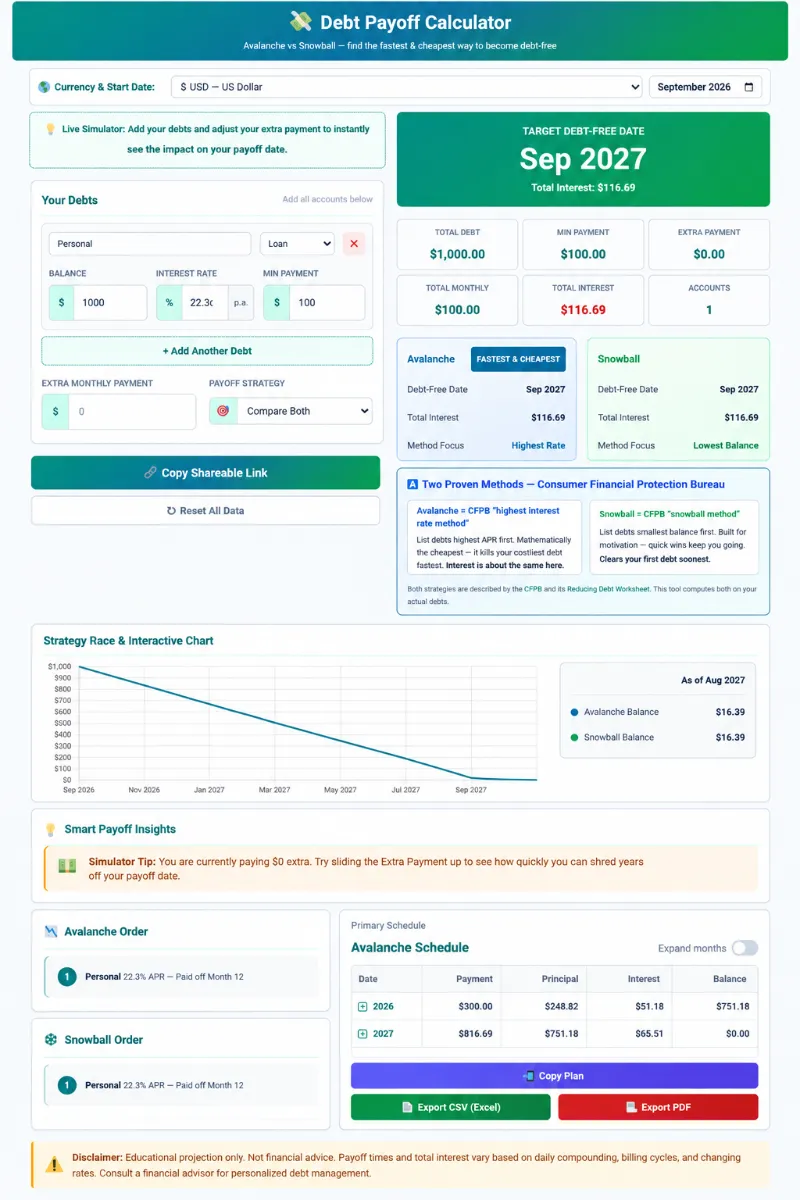
💳 See the Full Payoff Cost: SaveXpert Debt Payoff Calculator
I ran a $1,000 holiday balance through the Debt Payoff Calculator at the 22.32% average APR from the Federal Reserve data. The minimum-payment scenario stretched the payoff timeline beyond 6 years and produced more than $1,100 in interest — more than the original purchase. A fixed $100 monthly payment cut that to about 11 months and roughly $104 in interest. Put your own holiday balance estimate in and see exactly what payment size gets it resolved before next holiday season.
Educational note: This calculator models debt repayment scenarios for informational purposes only and does not provide personalized financial advice. Source: Federal Reserve G.19 Consumer Credit
BNPL: A Newer Risk the Research Flags
Buy Now, Pay Later products have become a regular part of holiday shopping — and the research is now tracking specific risks that weren’t prominent two or three years ago.
NerdWallet found that 18% of 2025 holiday shoppers used BNPL for gifts. That’s a meaningful share — and one that grew with the broader adoption of BNPL services across major retailers. In isolation, a single BNPL loan with scheduled installments isn’t inherently problematic when the payments are manageable and made on time.
The risk the research specifically flags is what it calls “loan stacking” — taking out multiple BNPL loans simultaneously from different retailers during the same holiday season. Multiple installment obligations competing for the same monthly income create a tracking challenge and increase the risk of a missed payment on one or more of them.
The credit score dimension also changed in 2025. FICO began incorporating BNPL data into credit scoring models in fall 2025. A late or missed BNPL payment now has potential credit score consequences that didn’t exist when BNPL was newer. Stacking multiple BNPL loans and missing a payment on any one of them can affect the score in ways that affect borrowing access and rates well after the holiday season.
⚠️ BNPL loan stacking: Using BNPL at three or four retailers in the same holiday season means managing three or four separate payment schedules simultaneously, each with its own due date and amount. One missed installment on any of them now has FICO implications it didn’t a year ago. The research flags this pattern specifically as a holiday-season credit risk.
What the CFPB Data Shows Works (and What Doesn’t)
What the research consistently supports
Setting a strict spending limit before any purchase is made.
The gap between the 28% who had a strict gift budget and the 80% who planned to use “some budgeting strategy” is the clearest finding in the holiday-spending research. A specific number — not a general intention — produces the boundary that prevents overspending from becoming post-holiday revolving debt.
Paying the full statement balance every billing cycle during the holiday season.
The Federal Reserve’s average APR data (22.32% for accounts assessed interest) makes the math on carrying a balance unambiguous. Paying in full eliminates interest entirely. Minimum payments at that rate turn a one-season purchase into a multi-year debt situation.
Tracking spending in real time as purchases happen.
AICPA research found that seeing the amount already spent and the remaining balance can help consumers stay within predetermined budgets. The budget that only gets reviewed at month-end doesn’t produce the same behavioral effect as one that’s visible with each purchase.
Planning purchases in advance to monitor prices.
NerdWallet found 31% of holiday shoppers planned purchases ahead specifically to watch sales. Advance planning reduces impulse purchases and gives shoppers information about whether a “deal” is actually below the expected price.
What the data says doesn’t work
Broad budgeting intentions without a specific dollar ceiling.
The 80%/28% gap in the NerdWallet and PwC data shows that intending to budget is meaningfully different from having a strict limit. General intentions don’t create the same boundary as a number written down before shopping starts.
Making only minimum credit card payments on holiday balances.
The 15% of cardholders who made only minimum payments in 2024 — the highest share since 2015 — represent the population most exposed to prolonged post-holiday debt. The CFPB’s $160 billion in total interest charges for 2024 shows the aggregate cost of that behavior.
Stacking multiple BNPL loans across holiday purchases.
The research specifically identifies this as a risk that combines a payment-management problem (multiple schedules, multiple due dates) with a credit score consequence that now has FICO implications under the 2025 integration.

Bottom Line: 5 Steps to Avoid Holiday Debt in 2026
1. Set the number before you shop — not after:
Only 28% of 2025 holiday shoppers reported having a strict gift budget. That gap between intention and a specific ceiling is where holiday debt starts. Write the total down before the first purchase. Divide it across gifts, food, travel, decorations, and shipping. Put it in the Budget Calculator so the ceiling is visible while shopping — not discovered in January.
2. Pay the full statement balance — not the minimum — every cycle:
The Federal Reserve’s 22.32% average APR on accounts assessed interest turns minimum payments into a years-long problem. The Debt Payoff Calculator shows exactly what your planned balance costs at different monthly payment amounts. The goal isn’t avoiding credit cards — it’s avoiding revolving balances at rates that more than double the cost of anything purchased.
3. Track as you go — not as a retrospective exercise:
AICPA research shows that seeing the remaining budget after each purchase creates a different behavioral effect than reviewing a total at month-end. The budget isn’t working if you only look at it when the damage is done. Subtract each purchase from the total as it happens.
4. Have the gift-expectation conversation with family before shopping starts:
NerdWallet found 63% of Americans want less gift-focused holidays, but only 20% had discussed limiting gift spending with family. A conversation before anyone shops is more effective than trying to reduce spending after expectations have been set. One discussion can shift the entire household’s holiday spending pattern.
5. Limit BNPL to one loan at a time — and track it like a credit card payment:
FICO now incorporates BNPL data into credit scores. Using BNPL at multiple retailers in the same season creates several payment obligations with different due dates, and a missed payment on any one of them now has credit score consequences. If BNPL is part of the holiday plan, treat each installment as a scheduled payment the same way you’d treat a credit card minimum — knowing exactly when it’s due and from where.
“What I found when I went through the CFPB’s 2025 Credit CARD Act Report is that the minimum-payment figure is the most striking number in the whole dataset. Fifteen percent of general-purpose cardholders made only minimum payments in 2024 — the highest share since at least 2015. At a 22.32% average APR, that’s not just a holiday problem. That’s how seasonal spending becomes a multi-year debt situation.”
— Kevin Brown, Lead Researcher at SaveXpert.com
Frequently Asked Questions
Ans: No single official source publishes a national average holiday debt figure for January. The Federal Reserve Bank of New York data shows credit card balances fell $25 billion between Q4 2025 and Q1 2026, suggesting many consumers paid off seasonal balances relatively quickly. The NerdWallet 2025 Holiday Spending Report gives a different view: 31% of 2024 holiday shoppers who used credit cards still carried those balances by fall 2025 — nearly nine months later. The difference between those two groups largely comes down to payment behavior.
Ans: According to AICPA and NerdWallet research, the most effective approach sets a strict total before shopping starts — then tracks spending against that ceiling with each purchase. The research shows only 28% of 2025 holiday shoppers had a strict gift budget, even though 80% intended to use some budgeting strategy. Closing that gap between intention and a specific dollar limit is the mechanism that keeps holiday spending from becoming post-holiday revolving credit card debt at the Federal Reserve’s reported 22.32% average APR.
Ans: The research doesn’t support a universal recommendation that one is always better. NerdWallet found 74% of 2025 holiday shoppers planned to use credit cards — and using a card isn’t inherently problematic when the full statement balance is paid on time. Cash provides a hard spending boundary. A credit card paid in full each billing cycle produces $0 in interest charges and the same effective cost as cash. The key variable is payment behavior: paying in full versus making minimum payments at 22.32% APR produces completely different financial outcomes on the same purchase amount.
Ans: The research doesn’t define one universal “safe” amount — income, existing debt, and obligations vary too much. NerdWallet reported average 2025 holiday gift spending of $1,107 per shopper, but 56% said those costs stressed them out. JLL found average holiday budgets fell 10.2% year over year. Deloitte found a 10% planned spending decline. The data supports a practical working definition: a safe budget is one that doesn’t require minimum payments or revolving credit card debt to sustain — whatever that specific number is for each household.
Ans: The CFPB’s 2025 Credit CARD Act Report shows that carrying unpaid balances is the primary driver of post-holiday financial strain — $160 billion in interest charges were assessed to consumers in 2024, up from $105 billion in 2022. Fifteen percent of cardholders made only minimum payments in 2024, the highest share since at least 2015. The CFPB’s data points toward paying statement balances in full and avoiding simultaneously stacking multiple BNPL loans as the two most direct ways to prevent holiday spending from becoming long-term revolving debt.
Ans: BNPL “loan stacking” is using multiple Buy Now, Pay Later loans from different retailers at the same time — for example, financing purchases at three separate retailers with three separate BNPL arrangements during the same holiday season. Each creates its own installment schedule with its own due date. NerdWallet found 18% of 2025 holiday shoppers used BNPL for gifts. The risk increased in fall 2025 when FICO began incorporating BNPL data into credit scoring. A missed payment on any one stacked BNPL loan now has credit score consequences, and managing several simultaneous payment schedules increases the likelihood of a missed due date.