
Finance is Complex.
We Make it Simple.
Welcome to SaveXpert — your trusted personal finance guide for research-backed money strategies, budgeting tools, and debt payoff solutions.
✓ All our content is verified from official US sources, including the IRS, CFPB, and Federal Reserve.
Free Financial Calculators
Master your money with instant charts and clear steps. No signup required.

Track your monthly income and expenses. Easily organize your spending using the 50/30/20 rule to meet your financial goals.

Estimate your monthly home loan payments, interest costs, and total property payoff timeline in seconds.

Estimate your credit score range based on key financial habits and learn simple steps to boost your rating.

Calculate the exact safety net you need to cover unexpected life expenses and safeguard your financial security.

Calculate how much you need to save today to build a secure nest egg and retire comfortably on your terms.
LATEST PERSONAL FINANCE GUIDES & RESEARCH

Retirement Planning, Social Security Benefits
Social Security COLA 2027 Estimate: What the Latest SSA and CPI-W Data Shows
As of August 2026, the Social Security COLA 2027 estimate stands at ~3.1% from July CPI-W data, while the SSA Trustees projection is 2.7%. Outside forecasts reach 3.5%–3.6%. None is final — the official announcement comes in October 2026. Here’s what the data actually shows.

Health Insurance Basics, Insurance
When Does Health Insurance Open Enrollment Start 2026? ACA Dates, Deadlines & What Happens If You Miss It
Federal ACA Marketplace open enrollment for 2026 coverage ran from November 1, 2025, to January 15, 2026. Medicare follows a completely different calendar. Here’s what the CMS and HealthCare.gov data shows about deadlines, Special Enrollment Periods, and the 2027 enrollment window opening November 1, 2026.

Student & Education Finance, Student Loans & Repayment Plans
Big Beautiful Bill Student Loan Changes: What the Official Data Shows Borrowers Need to Know
The One Big Beautiful Bill Act (Public Law 119-21) introduces new federal borrowing caps for graduate and professional students, eliminates Grad PLUS for new borrowers, and replaces older repayment plans with the Repayment Assistance Plan. Here’s what the official data shows borrowers need to know.

FAFSA & Financial Aid, Student & Education Finance
Is FAFSA Going Away in 2026? What the Department of Education Data Actually Shows
The 2026–27 FAFSA is fully available and actively processing millions of applications. Federal Student Aid is already planning the 2027–28 cycle. Here’s what the official Department of Education data shows — and what’s actually changing in 2026.

Insurance, Life Insurance Guide
Term vs. Whole Life Insurance Difference: 2026 Guide
Stop overpaying for complicated insurance contracts. Learn the exact differences between term and whole life insurance, compare current 2026 premium costs, and discover why investing the difference builds better long-term wealth.

Common Retirement Mistakes, Retirement Planning
Can You Take All Your RMD From One Account? What the IRS Rules Actually Show
You don’t always have to take an RMD from every retirement account you own. IRS rules let owners combine RMDs from traditional, SEP, and SIMPLE IRAs and withdraw the total from one IRA. But the account type changes everything — here’s what the research actually shows.

Retirement Planning, Social Security Benefits
How Much Can You Earn While Drawing Social Security at 62? What the SSA Data Shows for 2026
You can earn $24,480 in 2026 while collecting Social Security before full retirement age without triggering the earnings test. Learn exactly how the $1-for-$2 withholding formula works, what income counts, and what happens to withheld benefits at full retirement age.

First Time Home Buying Guide, Home & Real Estate
First-Time Home Buyer Guide 2026: Grants, Down Payments & Closing Costs
Learn how to purchase your first home in 2026 using low-down-payment mortgages, state grants, and structured closing-cost strategies. This full breakdown details credit requirements, loan programs, and real-world cash-to-close math.
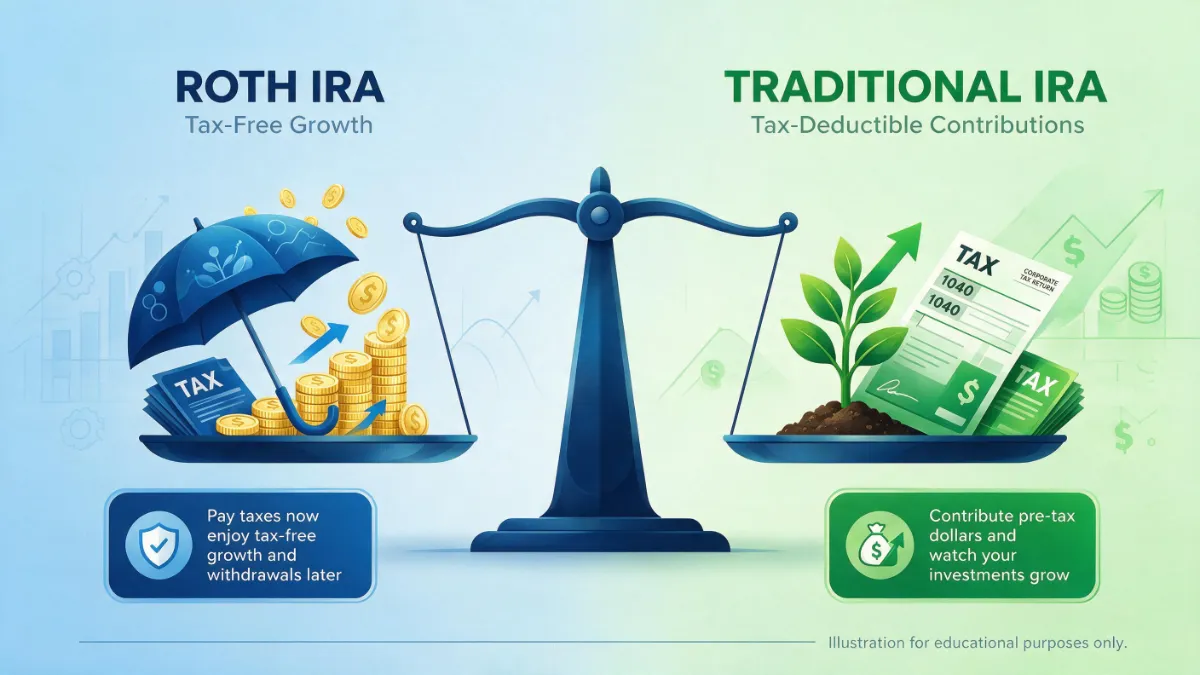
Retirement Planning, Roth IRA vs Traditional IRA
Roth IRA vs. Traditional IRA in 2026: Contribution Limits, Tax Rules & Which Is Better
Choosing between a Roth IRA and a Traditional IRA dictates when you pay taxes on your retirement wealth. Explore the official 2026 IRS contribution limits, income phase-outs, and withdrawal rules to pick the right tax structure for your financial future.

Index Funds vs. ETFs Explained: 2026 Investing Guide
Confused by the difference between an index fund and an ETF? Discover exactly how pricing, taxes, and automatic investing impact your portfolio so you can confidently choose the right vehicle for your financial goals.
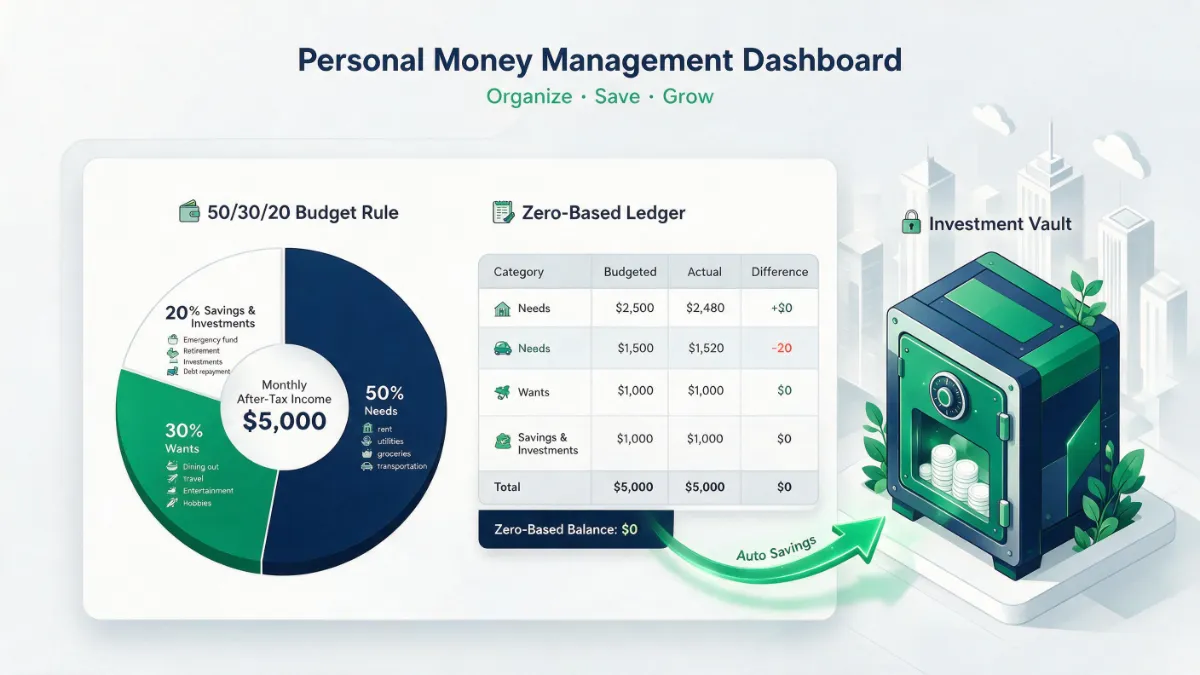
Best Budgeting Methods, Budgeting & Saving
Best Budgeting Methods in 2026: 50/30/20, Zero-Based & Pay Yourself First
Finding the right money management system is essential for sustainable financial growth and debt reduction. Explore our full 2026 comparison of the 50/30/20 rule, Zero-Based Budgeting, Pay Yourself First, and Envelope systems to find your best fit.

2026 Federal Income Tax Brackets: Rates, Standard Deduction & How Margins Work
Understanding the 2026 federal income tax brackets is key to maximizing your take-home pay and avoiding common tax myths. Explore our complete guide to marginal rates, standard deductions, and smart tax planning for the year ahead.
Ans: Navigating the complexities of modern money management can feel overwhelming. That is exactly why SaveXpert was created. We serve as a comprehensive personal finance guide, offering tools and insights that empower you to take total control of your wealth. Whether you are searching for a money management guide to help you get out of debt, or you need free financial calculators to plan your retirement, our platform is designed to provide instant, actionable clarity. We believe that financial literacy should be accessible to everyone, which is why all of our resources are completely free to use.
Ans: Yes. We believe that good financial decisions must be rooted in facts. That is why every personal finance guide and article we publish is meticulously verified against official US sources, including the IRS, CFPB, and the Federal Reserve. We cut through the noise to deliver debt payoff strategies and personal finance for beginners that actually work in the real world. Furthermore, our free financial calculators use industry-standard mathematical formulas to ensure your amortization schedules and interest projections are as accurate as possible.
Ans: Reading about money is one thing; seeing your own numbers is another. Our suite of free financial calculators is built to handle everything from complex mortgage amortization to simple daily budgeting. By pairing a comprehensive money management guide with interactive tools, SaveXpert ensures that you aren’t just learning about wealth—you are actively building it. Explore our calculators today to see how easy it is to track your net worth, forecast your investments, and build a lasting financial safety net. All calculations are done locally in your browser, meaning your data is never stored on our servers.
Ans: No. As your trusted personal finance guide, we do not require you to create an account, log in, or provide an email address to use any of our tools. You can run unlimited scenarios through our calculators, compare debt payoff strategies, and export your results to PDF or CSV completely anonymously. We built this platform for everyday Americans who want straightforward personal finance for beginners without the hassle of subscriptions or data tracking.

