

ⓘ Educational Disclosure:
This article is for educational and informational purposes only. It does not constitute financial, legal, tax, lending, or investment advice. SaveXpert and its authors are not licensed financial advisors, CPAs, attorneys, or tax advisors. All data comes from publicly available government and institutional sources. Always consult a qualified professional before making investment decisions.
Key Takeaways
- Problem: Many everyday Americans unknowingly overpay on housing costs by failing to claim local property tax relief programs they already qualify for.
- Solution: Research shows you must proactively apply through your local tax assessor — these benefits don’t apply automatically when you buy a home or move.
- Result: Claiming these benefits can significantly reduce your taxable assessed value, though actual savings vary widely by jurisdiction and local tax rates.
- Source: Dallas County Appraisal District · Lincoln Institute of Land Policy (2024)
- Time To Read: 7 Minutes
Table of Contents
1. 8–9% of Eligible Homeowners May Miss a Homestead Exemption
2. Senior and Veteran Property Tax Exemptions Can Be Much Larger
3. Applying for a Property Tax Exemption Requires a Separate Filing
4. Homestead Exemptions Aren’t the Same as the Federal SALT Deduction
5. The Advertised Exemption Amount Doesn’t Always Equal the Final Tax Savings
6. Five Patterns That Appear Consistently Across State Exemption Data
In Dallas County alone, researchers estimated roughly 57,000 properties were missing a basic homestead exemption. The total potential missed benefit: around $310 million. That’s one county. In surveyed low-income areas within that county, 73% of homeowners reportedly didn’t know the benefit existed at all.
What are the property tax exemptions homeowners often miss? Research shows they include basic homestead exemptions, senior citizen discounts, and disabled veteran programs. A 2021 academic study by Ihlanfeldt estimated that 8–9% of eligible homeowners don’t claim these benefits — primarily because they assume their mortgage servicer files the application automatically. Property tax exemptions reduce a home’s taxable assessed value and operate entirely at the state and local level, not through the IRS.
8–9% of Eligible Homeowners May Miss a Homestead Exemption
State enrollment data caught my attention immediately — a 2021 academic study by Ihlanfeldt estimated that 8–9% of eligible homeowners don’t claim homestead exemptions they already qualify for. That’s not a rounding error. It’s a real share of the homeowning population leaving money on the table every single year.
Dallas County research puts a dollar figure on the problem. Researchers estimated roughly 57,000 properties were missing the basic homestead exemption. In surveyed low-income census tracts, 73% of homeowners reportedly didn’t know the benefit existed. Total potential missed benefit: around $310 million.
These programs don’t live at the federal level. They operate through state and local systems. No federal agency publishes a nationwide database of every exemption amount or eligibility rule. The CFPB doesn’t administer them. The IRS doesn’t either. Your local assessor does.
The basic mechanic is straightforward. A homestead exemption reduces the taxable assessed value of your primary residence. That reduction lowers the base your local tax rate gets applied to. The actual exemption amount varies sharply by state — far more than most homeowners expect.
| State | Standard Exemption | Notable Special Program |
|---|---|---|
| Texas | $140,000 general (2026) | 100% exemption for 100% disabled veterans |
| Florida | Up to $150,000 | Additional senior exemptions by county |
| Georgia | $2,000 off 40% assessed value | $121,812 reduction for seniors/disabled veterans (2025) |
| California | $7,000 homeowner exemption | Income-based senior programs |
| Michigan | Credit (income-based) | Maximum taxable value cap: $165,400 |
| Alabama | $4,000 assessed value | Additional relief for homeowners under 65 |
Source: Texas Comptroller · Georgia DOR · California BOE · Michigan Treasury · Alabama DOR
💡 Research note: Dallas County data showed exemption take-up rates ranging from 81% in very-low-income census tracts to 95% in the highest-income tracts. The awareness gap clusters heavily in lower-income areas — where average potential benefits ran near $5,000 per property.

Senior and Veteran Property Tax Exemptions Can Be Much Larger
Senior and veteran exemptions in several states go well beyond the standard homestead amount — sometimes by a factor of ten or more. The standard homestead exemption is often the smallest program available. Specialized programs for seniors, disabled homeowners, and veterans can run significantly higher — sometimes by an order of magnitude.
Georgia illustrates this contrast sharply. Its standard homestead exemption is $2,000 off 40% of assessed value. For qualifying seniors and disabled veterans, the Georgia Department of Revenue lists a $121,812 reduction for 2025. Same state. Very different programs. They use separate eligibility rules, and many qualifying homeowners don’t know both exist.
Texas provides the most striking example for veterans. According to the Texas Comptroller’s disabled veteran guidance, a veteran with a 100% service-connected disability may qualify for a total residence homestead exemption. That means no local property tax at all on the primary residence.
California shows how large these programs can get at scale. The California Board of Equalization reported 4.7 million homeowner exemption claimants for 2024–25, with $32.8 billion in total exempt value across the state.
Michigan adds another layer. Its 2025 Homestead Property Tax Credit uses a $165,400 maximum taxable value cap and a phaseout starting at $62,500 in household resources. That means income affects eligibility here — not just whether you own and occupy the home.
The IRS Publication 530 confirms that direct property tax relief comes through state and local programs. The federal connection runs through the SALT deduction, which is a separate mechanism covered below.
Applying for a Property Tax Exemption Requires a Separate Filing
Most homeowners who qualify for an exemption have to file a separate application — and that application does not carry over automatically from one year to the next. Buying a home doesn’t automatically apply every exemption you qualify for. You have to file separately, directly with your local assessor’s office. Your closing attorney doesn’t do it. Your real estate agent doesn’t do it. The application is yours to file.
Deadlines are real, and the consequences of missing them are significant. Missing the window typically means waiting a full tax year before the benefit takes effect.
| State | Filing Deadline | Late Filing Available? |
|---|---|---|
| Florida | March 1 | Limited — through early September in 2025 guidance |
| Texas | April 30 | Limited exceptions only |
| Nebraska | June 30 | Check with county assessor |
Source: Orange County FL Property Appraiser · Texas Comptroller (Form 50-114) · Nebraska Department of Revenue
How to Apply for a Property Tax Exemption: Step by Step
Step 1: Find your county assessor or appraisal district
Go to your state’s Department of Revenue website or search “[county name] property tax exemption application.” Every county handles this locally — there is no single federal or state portal.
Step 2: Confirm primary residence status as of January 1
Most states require the property to be your primary residence on January 1 of the tax year you are applying for. A rental, vacation home, or investment property does not qualify.
Step 3: Download the correct exemption application form
Examples from the source states in this article:
- Texas: Form 50-114 (Residence Homestead Exemption Application), available at the Texas Comptroller
- Florida: Form DR-501 (Original Application for Homestead and Related Tax Exemptions), available at the Florida Department of Revenue
- California: BOE-266 (Claim for Homeowners’ Property Tax Exemption), available at the California Board of Equalization
Step 4: Gather the required documents
Search “[your county] property appraiser” or “[your county] assessor exemptions.” This is where your application lives — not with the IRS and not with your mortgage servicer.
Step 5: Submit before your county’s filing deadline
Use the deadline table above: Florida March 1, Texas April 30, Nebraska June 30. Filing one to two months early gives time to correct any errors before the deadline passes.
Step 6: Retain a copy of your application and any confirmation
If you submit in person, ask for a date-stamped copy. If you submit by mail, use certified mail with return receipt. Online submissions typically generate a confirmation number — screenshot it.
The mortgage escrow situation is where genuine confusion enters the picture. CFPB Regulation X (12 CFR §1024.17) requires mortgage servicers to pay property taxes on time from the escrow account. That’s what the rule covers. It says nothing about filing homeowner exemption applications. That step stays with you.
Moving creates a second common misunderstanding. The research is consistent on this: exemptions attach to specific properties, not to the person who owns them. If you sell your home and buy a new one, the exemption doesn’t follow you. You apply again for the new property, starting the process over.
Retroactive treatment is limited. The research found no consistent nationwide rule allowing refunds of past payments. Some states allow narrow late-filing windows — Florida allowed late filing through September in its 2025 guidance — but these aren’t available everywhere and aren’t guaranteed year to year.
⚠️ Deadline risk: Missing a filing deadline typically delays your benefit by a full tax year. Past payments are not refunded under the rules reviewed. A late application is not the same thing as a retroactive exemption.
Estimate your monthly payment and total interest in seconds.
Homestead Exemptions Aren’t the Same as the Federal SALT Deduction
A homestead exemption and the federal SALT deduction are two separate programs that can both apply to the same property in the same tax year. But they work through entirely different systems — and confusing them is a real and documented source of missed or miscalculated savings.
A homestead exemption reduces the taxable assessed value of your home under state or local rules. It lives in your county assessor’s records. The SALT (State and Local Tax) deduction reduces your federal taxable income on Schedule A. It lives on your federal return. One doesn’t automatically help the other.
| Tax Year | SALT Cap (Most Filers) | Married Filing Separately |
|---|---|---|
| 2024 | $10,000 | $5,000 |
| 2025 | $40,000 | $20,000 |
| 2026 | $40,400 | $20,200 |
| 2027–2029 | ~1% annual increase | ~1% annual increase |
| After 2029 | Scheduled to expire | Scheduled to expire |
2025 source: IRS Publication 530 · IRS Schedule A Instructions · IRS Topic No. 503
There’s a significant catch on the federal side. IRS Schedule A instructions confirm that you can deduct qualifying property taxes only when you itemize deductions. Most US taxpayers take the standard deduction. If you don’t itemize, the property tax deduction doesn’t appear separately on your federal return at all.
The phaseout for the $40,000 cap starts above $500,000 in Modified Adjusted Gross Income ($250,000 for married filing separately), with a $10,000 floor ($5,000 for MFS). Property taxes must also be assessed and due in the same tax year to qualify. Rental and investment property taxes follow different deduction rules entirely.
⚠️ Itemization check: If you take the standard deduction — as most US taxpayers do — you’re not getting a separate federal deduction for your property taxes. The local homestead exemption and the federal SALT deduction don’t always operate together in a meaningful way for the same homeowner.
Find your marginal bracket, income tax, and take-home.
The Advertised Exemption Amount Doesn’t Always Equal the Final Tax Savings
A $100,000 exemption does not mean $100,000 less in taxes owed — the actual reduction depends on your local tax rate. That gap is real — and documented across multiple research sources I went through.
A 2024 Lincoln Institute of Land Policy study found a typical median property tax reduction of 12.5% in states with active homestead programs. That’s the research benchmark. It isn’t a floor, and it isn’t a ceiling.
Cook County research explains why actual savings can be lower than the advertised figure. Studies there found nearly all homeowners saved less than the exemption amount suggested. The mechanism: when large numbers of properties receive exemptions within a taxing district, the district can raise its overall rate to compensate. That partially offsets each individual homeowner’s reduction.
Philadelphia puts specific numbers on this. Its 2025 homestead exemption reduced taxable assessment by $100,000 per property. A Philadelphia City Controller investigation found roughly 23,000 properties that appeared ineligible among 233,000 enrolled, with an estimated annual city cost of $11.4 million from improper claims. Eligibility verification matters as much as filing does.
The income and awareness gap in Dallas County is consistent with this picture. Exemption take-up ran from 81% in very-low-income census tracts to 95% in the highest-income tracts. The largest share of unclaimed exemptions — 71% — clustered in lower-income areas where average potential benefits ran near $5,000 per property.
💡 Research note: The Lincoln Institute puts the typical median property tax benefit at 12.5%. Some specialized programs — like Texas’s 100% disabled veteran exemption — can eliminate the tax entirely. The actual outcome depends on the specific program, local tax rates, and whether the taxing district adjusts its rate in response to widespread exemption claims.
Run Your Own Numbers
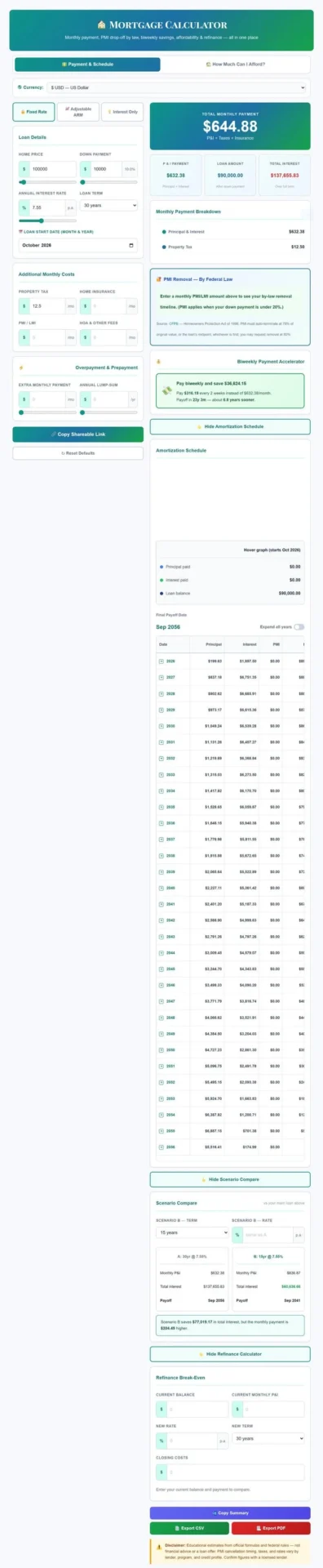
I ran the exemption concept through SaveXpert’s Mortgage Calculator using a straightforward framing: property tax is a core part of your monthly housing picture. Even a 12.5% reduction in that line item shifts the total monthly cost. The exemption reduces taxable assessed value — not necessarily the full advertised amount as direct cash savings. Try your own scenarios:
🏠 Try the SaveXpert Mortgage Calculator
When I entered a $100,000 home with $10,000 down at 7.55% over 30 years, adding a property tax line of $12.50/month shifted the total monthly cost from $632.38 to $644.88 — a difference that changes how much home the same income can support.
Educational note: This calculator helps model monthly housing costs and does not provide personalized financial advice. Source: CFPB — Owning a Home
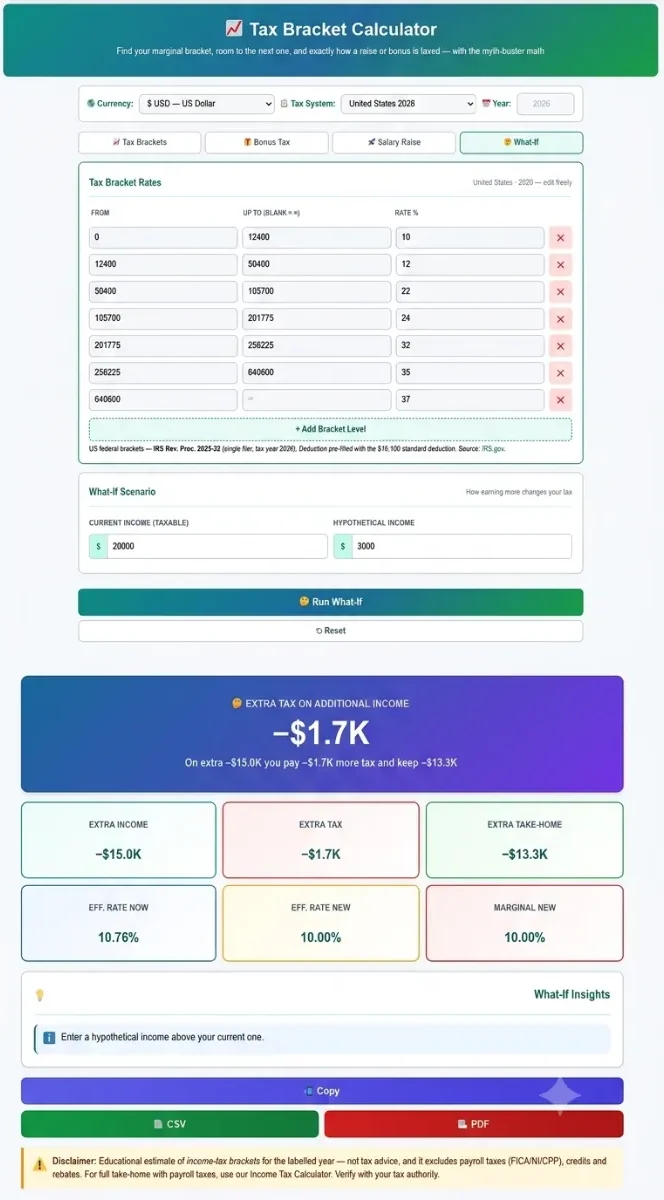
For the federal SALT side, the value of the deduction depends entirely on whether you itemize — and whether it actually moves the needle given your full federal picture. The Tax Bracket Calculator helps clarify that.
📊 Try the SaveXpert Tax Bracket Calculator
When I went through the SALT deduction data, the biggest variable was whether a taxpayer actually itemizes. This calculator shows where you fall in the federal bracket system and helps you see whether itemizing makes sense for your situation.
Educational note: This calculator models federal income tax brackets and does not provide personalized tax advice. Source: IRS Tax Topics

Five Patterns That Appear Consistently Across State Exemption Data
Several patterns appear consistently across the state-level data, and each one comes down to what homeowners do or fail to do before a filing deadline. Here’s what the evidence supports — and what it doesn’t.
1. Filing early works.
Florida’s March 1 deadline, Texas’s April 30, Nebraska’s June 30 — the data shows stronger take-up in states with clear deadlines when homeowners file well before those dates. Early filing also reduces the chance of missing a narrow late-filing window.
2. Checking specialized programs works.
Georgia’s $121,812 senior and disabled veteran exemption and Texas’s 100% disability program aren’t widely publicized outside the communities they serve. The gap between the standard exemption and the specialized programs can run to tens of thousands of dollars in assessed value.
3. Verifying primary residence status works.
Most state homestead programs require ownership and occupancy as a primary residence as of January 1. If you own multiple properties, this distinction determines which one qualifies — and it can change if you move mid-year.
4. Relying on mortgage servicers doesn’t work.
This was the most consistent finding in the data. CFPB escrow rules require servicers to pay property taxes on time. They don’t require servicers to file your exemption application. These are separate obligations, and the application one stays with the homeowner.
5. Assuming exemptions transfer doesn’t work.
Moving means reapplying. The exemption attaches to the property you sold, not to you as a buyer. When you close on a new home, you start the application process from scratch.
Realistic Expectations for Homeowners
The process runs on a tax-year timeline. Missing a deadline typically means a full year’s delay before the benefit takes effect. The Lincoln Institute puts the typical median benefit at 12.5% — with some specialized programs offering much larger reductions. Actual results vary by jurisdiction, assessed value, eligibility rules, and how the local taxing district responds to widespread exemption claims across the area.
Several programs have changed recently. Texas raised its general residence homestead exemption to $140,000 in January 2026, per the Texas Comptroller. Philadelphia raised its homestead exemption to a $100,000 taxable-assessment reduction for 2025. New York extended the filing deadline for age-eligible Enhanced STAR homeowners in February 2025. These programs update. What your assessor’s website says today may differ from what it said last year.

The Bottom Line: 5-Step Action Plan
The biggest finding in this research isn’t any one exemption amount — it’s the gap between programs that exist and homeowners who actually claim them. Here’s the action plan the data supports:
1. Find your local tax assessor:
Search “[your county] property appraiser” or “[your county] assessor exemptions.” This is where your application lives — not with the IRS and not with your mortgage servicer.
2. Confirm your primary residence status:
Most state homestead programs require ownership and occupancy as of January 1. If you moved mid-year, your eligibility for that tax year may differ from the next.
3. Ask about senior, disability, and veteran programs:
Don’t stop at the standard homestead exemption. Georgia, Texas, Michigan, and other states offer specialized programs with far larger reductions. Ask your assessor’s office specifically what else you qualify for.
4. File before the deadline:
Florida’s March 1, Texas’s April 30, Nebraska’s June 30. Check your state’s specific date and file early. Missing the window by one day can cost you a full year’s benefit.
5. Model the numbers:
Use SaveXpert’s Mortgage Calculator to see how a property tax change affects your monthly housing cost. For the federal side, the Tax Bracket Calculator shows whether itemizing actually changes your federal picture — because the SALT deduction only helps if you do.
“What the research data consistently shows is a gap between programs that exist on paper and homeowners who know those programs exist. Your mortgage servicer pays your property taxes from escrow. That servicer does not file your exemption application. Those are two completely different things.”
— Kevin Brown, Lead Researcher at SaveXpert.com
Frequently Asked Questions
Ans: According to state revenue departments, a homestead exemption is a legal provision that reduces the taxable assessed value of your primary residence. It’s one of the most frequently missed property tax benefits — primarily because buyers assume their mortgage servicer handles the application during closing. It doesn’t. You file separately, directly with your local assessor’s office, and the application is your responsibility from day one of homeownership.
Ans: Yes — and they can be significantly larger than the standard homestead exemption. According to the Georgia Department of Revenue, qualifying seniors and disabled veterans can see assessment reductions of $121,812 in 2025. Michigan’s income-based program uses a $165,400 maximum taxable value cap with a $62,500 phaseout threshold. Rules vary widely by state, and the gap between the standard exemption and the senior programs is large enough to be worth a direct inquiry to your local assessor.
Ans: Yes. According to the Texas Comptroller, veterans with a 100% service-connected disability can qualify for a total residence homestead exemption — eliminating the property tax on their primary residence entirely. Other states offer partial reductions based on disability rating. These are among the largest programs in the research data and also among the least-claimed outside the communities that actively publicize them.
Ans: You apply by submitting a specific form directly to your county or city tax assessor’s office. The process is entirely separate from your mortgage and your federal tax return. Deadlines vary by state: Florida uses March 1, Texas uses April 30, Nebraska uses June 30. Missing the deadline typically means waiting a full tax year for the benefit to take effect. Start with a search for “[your county] homestead exemption application” to find your specific jurisdiction’s form.
Ans: The research shows this is generally not available. Missing the annual filing deadline typically delays your benefit by a full tax year — past payments aren’t refunded. Some states allow narrow late-filing windows: the Orange County FL Property Appraiser allowed late filing through September in 2025 guidance. But those windows aren’t available everywhere and aren’t guaranteed to repeat year to year.
Ans: No. The research is consistent on this point: exemptions attach to specific properties, not to the homeowner. When you sell your home and close on a new one, your existing exemption stays with the property you sold. You must apply again for the new address, starting from scratch. According to county assessor guidance reviewed in the research, this is one of the most common — and most financially significant — sources of missed benefits after a move.