

ⓘ Educational Disclosure:
This article is for educational and informational purposes only. It does not constitute financial, legal, tax, lending, or investment advice. SaveXpert and its authors are not licensed financial advisors, CPAs, attorneys, or tax advisors. All data comes from publicly available government and institutional sources. Always consult a qualified professional before making investment decisions.
What is the difference between a deductible and an out-of-pocket maximum? According to HealthCare.gov and CMS data, your deductible is the initial amount you pay for covered care before your plan starts paying — your starting threshold. Your out-of-pocket maximum is the annual ceiling on qualifying cost-sharing: once reached, your plan pays 100% of covered in-network services. Your deductible, qualifying copays, and coinsurance all count toward the maximum. Premiums, out-of-network care, and non-covered services do not count. For 2026, the ACA sets the individual ceiling at $10,600 and the family limit at $21,200.
Key Takeaways
- Problem: Many people treat the deductible as the ceiling on their healthcare costs — assuming once it’s met, insurance covers everything. The research shows that’s a common misconception: meeting your deductible only changes what percentage the insurer pays, not whether you continue paying.
- Solution: The deductible is your starting threshold — the amount you pay before the plan begins sharing costs. The out-of-pocket maximum is your annual ceiling on qualifying cost-sharing. Once you hit that ceiling, the plan pays 100% of covered in-network services.
- Result: For 2026, the ACA sets the individual OOP maximum at $10,600 and the family limit at $21,200 — a 15.2% increase over 2025. Premiums, out-of-network costs, and non-covered services don’t count toward that ceiling.
- Source: CMS 2027 PAPI Parameters Guidance · Federal Register 2026 ACA Parameters
- Time To Read: 6 Minutes
Table of Contents
1. The Sequence That Defines the Difference
2. How a Deductible Works in Practice
3. Copays and Coinsurance: What Happens After the Deductible
4. What Actually Counts Toward Your Out-of-Pocket Maximum?
5. The 2026 and 2027 OOP Limits Across All Plan Types
6. What the Research Shows Works (and What Doesn’t)
7. Bottom Line: 5 Things to Know About Deductibles and OOP Maximums
The 2026 ACA individual out-of-pocket maximum is $10,600. That figure represents a 15.2% increase from the $9,200 limit in 2025. What it doesn’t represent is a ceiling on every medical dollar you could pay in a year — because premiums, out-of-network costs, and non-covered services sit entirely outside that number. Understanding the difference between a deductible and an out-of-pocket maximum starts with separating two things that seem connected: where your cost-sharing begins and where qualifying cost-sharing stops.
The Sequence That Defines the Difference
The clearest way to separate a deductible from an out-of-pocket maximum is through the payment sequence. Both involve what you pay — but they govern different points in the cost-sharing timeline.
| Cost-Sharing Element | When It Applies | Role |
|---|---|---|
| Deductible | From the start of the plan year | Starting threshold — you pay 100% of covered services until this amount is met |
| Copayments | During and after meeting the deductible (varies by plan) | Fixed dollar amounts for specific services; continue until OOP maximum is reached |
| Coinsurance | After the deductible is met | Percentage of covered service costs you pay; continues until OOP maximum is reached |
| Out-of-pocket maximum | Annual ceiling | Once reached, plan pays 100% of covered in-network services for the rest of the plan year |
Source: HealthCare.gov — Glossary · CMS ACA Implementation FAQs
A worked example using 2026 numbers: a plan with a $2,000 deductible and a $10,600 OOP maximum. You pay the first $2,000 of qualifying covered services yourself. After that, you pay your plan’s copays or coinsurance rate on additional services — say, 20% — until the total of your deductible payments, copays, and coinsurance reaches $10,600. At that point, the plan pays 100% for the rest of the year.
Two things to notice in that sequence. First, meeting the deductible at $2,000 doesn’t mean the plan now pays 100% — it means cost-sharing shifts to copays and coinsurance. Second, the full $10,600 ceiling is the point where the plan takes over entirely, not the deductible.

How a Deductible Works in Practice
A deductible is the amount you pay for covered healthcare services before your insurance plan starts paying. The keyword in that definition is covered — a deductible applies to services your plan includes as benefits, not to every medical expense you could possibly have.
Individual vs. family deductibles
Individual plans carry a single deductible. Family plans carry two structures that can apply simultaneously: an individual deductible for each family member and a combined family deductible.
Under a typical family plan design, each family member counts their own spending toward their individual deductible. The family deductible sets a combined limit — once total family spending reaches it, the plan begins sharing costs for all family members even if individual deductibles haven’t been met separately.
What resets each plan year
Deductibles reset at the start of each plan year. A consumer who spent $1,800 toward a $2,000 deductible in December doesn’t carry that balance into January — the counter resets to zero. The research brief identifies this reset cycle as a reason why healthcare costs can feel uneven throughout the year: early-year spending often goes entirely toward the deductible, while late-year spending may hit a nearly-met maximum.
The 2026 jump in perspective
The 2026 ACA individual OOP limit rose 15.2% over 2025. The research brief also notes that HHS revised the initially announced 2026 figures after a methodology revision.
⚠️ 2026 ACA OOP figures were revised: HHS initially announced 2026 figures of $10,150 (individual) and $20,300 (family). After a methodology revision, CMS updated the figures to the current $10,600 (individual) and $21,200 (family). If you saw the earlier numbers in prior reporting, the revised figures are the operative ones for 2026 plan years.
Copays and Coinsurance: What Happens After the Deductible
Meeting your deductible changes the cost-sharing structure — it doesn’t end your out-of-pocket spending. The research brief groups deductible, copayment, and coinsurance together as forms of cost-sharing, and all three can contribute toward the out-of-pocket maximum.
| Cost-Sharing Type | How It Works | Counts Toward OOP Max? |
|---|---|---|
| Deductible | Fixed amount you pay before insurer begins sharing costs | Yes — qualifying deductible payments count |
| Copayment (copay) | Fixed dollar amount per service (e.g., $30 per doctor visit) | Yes — qualifying copays count |
| Coinsurance | Percentage of service cost after the deductible (e.g., you pay 20%, plan pays 80%) | Yes — qualifying coinsurance counts |
| Premium | Monthly payment to maintain coverage | No — premiums sit outside the OOP ceiling |
Source: HealthCare.gov — Cost-Sharing Glossary · CMS ACA Implementation FAQs
The research brief specifically identifies the assumption that meeting the deductible ends all payments as a common misconception. A plan with a 20% coinsurance rate after the deductible still charges 20% of each covered service until the OOP maximum is reached. The deductible is a threshold that changes the cost-sharing formula — not a switch that turns off patient payments.
How metal tiers affect this balance
The research brief compares Bronze and Gold plans using actuarial value — the estimated share of total healthcare costs the plan pays on average across all enrollees.
| Metal Tier | Approximate Actuarial Value | Typical Implication |
|---|---|---|
| Bronze | ~60% | Plan pays about 60% of covered costs on average; enrollees typically face higher deductibles and OOP exposure |
| Silver | ~70% | Mid-range cost sharing; only tier eligible for cost-sharing reductions (CSRs) at certain income levels |
| Gold | ~80% | Plan pays about 80% of covered costs on average; lower deductibles and OOP exposure |
| Platinum | ~90% | Lowest deductibles and OOP exposure; highest premiums |
Source: HealthCare.gov — Plan Categories
The research brief doesn’t establish a fixed premium-deductible tradeoff formula across all plans. The association between Bronze and higher cost-sharing exposure is a plan-design pattern, not a universal rule with specific dollar figures that apply to every issuer’s Bronze plan.

See your target safety net and how close you are.
What Actually Counts Toward Your Out-of-Pocket Maximum?
This is one of the most practically important distinctions in health insurance, and the research gives a clear answer.
| Expense Type | Counts Toward ACA OOP Max? | Notes |
|---|---|---|
| Deductible payments (in-network, covered services) | ✅ Yes | Core component of what moves toward the ceiling |
| Qualifying copayments (in-network, covered services) | ✅ Yes | Fixed-dollar cost sharing accumulates toward the maximum |
| Qualifying coinsurance (in-network, covered services) | ✅ Yes | Percentage-based cost sharing accumulates toward the maximum |
| Monthly premium | ❌ No | Premiums sit entirely outside the cost-sharing ceiling |
| Out-of-network care costs | ❌ No | Federal ACA OOP limit does not apply to out-of-network cost-sharing |
| Balance billing from out-of-network providers | ❌ No | Amounts billed above what the plan pays are not covered by the ceiling |
| Non-covered services | ❌ No | Expenses for excluded services don’t count regardless of how much is spent |
Source: CMS ACA Implementation FAQs · CMS 2027 PAPI Parameters Guidance
The exclusion list matters as much as the inclusion list. A consumer who spends $3,000 in out-of-network costs and $8,000 in in-network costs hasn’t reached the $10,600 ceiling — because only the $8,000 counts. They would need to spend another $2,600 in qualifying in-network cost-sharing before the plan covers 100%.
⚠️ The OOP maximum doesn’t cap everything you could pay: The federal ACA OOP maximum applies specifically to qualifying cost-sharing for covered, in-network essential health benefits. A year with significant out-of-network care, balance billing, or non-covered services can produce total medical spending that exceeds the advertised maximum — while the plan still only covers 100% of in-network qualifying expenses. Read your plan’s Summary of Benefits and Coverage to know exactly what the in-network cost-sharing limit covers.
The 2026 and 2027 OOP Limits Across All Plan Types
The research brief covers ACA, HDHP, Medigap, and Medicare Part D limits. Here is the complete reference table.
| Coverage Type | Individual Limit | Family Limit | Plan Year / Effective Date |
|---|---|---|---|
| ACA Marketplace (2025) | $9,200 | $18,400 | 2025 plan year |
| ACA Marketplace (2026) | $10,600 | $21,200 | 2026 plan year (+15.2%) |
| ACA Marketplace (2027) | $12,000 | $24,000 | 2027 plan year (+13.2% over 2026) |
| HDHP OOP max (2026) | $8,500 | $17,000 | 2026 (IRS) |
| HDHP min. deductible (2026) | $1,700 | $3,400 | 2026 (IRS) |
| HDHP OOP max (2027) | $8,700 | $17,400 | 2027 (IRS) |
| HDHP min. deductible (2027) | $1,750 | $3,500 | 2027 (IRS) |
| Medigap Plan K OOP limit (2026) | $8,000 | — | 2026 |
| Medigap Plan L OOP limit (2026) | $4,000 | — | 2026 |
| Medicare Part D OOP threshold (2026) | $2,100 | — | 2026 |
| Medicare Part D OOP cap (implemented) | $2,000 | — | Implemented January 1, 2025 |
Source: CMS 2027 PAPI Guidance · IRS Internal Revenue Bulletin 2026-02 · CMS Medigap K & L Limits
💡 Research note — two different Part D figures: The research brief records both a $2,000 Medicare Part D cap (implemented January 1, 2025) and a $2,100 2026 threshold. These are separate data points referring to different points in the policy framework — not the same figure with a typo. The $2,000 cap was a major policy change for 2025; the $2,100 figure appears in 2026 Part D cost-sharing rules. Always verify the specific Part D figure relevant to your coverage year at CMS.gov.
Cost-sharing reductions: lower OOP limits for eligible Silver plan enrollees
Silver plan enrollees at certain income levels qualify for cost-sharing reductions (CSRs) that lower the effective OOP maximum significantly below the standard ACA limit. The research brief provides 2027 figures for this comparison:
| Income Level (% FPL) | Standard 2027 OOP Max | CSR-Reduced 2027 OOP Max | Plan Required |
|---|---|---|---|
| 100%–200% FPL | $12,000 | $4,000 | Silver plan required for CSR access |
| 200%–250% FPL | $12,000 | $9,600 | Silver plan required for CSR access |
| Above 250% FPL | $12,000 | Not eligible for reduced OOP max | — |
Source: CMS 2027 PAPI Guidance · KFF ACA Overview
The CSR-reduced $4,000 ceiling (for 100%–200% FPL enrollees) represents a third of the standard 2027 limit. CSRs are only accessible through Silver plan enrollment — choosing Bronze at that income level means forfeiting the reduced ceiling alongside the reduced deductibles and copays.
🏦 Model Your OOP Exposure: SaveXpert Emergency Fund Calculator
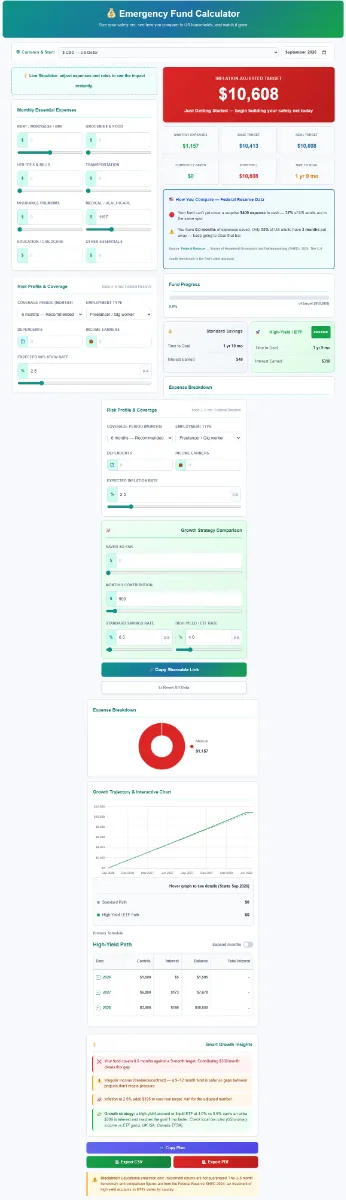
I ran the 2026 individual OOP maximum ($10,608) through the Emergency Fund Calculator as a medical-cost scenario. The output showed that covering the maximum qualifying cost-sharing would require having that amount liquid before a significant health event depletes savings elsewhere. The calculator is most useful here not as a one-time exercise but as a planning benchmark — the OOP maximum gives you the worst-case annual cost-sharing number for covered in-network care, which is exactly what an emergency fund should be sized to absorb.
Educational note: This calculator models savings scenarios for informational purposes only. Source: CMS 2027 PAPI Parameters Guidance
What the Research Shows Works (and What Doesn’t)
What the CMS and IRS data consistently supports
The OOP maximum provides significant financial protection when reached.
The research brief states that these limits prevent much larger covered-cost exposure during serious illness or injury. Only a small share of enrollees reach the maximum in any given plan year — but for those who do, the ceiling is the mechanism that prevents uncapped out-of-pocket exposure on covered in-network care.
Comparing deductible and OOP maximum together, not separately.
A plan with a very low OOP maximum relative to its deductible may have limited space between the two figures — meaning you’d pay through the deductible and quickly reach the ceiling anyway. A plan with a high OOP maximum and a moderate deductible has a wider cost-sharing band. The relationship between the two numbers matters as much as either one alone.
Reading the plan’s covered-service rules alongside the OOP figure.
CMS program-integrity data cited in the research brief show that direct enrollment through HealthCare.gov or a state marketplace carries lower improper-enrollment indicators than some broker-assisted channels.
What the data says doesn’t work
Treating the OOP maximum as a cap on all medical spending.
The exclusions are clear: premiums, out-of-network costs, balance billing, and non-covered services all sit outside the federal ACA OOP ceiling. Someone with mixed in-network and out-of-network care can face total spending well above the ceiling even after the in-network portion crosses the maximum.
Assuming the cheapest plan has the most protection.
A lower premium often correlates with a higher deductible and a higher OOP maximum (Bronze vs. Gold pattern). A plan that costs less each month may expose the enrollee to more total cost-sharing before the 100% coverage threshold is reached. The relationship between premium and total exposure requires the full plan comparison — not the premium line alone.
Choosing Bronze over Silver at income levels where CSRs would apply.
For enrollees at 100%–250% FPL, Silver plans carry CSR-reduced OOP maximums that can be $4,000–$9,600 below the standard ACA limit. Enrolling in Bronze at those income levels forfeits that reduction. The lower Bronze premium doesn’t compensate for a ceiling that can be two to three times higher.

Bottom Line: 5 Things to Know About Deductibles and OOP Maximums
1. Separate the deductible from the OOP maximum — they serve different roles in the same system:
The deductible is where cost-sharing begins (you pay 100% of covered care until it’s met). The OOP maximum is where qualifying cost-sharing stops (the plan pays 100% after this). Meeting your deductible does not end your out-of-pocket costs — copays and coinsurance continue until the OOP maximum is reached. The 2026 ACA individual ceiling is $10,600; the 2026 family ceiling is $21,200.
2. Know what counts toward your OOP maximum and what doesn’t — the exclusions are as important as the limit:
Qualifying deductibles, copays, and coinsurance for in-network covered services count. Your monthly premium, out-of-network care, balance billing, and non-covered services do not. A year with significant out-of-network costs can produce total medical spending well above the ACA ceiling without triggering 100% plan coverage, because only qualifying in-network cost-sharing counts toward the limit.
3. Compare your plan’s OOP maximum against the 2026 ACA benchmark before enrolling:
A plan can set its OOP maximum below the ACA ceiling ($10,600 individual / $21,200 family). Knowing where your specific plan’s ceiling sits — not just the ACA maximum — gives you the worst-case qualified annual cost-sharing you could face. Some plans set the deductible equal to the OOP maximum (catastrophic design); others have a wide band between the two. The relationship between those two numbers in your specific plan documents matters more than the ACA ceiling alone.
4. If your income is between 100% and 250% FPL, check whether Silver plan CSRs reduce your effective OOP ceiling before choosing Bronze:
Cost-sharing reductions available only on Silver plans can lower the OOP maximum to $4,000 (for 100%–200% FPL) under 2027 figures — a fraction of the standard $12,000 ceiling. Choosing Bronze at those income levels forfeits the reduced ceiling. The lower Bronze premium doesn’t compensate for a ceiling that may be two to three times higher when healthcare use is significant.
5. Use the Emergency Fund Calculator with your plan’s OOP maximum as the scenario amount — it converts the ceiling into a savings target:
The $10,600 individual ACA ceiling represents the maximum qualifying cost-sharing you could face in a year before the plan covers 100% of covered in-network care. That figure is the most useful input for a healthcare emergency fund calculation — it gives you the actual number to save toward, not a range or estimate. Run it against your current savings balance to see the gap.
“When I went through the CMS PAPI parameters guidance and the Federal Register data, the finding that most changes how people should read an advertised out-of-pocket maximum was the exclusion list. The $10,600 ACA individual ceiling sounds like a hard limit on every medical dollar you might pay in a year. But the research is clear: premiums don’t count, out-of-network care doesn’t count, and non-covered services don’t count. The ceiling applies to qualifying cost-sharing for in-network essential health benefits — and nothing else. Someone with both high in-network costs and substantial out-of-network care could exceed the advertised maximum without the plan covering 100%.”
— Kevin Brown, Lead Researcher at SaveXpert.com
Frequently Asked Questions
Ans: According to HealthCare.gov and CMS, the difference is sequential. Your deductible is the initial amount you pay for covered care before your insurance plan begins sharing costs — your starting threshold. Your out-of-pocket maximum is your annual ceiling: once your qualifying cost-sharing (deductible + copays + coinsurance) reaches it, the plan pays 100% of covered in-network services for the rest of the year. For 2026, the ACA individual maximum is $10,600, and the family maximum is $21,200.
Ans: Both are forms of cost-sharing that can continue after you meet your deductible — and both count toward your out-of-pocket maximum. A copayment is a fixed dollar amount for a specific service (for example, $30 per doctor visit), regardless of the total cost of that service. Coinsurance is a percentage of the covered service cost that you pay after meeting your deductible (for example, you pay 20% and the plan pays 80%). The practical difference: copays are predictable fixed amounts; coinsurance varies with the cost of each service.
Ans: According to HealthCare.gov, a deductible works as your initial spending threshold for the plan year. You pay 100% of covered medical bills up to this set dollar amount. Once met, your plan begins sharing costs through copayments or coinsurance. Preventive care services are typically covered before the deductible under ACA-compliant plans. The deductible resets at the start of each plan year — spending from a prior year doesn’t carry forward.
Ans: The federal ACA rules establish that qualifying deductible payments, qualifying copayments, and qualifying coinsurance for in-network essential health benefits all count toward the annual OOP maximum. Monthly premiums do not count. Out-of-network care, balance billing from out-of-network providers, and costs for non-covered services do not count. A consumer with a mix of in-network and out-of-network costs may spend more than the OOP maximum in total while still having qualifying in-network cost-sharing below the ceiling — because only the in-network qualifying expenses count toward it.
Ans: A premium is the fixed monthly payment you make to keep your health insurance active — you pay it whether or not you use any healthcare services that month. A deductible is the amount you pay for actual medical care before your insurance starts contributing to covered costs. Premiums sit entirely outside the cost-sharing framework: they don’t count toward your deductible or your out-of-pocket maximum. The deductible is a feature of what happens when you use care; the premium is the cost of having coverage available.
Ans: CMS announced the 2027 ACA OOP limits on January 29, 2026. The individual limit rises from $10,600 in 2026 to $12,000 in 2027 — a 13.2% increase. The family limit rises from $21,200 to $24,000. The 2026 limits themselves represented a 15.2% increase over 2025 ($9,200 individual / $18,400 family). HHS also revised the initially announced 2026 figures (from $10,150/$20,300) to the current $10,600/$21,200 after a methodology revision. The 2027 HDHP limits also rise: individual OOP maximum to $8,700 (from $8,500 in 2026) and family to $17,400 (from $17,000). Sources: CMS 2027 PAPI Guidance · IRS Revenue Bulletin 2026-02