

ⓘ Educational Disclosure:
This article is for educational and informational purposes only. It does not constitute financial, legal, tax, lending, or investment advice. SaveXpert and its authors are not licensed financial advisors, CPAs, attorneys, or tax advisors. All data comes from publicly available government and institutional sources. Always consult a qualified professional before making investment decisions.
FSA vs HSA 2027 — which is better? IRS data shows an HSA is generally better for long-term tax-free investing and indefinite balance rollovers — but only for workers enrolled in a qualifying High-Deductible Health Plan (HDHP). An FSA fits workers who have predictable, near-term medical expenses and aren’t in an HDHP. For 2027, the IRS set the HSA limit at $4,500 (self-only) and $9,000 (family) under Revenue Procedure 2026-24. The 2027 FSA limit hadn’t been published as of September 2026 — the most recent confirmed figure is $3,400 for 2026.
Key Takeaways
- Problem: Workers facing open enrollment struggle to choose between an FSA and HSA — two accounts that look similar but operate under completely different rules for rollovers, ownership, and eligibility.
- Solution: For 2027, the IRS published HSA limits of $4,500 (self-only) and $9,000 (family). An HSA is generally better for long-term, tax-free investing with an HDHP. An FSA better fits predictable near-term medical expenses when HDHP coverage isn’t available or preferred.
- Result: IRS data shows HSA balances roll over indefinitely with investment potential and full portability. FSA funds face use-it-or-lose-it rules with a limited carryover — making the right choice highly dependent on your health plan type and spending pattern.
- Source: IRS Publication 969 — HSAs and HDHPs, IRS Publication 502 — Medical Expenses
- Time To Read: 6 Minutes
Table of Contents
1. Why FSA and HSA Feel Similar But Work Very Differently
2. HSA Contribution Limits for 2027: What the IRS Published
3. 2027 FSA Limits: What We Know Right Now
4. Rollover Rules: The Biggest Practical Difference
5. Can You Have Both an HSA and FSA at the Same Time?
6. FSA vs HSA 2027: Which Is Better for Your Situation?
7. What Changed for HSAs in 2025 and 2026
8. Common FSA and HSA Mistakes the Research Flags
9. What the Research Shows Works (and What Doesn’t)
10. Bottom Line: 5 Questions to Answer Before Open Enrollment Closes
The IRS published the 2027 HSA contribution limits in May 2026: $4,500 for self-only coverage, $9,000 for family. The 2027 FSA limit? Still pending as of September 2026 — those numbers typically arrive in an IRS Revenue Procedure each October. That timing gap alone captures the core challenge of comparing FSA vs HSA 2027: you’re making an open enrollment decision with one set of confirmed numbers and one that’s still forthcoming.
Why FSA and HSA Feel Similar But Work Very Differently
Both accounts let you set aside pre-tax money for qualified medical expenses. Both reduce your taxable income. Both cover the same list of expenses under IRS Publication 502. Stop there, and they sound almost identical.
But the operational rules are where they split apart — and where the open enrollment decision actually gets made. Here’s the master comparison:
| Feature | HSA | FSA |
|---|---|---|
| 2027 contribution limit | $4,500 (self-only) · $9,000 (family) | Not yet published (2026: $3,400) |
| Catch-up contribution | $1,000 (age 55+, statutory) | None |
| Health plan required | Yes — HDHP required | No — works with most employer plans |
| Account ownership | You own it permanently | Employer-owned |
| Year-end rollover | Indefinite — no forfeiture ever | Use-it-or-lose-it (up to $680 carryover in 2026) |
| Portable after job change | Yes — fully portable | No — subject to employer plan rules |
| Investment potential | Yes — balance can be invested | No |
| Triple tax advantage | Yes — contributions, growth, and qualified withdrawals | Pre-tax contributions only |
| Compatible with the other? | Only with a limited-purpose FSA | Only a limited-purpose FSA is HSA-compatible |
Source: IRS Publication 969 · IRS Publication 502 · IRS Revenue Procedure 2026-24

HSA Contribution Limits for 2027: What the IRS Published
The IRS released the 2027 HSA figures through Revenue Procedure 2026-24. The numbers are confirmed and in effect for plan years beginning in 2027.
| Coverage Type | 2026 HSA Limit | 2027 HSA Limit | Change |
|---|---|---|---|
| Self-only (HDHP) | $4,400 | $4,500 | +$100 |
| Family (HDHP) | $8,750 | $9,000 | +$250 |
| Age 55+ catch-up | $1,000 | $1,000 | No change (statutory) |
Source: IRS Revenue Procedure 2026-24 · CNBC HSA Limits 2027
HDHP thresholds that determine HSA eligibility in 2027
HSA eligibility isn’t just about the account — it ties directly to the underlying health plan. The IRS sets minimum deductible and maximum out-of-pocket thresholds for a plan to qualify as an HDHP. For 2027:
| HDHP Threshold | Self-Only Coverage | Family Coverage |
|---|---|---|
| Minimum annual deductible | $1,750 | $3,500 |
| Maximum out-of-pocket limit | $8,700 | $17,400 |
Source: IRS Revenue Procedure 2026-24
If your health plan’s deductible falls below the applicable HDHP minimum, it doesn’t qualify — and you can’t contribute to an HSA while enrolled in it, regardless of how the plan markets itself.
💡 Research note: The age-55+ HSA catch-up contribution has stayed at $1,000 for several years. The IRS confirms it’s a statutory amount — Congress sets it directly rather than adjusting it for inflation the way the base limits get adjusted. That’s why it doesn’t move year to year while the main limits do.
2027 FSA Limits: What We Know Right Now
As of September 8, 2026, the IRS had not published the 2027 Health FSA contribution limit. The most recent confirmed figure is $3,400 for 2026, announced October 9, 2025, in Revenue Procedure 2025-32. The 2026 maximum FSA carryover is $680 — but neither figure is confirmed for 2027 yet.
The IRS typically releases the following year’s FSA limit in October through a Revenue Procedure. That means workers making open enrollment elections right now are working with the 2026 confirmed amount as the best available reference — not a final 2027 number.
⚠️ Open enrollment timing issue: Many employers run open enrollment in October or November — often before the IRS publishes the following year’s FSA limit. If you’re electing an FSA for 2027 before the IRS announcement, use $3,400 as your reference point but plan conservatively. Overestimating FSA contributions has a real cost: funds above the permitted carryover can be forfeited.
FSA availability also differs from HSA eligibility in a key way: FSAs generally work with most employer health plans regardless of deductible level. You don’t need an HDHP to open an FSA — which makes it accessible to a broader group of workers than an HSA.
Rollover Rules: The Biggest Practical Difference
The rollover distinction is where the long-term math diverges most sharply between the two accounts.
HSA: indefinite rollover, no forfeiture
HSA balances roll over indefinitely. There’s no end-of-year deadline to spend them. The IRS imposes no forfeiture rule on HSA balances — they belong to the account holder permanently, whether they’re used next month or 25 years from now. When you change jobs, the HSA goes with you.
The investment dimension adds to this. Most HSA custodians allow account holders to invest balances above a certain threshold in mutual funds or other instruments. That makes an HSA one of the few healthcare accounts where unused balances can grow over time rather than sitting idle or being forfeited.
FSA: use it or lose it — with limited exceptions
FSA funds generally expire at year-end. The IRS allows employers to offer one of two grace provisions — but not both, and neither is automatic:
| FSA Grace Provision | What It Allows | Employer Required to Offer? |
|---|---|---|
| Grace period | Up to 2.5 extra months after plan year to spend remaining funds | No — employer choice |
| Carryover | Up to $680 (2026) rolled into next plan year | No — employer choice |
| Neither provision | Unused funds forfeited at year-end | Default if employer offers nothing |
Source: IRS Publication 969
A job change creates an additional FSA risk. The account is employer-owned — which means unused funds can be subject to the employer plan’s rules when employment ends. The HSA has no such vulnerability.
Find your marginal bracket, income tax, and take-home.
Can You Have Both an HSA and FSA at the Same Time?
This is where open enrollment decisions get complicated — and where a well-intentioned benefits election can accidentally eliminate HSA eligibility.
A general-purpose FSA counts as disqualifying coverage under IRS rules. Enrolling in a general health FSA while also trying to contribute to an HSA blocks the HSA contribution — even if you’re in an HDHP. The FSA’s broad coverage of medical expenses creates the conflict.
There is one way to have both: a limited-purpose FSA. A limited-purpose FSA covers only vision and dental expenses — not general medical costs. Because it doesn’t create the same coverage conflict, it can run alongside an HSA without affecting eligibility.
| FSA Type | HSA-Compatible? | What It Covers |
|---|---|---|
| General-purpose Health FSA | No — blocks HSA contributions | All IRC §213(d) qualified medical expenses |
| Limited-purpose FSA | Yes — HSA-compatible | Dental and vision expenses only |
| Dependent Care FSA | Yes — doesn’t affect HSA | Qualifying childcare and dependent care expenses |
Source: IRS Publication 969 · IRS Publication 502
💡 Research note: The research also confirms that an FSA-to-HSA transfer isn’t possible. The IRS doesn’t allow rollover or transfer of unused FSA funds into an HSA. Any FSA balance above the permitted carryover that goes unspent is forfeited — it can’t be moved into an HSA account as a workaround.
See how long it takes to reach your target.
FSA vs HSA 2027: Which Is Better for Your Situation?
The research doesn’t produce a single answer — it produces a framework. The decision depends on four factors: your health plan type, your expected annual medical spending, your employment situation, and your long-term savings goals.
When an HDHP plus HSA makes more sense
For someone with moderate-to-low annual medical expenses who qualifies for an HDHP, the research consistently points toward the HSA. The reasons stack up: higher contribution limits than an FSA, indefinite rollover with no forfeiture risk, full portability at any job change, investment growth potential, and the triple tax advantage — pre-tax contributions, tax-free growth, and tax-free qualified withdrawals.
Being generally healthy doesn’t automatically mean choosing an HSA. But lower medical spending gives an HSA balance more time to accumulate and invest rather than being drawn down immediately.
When a PPO plus FSA makes more sense
For someone with high, predictable annual healthcare expenses — planned surgeries, chronic condition management, regular specialist visits — an FSA paired with a lower-deductible PPO may produce better short-term outcomes. Lower deductibles mean you spend less out-of-pocket before insurance kicks in. The FSA covers predictable near-term expenses efficiently when you’ll spend the balance before year-end anyway.
The FSA also works when HDHP coverage simply isn’t available or isn’t appropriate for a household’s medical needs. Not every employer offers an HDHP option.
The triple tax advantage in plain terms
The research describes the HSA’s triple tax advantage this way: contributions go in pre-tax, investment growth inside the account is tax-free, and qualified medical withdrawals come out tax-free. That’s three separate layers of tax treatment — more than a traditional IRA (which is taxed on withdrawal), more than a Roth IRA (which is taxed on contribution), and more than an FSA (which only gets the pre-tax contribution benefit).
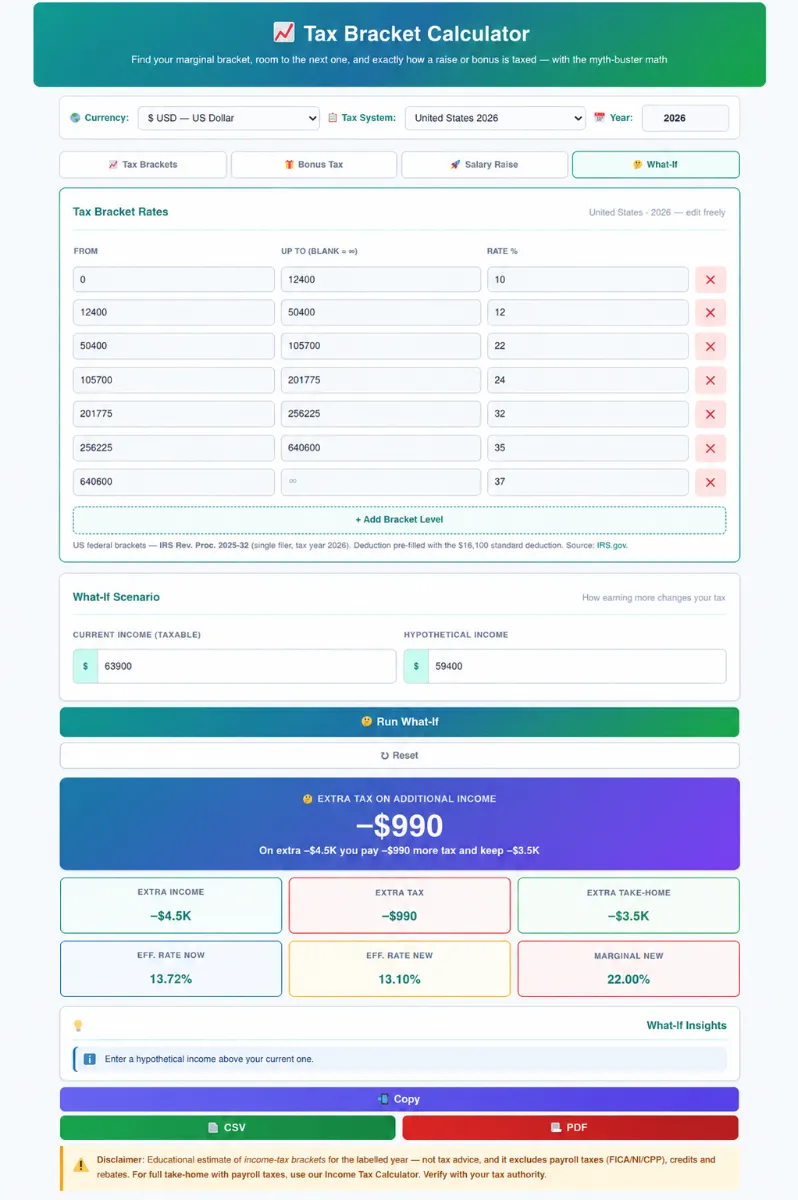
🧮 Model Your Tax Savings: SaveXpert Tax Bracket Calculator
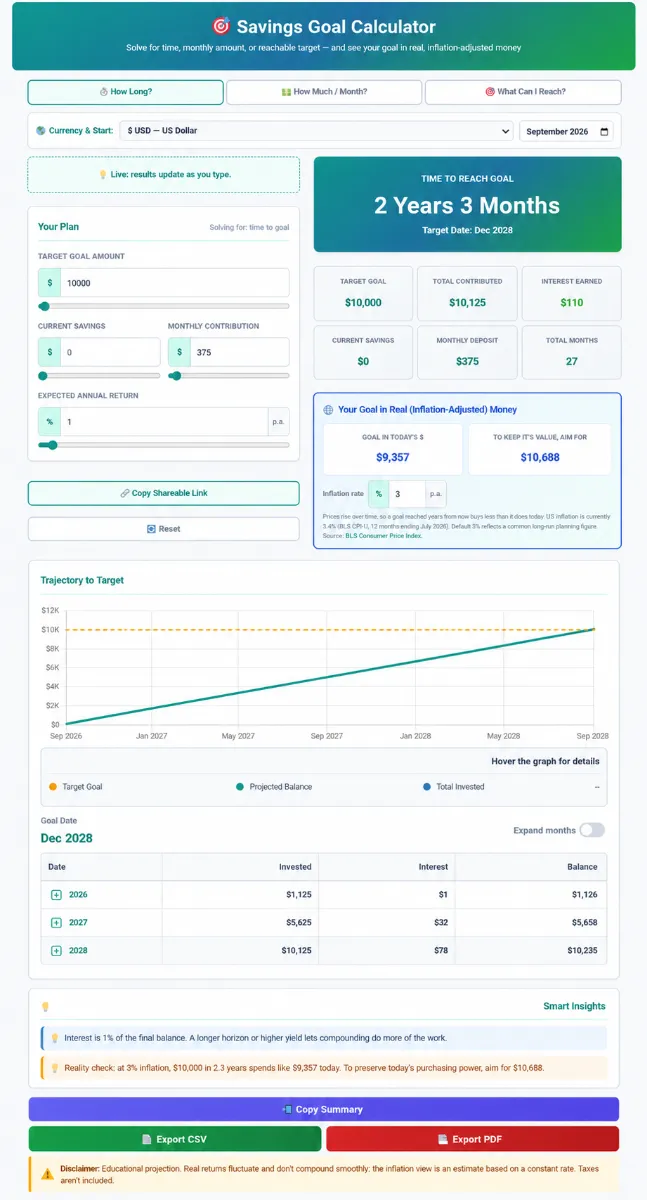
I ran a $4,500 HSA contribution scenario through the Tax Bracket Calculator to see how pre-tax healthcare contributions shift taxable income. A worker in the 22% federal bracket saves approximately $990 in federal income tax on a full $4,500 HSA contribution — before state tax savings. Put your own income and contribution amount in to see where you land. For projecting healthcare spending against a contribution target, the Savings Goal Calculator helps model that side of the decision too.
Educational note: These calculators model tax and savings scenarios for informational purposes only and do not provide personalized tax or benefits advice. Source: IRS Publication 969
What Changed for HSAs in 2025 and 2026
The “One Big Beautiful Bill” legislation created several notable changes to HSA eligibility rules that take effect for plan years beginning in 2026 and 2027. I went through the IRS guidance and IRS Notice 2026-05 on these changes.
Bronze and catastrophic ACA plans now qualify for HSA purposes
Under the new rules, Bronze and catastrophic ACA marketplace plans receive HDHP treatment for HSA eligibility purposes. Previously, those plans could fail to meet HDHP deductible thresholds and thus block HSA contributions. That restriction has changed — which opens HSA access to more workers purchasing coverage through ACA marketplaces.
Direct Primary Care arrangements no longer disqualify HSA eligibility
Direct Primary Care Service Arrangements (DPCSAs) previously created an eligibility concern for HSA contributors. Under the updated IRS guidance, DPCSAs no longer disqualify HSA eligibility when certain conditions are met. This is a meaningful change for workers who use DPC memberships alongside HDHP coverage.
Telehealth permanently allowed before the HDHP deductible
The IRS permanently allowed certain telehealth and remote care services to be covered before the HDHP deductible for plan years beginning on or after January 1, 2025. That permanence removes the annual renewal uncertainty that had complicated HSA planning in prior years.
💡 Research note: These changes expand the pool of workers who can contribute to HSAs. If you previously reviewed HSA eligibility and concluded you didn’t qualify due to DPCSA coverage or ACA plan type, the 2026 guidance is worth reviewing again before this year’s open enrollment closes.
Common FSA and HSA Mistakes the Research Flags
Overcontributing to an FSA
This is the most frequent and most costly FSA mistake. A worker who estimates $2,500 in medical expenses and puts $2,500 into an FSA can end up with $1,820 in forfeited funds if actual spending only reaches $1,000 and the plan’s carryover caps at $680. The research says to contribute what you’ll realistically spend — not what you hope to claim.
Assuming a general-purpose FSA and HSA can run together
A general-purpose health FSA eliminates HSA eligibility for the same period. Workers who elect both during open enrollment without understanding this rule lose their HSA contribution ability — even if they’re enrolled in a qualifying HDHP. The limited-purpose FSA is the only FSA type that remains HSA-compatible.
Assuming HSA money expires after age 65
HSA funds don’t have an expiration date — at any age. After 65, qualified medical withdrawals remain tax-free exactly as they do before 65. Non-medical withdrawals after 65 are subject to ordinary income tax but carry no additional penalty. Before 65, non-medical HSA withdrawals face income tax plus a 20% penalty. The research notes that this makes an HSA function similarly to a traditional IRA for non-medical purposes after age 65 — but without required minimum distributions.
Thinking you can transfer FSA funds into an HSA
The IRS doesn’t allow FSA-to-HSA rollovers or transfers. If an FSA has an unused balance above the permitted carryover at year-end, those funds are forfeited. They can’t be moved into an HSA account as a workaround. The accounts are separate structures with separate rules — there’s no bridge between them for accumulated balances.

What the Research Shows Works (and What Doesn’t)
What the data consistently supports
HSA with an HDHP for lower medical spenders with long-term goals.
The research points to higher contribution limits, indefinite rollover, investment potential, and portability as compounding advantages over time. Workers who build HSA balances rather than spending them down each year accumulate a dedicated tax-advantaged healthcare fund that moves with them through job changes and into retirement.
FSA for predictable near-term spending when HDHP coverage isn’t available or suitable.
The FSA works well when the balance will be fully used within the plan year. For households with predictable high healthcare costs — regular prescriptions, planned procedures, ongoing specialist visits — FSA contributions matched to expected spending can produce meaningful tax savings without forfeiture risk.
Limited-purpose FSA alongside an HSA.
This combination lets workers capture pre-tax dental and vision spending through the FSA while building HSA balances for broader medical expenses and long-term savings. It’s the one scenario where both account types work simultaneously without creating an eligibility conflict.
What the data says doesn’t work
Electing an FSA amount based on optimistic medical expense estimates.
The use-it-or-lose-it rule turns overestimates into actual losses. A conservative FSA election — based on known, scheduled expenses rather than hoped-for ones — avoids forfeiture risk.
Treating the HSA and FSA as interchangeable based on eligible expenses alone.
Both accounts cover the same IRS §213(d) expense list. But that similarity stops at the expense list. The rollover, portability, ownership, and eligibility rules create real differences in long-term value that the expense overlap doesn’t address.
Ignoring the HDHP deductible cost in the HSA comparison.
A lower monthly premium with an HDHP can look attractive until a high-deductible year requires significant out-of-pocket spending before insurance kicks in. The research says the HDHP-plus-HSA comparison has to include the full insurance picture — not just the account contribution limits.
Bottom Line: 5 Questions to Answer Before Open Enrollment Closes
1. Are you eligible for an HDHP — and does one make sense for your household?
HSA eligibility starts with HDHP enrollment. For 2027, the minimum HDHP deductible is $1,750 (self-only) or $3,500 (family), with out-of-pocket maximums of $8,700 and $17,400. If an HDHP is available and a high-deductible year wouldn’t create financial hardship, the HSA side of the comparison opens up.
2. How predictable and large are your expected 2027 medical expenses?
High, predictable costs (scheduled surgeries, chronic medications, regular specialist care) favor an FSA’s short-term spending structure. Lower or unpredictable costs give an HSA balance room to accumulate and potentially invest.
3. If electing an FSA, are you contributing only what you’ll actually spend?
The use-it-or-lose-it rule makes FSA overcontributions a real financial loss. Base the election on known, scheduled expenses — prescriptions, planned procedures, regular copays. The 2026 carryover cap is $680; amounts above that are forfeited.
4. Do you understand which FSA type is HSA-compatible?
A general-purpose health FSA blocks HSA contributions. A limited-purpose FSA covering dental and vision only is the one FSA type that runs alongside an HSA without creating an eligibility conflict. If your employer offers both, the limited-purpose FSA plus HSA combination is an option worth checking.
5. Note that the 2027 FSA limit isn’t confirmed yet — watch for the October IRS announcement.
If your open enrollment closes before the IRS publishes the 2027 FSA Revenue Procedure, use $3,400 as the reference figure. The 2027 limit will arrive in an IRS Revenue Procedure typically published each October. Don’t treat the 2026 figure as final for 2027 elections.
“What I found going through IRS Revenue Procedure 2026-24 and Publication 502 is that the most common misconception about FSA vs HSA is that they cover different medical expenses. They don’t. Both accounts cover the same universe of qualified expenses under IRC §213(d). The real differences are in ownership, rollover treatment, portability, and eligibility. Those differences compound significantly over time — and they’re the ones that actually drive the open enrollment decision.”
— Kevin Brown, Lead Researcher at SaveXpert.com
Frequently Asked Questions
Ans: The main differences are ownership, rollover rules, and eligibility requirements. An HSA is owned by the individual, rolls over indefinitely with no forfeiture risk, is fully portable across job changes, and requires enrollment in a qualifying High-Deductible Health Plan. An FSA is employer-owned, generally follows use-it-or-lose-it rules with a limited annual carryover (up to $680 in 2026), can be forfeited if employment ends, and works with most employer health plans regardless of deductible level. Both accounts cover the same universe of qualified medical expenses under IRS Publication 502.
Ans: The IRS published the 2027 HSA limits under Revenue Procedure 2026-24: $4,500 for self-only coverage and $9,000 for family coverage. The age-55+ catch-up contribution remains $1,000 — a statutory amount that doesn’t receive inflation adjustments. To qualify for HSA contributions in 2027, a worker must be enrolled in a plan meeting the HDHP thresholds: a minimum annual deductible of $1,750 (self-only) or $3,500 (family), and maximum out-of-pocket limits of $8,700 (self-only) or $17,400 (family).
Ans: For a generally healthy worker who qualifies for an HDHP, an HSA tends to produce better long-term outcomes. Lower annual medical spending means the HSA balance has more opportunity to accumulate and be invested rather than spent down immediately. The indefinite rollover, investment potential, and portability advantages compound over time. Health status alone doesn’t determine the decision — the underlying insurance plan, expected expenses, and long-term savings goals all factor in — but lower medical spending is one of the conditions where the HSA’s structural advantages become most visible.
Ans: Not with a general-purpose health FSA. Enrolling in a general health FSA creates disqualifying coverage that blocks HSA contributions — even when the worker is also in an HDHP. The only FSA type that’s HSA-compatible is a limited-purpose FSA, which covers only dental and vision expenses. A Dependent Care FSA doesn’t affect HSA eligibility either. The IRS also doesn’t allow FSA-to-HSA rollovers or transfers — unused FSA funds above the permitted carryover are forfeited, not movable into an HSA.
Ans: Yes — HSA balances roll over indefinitely with no forfeiture at any point. The IRS imposes no year-end spending requirement on HSA balances. Funds can accumulate for decades, be invested, and withdrawn tax-free for qualified medical expenses at any time. FSA funds generally expire at year-end unless the employer plan offers a grace period (up to 2.5 months) or a limited carryover (up to $680 in 2026). Neither grace provision is required — employers can offer one, the other, or neither.
Ans: HSA funds don’t expire at 65 or any other age. After age 65, qualified medical expense withdrawals remain tax-free exactly as they do before 65. The only change involves non-medical withdrawals: after 65, those are subject to ordinary income tax but carry no additional penalty. Before 65, non-medical HSA withdrawals face income tax plus a 20% penalty. This means an HSA effectively functions like a traditional IRA for non-medical purposes after age 65 — with the added benefit that qualified medical withdrawals remain permanently tax-free, unlike traditional IRA withdrawals.