

ⓘ Educational Disclosure:
This article is for educational and informational purposes only. It does not constitute financial, legal, tax, lending, or investment advice. SaveXpert and its authors are not licensed financial advisors, CPAs, attorneys, or tax advisors. All data comes from publicly available government and institutional sources. Always consult a qualified professional before making investment decisions.
What are the most common health insurance mistakes to avoid during open enrollment? According to HHS ASPE and CMS data, the most consequential errors in 2026 were: (1) confusing December 15 with the final enrollment deadline; (2) assuming a missed OE period leaves no options; (3) choosing a plan based only on the monthly premium, ignoring the $10,600 individual maximum out-of-pocket; (4) assuming auto-renewal is safe — HHS ASPE showed a 50% non-payment rate among auto-reenrolled consumers who transitioned from $0 to paid premiums; (5) not recognising that 2.6 million potentially improper enrollments remained in 2026; (6) ignoring income verification requests from CMS; and (7) skipping Form 8962 reconciliation when advance premium tax credits were received.
Key Takeaways
- Problem: Many Americans make seven recurring open enrollment errors — passive auto-renewal, deadline confusion, premium-only plan comparison, missing verification requests, and skipping the Form 8962 filing requirement — that the 2026 data shows produce coverage lapses and unexpected costs.
- Solution: Active plan comparison and accurate income reporting consistently produce better outcomes in the CMS data. Active selection correlated with 90%+ effectuation rates; the national average was 83%. State-based marketplaces with state subsidies reached 94%.
- Result: HHS ASPE data shows a 27.8% cancellation rate among zero-premium enrollees through May 2026 — compared to historical rates of 5%–10%. The data also shows a 50% non-payment rate among auto-reenrolled consumers who transitioned from $0 premiums to paid premiums. Both figures point to the same mistake: passive enrollment without checking what changes.
- Source: HHS ASPE · CMS National Enrollment Snapshot
- Time To Read: 7 Minutes
Table of Contents
1. Mistakes 1 & 2: Misreading the Open Enrollment Deadline
2. Mistake 3: Choosing a Plan Based Only on the Monthly Premium
3. Mistake 4: Assuming Auto-Renewal Keeps Coverage Active
4. Mistakes 5 & 6: Ignoring Enrollment Integrity and Verification
5. Mistake 7: Treating Advance Tax Credits as Set-and-Forget
6. What the Research Shows Works (and What Doesn’t)
7. Bottom Line: 5 Steps to Avoid the Most Costly Open Enrollment Mistakes
HHS ASPE data shows that 27.8% of consumers in zero-premium Marketplace plans cancelled coverage by May 2026 — compared to historical cancellation rates of 5%–10%. That single finding reframes the most common health insurance planning mistake of the year. A zero-dollar monthly premium isn’t automatically the safest option. The data shows it produced the highest cancellation rate of any plan type — often because consumers didn’t see the full cost picture before enrolling, or because what felt free during enrollment required a payment they weren’t expecting later.
Mistakes 1 & 2: Misreading the Open Enrollment Deadline
Mistake 1: Treating December 15 as the final enrollment deadline
The research identifies this as the most common calendar-related error. December 15 and January 15 are two different deadlines with two different consequences — and conflating them can mean starting the coverage year without insurance.
| Date | What It Controls | What Missing It Means |
|---|---|---|
| December 15, 2026 | Coverage start date for January 1, 2027 | Enrollment after this date means coverage starts February 1 — January is uncovered |
| January 15, 2027 | The federal open enrollment deadline | Missing this date means no Marketplace enrollment until the next OE (unless SEP) |
Source: CMS — 2026 Marketplace Open Enrollment · HealthCare.gov
The research finds that many consumers set their calendar reminder for December 15 and believe they’ve covered the full enrollment window. They have — if January 1 coverage is the goal. If they’re open to a February 1 start, enrollment between December 16 and January 15 still produces coverage. Missing December 15 doesn’t close enrollment; it changes when coverage begins.
Mistake 2: Assuming a missed Open Enrollment leaves no options
A second deadline misconception runs in the opposite direction: consumers who miss open enrollment entirely sometimes assume they have no path to coverage until the following November. The research identifies qualifying life events as a separate route.
A Special Enrollment Period (SEP) is triggered by qualifying events including loss of coverage, marriage, the birth or adoption of a child, moving to a new coverage area, and certain income changes. The SEP window is generally 60 days from the qualifying event.
⚠️ 2026 SEP change — the 150% FPL year-round option was eliminated: CMS eliminated the year-round Special Enrollment Period that had previously been available to households at or below 150% of the Federal Poverty Level. Households that previously relied on this option to enroll outside the standard window must now qualify under a specific qualifying life event for SEP access.

Enter your income and top expenses to see where you stand.
Mistake 3: Choosing a Plan Based Only on the Monthly Premium
KFF reported a 58% average increase in net premium payments for subsidised consumers in 2026, following the expiration of enhanced premium tax credits. That increase made monthly premiums a more visible household budget issue — and made the premium-only comparison mistake more consequential than in recent years.
The research is direct about what a premium-only comparison leaves out.
| Cost Component | 2026 Figure | Relationship to Premium |
|---|---|---|
| Average lowest-cost Marketplace premium after credits | $50/month ($600/year) | The visible number at enrollment — tells only part of the cost story |
| Individual maximum out-of-pocket (MOOP) | $10,600 | The highest amount you pay for covered in-network services before 100% plan coverage |
| Family maximum out-of-pocket | $21,200 | Family equivalent — 35× the monthly premium at the average figure |
| Deductible | Varies by tier and issuer | Amount paid before the plan begins sharing costs (except preventive care) |
What the zero-premium cancellation data shows
The HHS ASPE finding adds a specific dimension to the premium-only comparison: enrollees in zero-premium plans had a 27.8% cancellation rate through May 2026, compared to historical cancellation rates of 5%–10%. The research brief also found that enrollees paying even modest monthly premiums showed lower cancellation rates.
The research doesn’t say a $0 premium is always the wrong choice. It shows that consumers who chose plans for their $0 premium — without modelling what deductibles, cost-sharing, or premium changes would look like — cancelled at rates far above any historical benchmark.
💡 Research note: The research brief explicitly flags that it doesn’t provide a statistic on network-check mistakes (i.e., failing to verify whether your doctor is in-network before enrolling). That’s a real and consequential issue in plan comparison — but presenting it with a data point the research doesn’t support would mean inventing a number. The strongest evidence in the 2026 data centres on premiums, effectuation, auto-renewal, verification, and tax-credit filing. Check your specific plan’s provider directory at HealthCare.gov before finalising any plan selection.
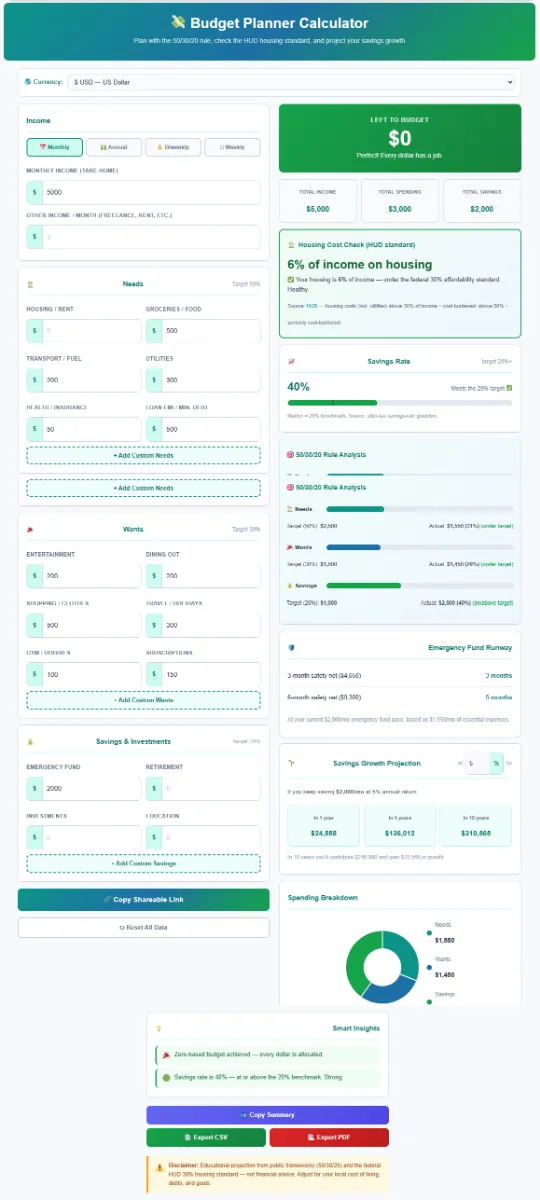
💰 Model the Real Cost: SaveXpert Budget Planner Calculator
I ran the 58% premium increase KFF reported through a household budget scenario in the Budget Calculator. The output showed that a premium increase from $32 to $50/month (roughly the 2024-to-2026 shift at the low end) adds $216 to annual healthcare spending before any deductible or cost-sharing is considered. For a household already running on a tight budget, that number matters. Entering your actual plan premium, deductible estimate, and expected use shows the full annual exposure — not just the monthly premium line.
Educational note: This calculator models household budget scenarios for informational purposes only. Source: KFF Marketplace Premium Report 2026
Mistake 4: Assuming Auto-Renewal Keeps Coverage Active
Auto-renewal is the most consequential passive mistake in the research. The mechanism works — until the plan’s price changes in a way the consumer wasn’t tracking.
The HHS ASPE data contains a specific and striking finding: among consumers who were auto-reenrolled and transitioned from a $0 premium to a plan requiring monthly payments, the non-payment rate reached 50% across the 2024–2026 period. Half of auto-reenrolled consumers in that situation stopped paying — meaning half lost coverage they thought they had renewed.
| Enrollment Method | Effectuation Rate | Non-Payment / Cancellation Rate |
|---|---|---|
| Active plan selection and renewal | 90%+ (research correlation) | Lower — consumer confirmed the premium before enrolling |
| National average (2026) | 83% | 17% did not effectuate |
| HealthCare.gov states (2026) | 85% | — |
| State-based Marketplaces with state subsidies | 94% | — |
| Auto-reenrolled ($0 → paid premium) | ~50% (non-payment rate from HHS ASPE) | 50% failed to pay within the period studied |
| Zero-premium enrollees (all, 2026) | ~72% (implied by 27.8% cancellation) | 27.8% cancelled through May 2026 |
Source: HHS ASPE — 2026 Enrollment Data · CMS National Enrollment Snapshot
Auto-renewal generates a renewal notice — not active confirmation of the new premium. A consumer who doesn’t read that notice before it takes effect may not realise their monthly cost changed until the payment fails and coverage lapses. The research brief identifies this as the scenario behind most auto-renewal-related coverage disruptions.
⚠️ Check your renewal notice before it processes: Log into your Marketplace account before November 15 to see what your plan’s premium becomes for the new coverage year. A renewal notice that shows a higher premium than you paid last year requires an active decision — either accepting the new premium, shopping for a different plan, or confirming eligibility for subsidies that offset the increase.
Mistakes 5 & 6: Ignoring Enrollment Integrity and Verification Rules
Mistake 5: Assuming every completed enrollment is a valid enrollment
The 2026 enrollment data contains a finding that affects consumers who enrolled through third-party assistance. HHS ASPE estimated that 2.6 million potentially improper or fraudulent enrollees remained active in 2026 — representing 13.2% of total enrollments. The same source reported that more than 80% of cancellations came from broker-assisted enrollments, suggesting higher improper-enrollment risk in that channel.
CMS took specific action in response. The 2026 final rule required pre-enrollment eligibility verification for at least 75% of new SEP enrollments. CMS also reported removing 2.9 million improper enrollments by January 28, 2026.
The research is explicit that this data doesn’t mean every broker-assisted enrollment was improper. It means consumers should verify their own enrollment status directly in the Marketplace — not assume completion confirmation from a third party equals confirmed valid enrollment.
| CMS 2026 Integrity Measure | What It Means for Consumers |
|---|---|
| 75%+ pre-enrollment verification for new SEPs | New SEP enrollments face more verification steps before coverage is confirmed |
| 2.9 million improper enrollments removed by Jan 28, 2026 | Some consumers who thought they had coverage discovered they didn’t |
| Direct enrollment showing lower improper-enrollment indicators | Enrolling directly through HealthCare.gov or your state marketplace is the safest verification path |
Mistake 6: Ignoring income verification requests from CMS
The 2026 rules reinstated income verification in two specific scenarios: when IRS return data isn’t available, and when reported income conflicts with available data. The regulatory basis is 45 CFR 155.320.
The research brief also notes that a previous 60-day income-verification extension — which gave consumers extra time to respond — ended in January 2026. Failing to respond to a verification request can result in coverage termination or subsidy adjustment without the grace period that previously applied.
💡 Research note: Consumers who received advance premium tax credits in 2025 under the enhanced subsidy rules and whose income situation changed for 2026 are most likely to trigger an income verification request. If CMS sends a data-matching notice requesting income documentation, respond within the stated window — the 60-day extension that softened earlier deadlines is no longer in effect.
Mistake 7: Treating Advance Tax Credits as Set-and-Forget
Advance Premium Tax Credits (APTCs) reduce monthly premiums during the coverage year — but they’re reconciled against actual income at tax time. The IRS requires Form 8962 when advance credits were received, even if the filer doesn’t normally need to file a federal income tax return.
The research brief identifies two consequences of skipping this step:
Advance credit repayment. If your actual income was higher than you projected at enrollment, the IRS may require repayment of excess advance credits when you file. Under the restored traditional ACA rules (the enhanced-credit period ended December 31, 2025), this repayment structure applies more strictly than it did during 2021–2025.
Loss of future advance credits. CMS moved the APTC denial period to one year after failure to file and reconcile — shortened from the previous two-year timeline. A consumer who skips Form 8962 for the 2026 tax year can lose advance credits for 2027 in the following enrollment cycle.
| Form 8962 Element | 2026 Rule | Source |
|---|---|---|
| Who must file | Anyone who received advance premium tax credits — regardless of normal filing requirement | IRS Form 8962 |
| What it reconciles | Advance credits received during the year vs. actual income-based eligibility | IRS Publication 974 |
| APTC denial for non-filing | 1 year after failure to file (shortened from 2 years) | CMS · IRS Fact Sheet 2025-10 |
| 1095-A form needed | Your Marketplace-issued 1095-A reports the advance credits paid on your behalf | HealthCare.gov |
Source: IRS Form 8962 · IRS Publication 974 · IRS Tax Topic 612

What the Research Shows Works (and What Doesn’t)
2026 effectuation data — what the numbers show
Effectuation rate measures whether enrolled consumers actually pay their first premium and maintain active coverage. The 2026 data breaks this down by enrollment method and marketplace type:
| 2026 Enrollment Metric | Figure | Source |
|---|---|---|
| Effectuated enrollment — February 2026 | 19.2 million | KFF |
| Effectuated enrollment — February 2025 (prior year) | 21.8 million | KFF |
| Year-over-year decline | 12% | KFF |
| National effectuation rate — 2026 | 83% | CMS |
| National effectuation rate — 2025 | 90% | CMS |
| State-based Marketplaces with state subsidies — 2026 | 94% | CMS |
| HealthCare.gov states — 2026 | 85% | CMS |
| Active plan selection — correlated effectuation | 90%+ | CMS / HHS ASPE |
Source: KFF Marketplace Enrollment Report · CMS National Enrollment Snapshot
What the data consistently supports
Active plan selection over passive auto-renewal.
The correlation between active selection and 90%+ effectuation rates is the clearest pattern in the research. The difference between 83% national effectuation and 90%+ for active selectors is roughly 7 percentage points — representing millions of consumers who enrolled but didn’t maintain coverage.
Paying even a modest premium.
The 27.8% cancellation rate among zero-premium enrollees vs. the 5%–10% historical benchmark shows that a small monthly payment — $10, $20 — correlates with significantly more durable coverage. This doesn’t mean $0 plans should be avoided. It means the choice should be made after understanding what happens when income or subsidy eligibility changes.
Direct Marketplace enrollment for integrity protection.
CMS program-integrity data cited in the research brief show that direct enrollment through HealthCare.gov or a state marketplace carries lower improper-enrollment indicators than some broker-assisted channels.
What the data says doesn’t work
Passive enrollment in any form.
Auto-renewal, zero-premium selection without modelling cost-sharing exposure, and skipping Form 8962 all appear in the 2026 data as patterns associated with coverage disruption. The research doesn’t say passive enrollment is always wrong. It shows that in 2026, passive enrollment produced measurably worse outcomes than active engagement at every step.
Assuming the same eligibility and premium as last year.
The enhanced credit expiration, the restored 400% FPL cliff, and the 58% average net premium increase make 2026 a particularly poor year to assume that last year’s information still applies.

Bottom Line: 5 Steps to Avoid the Most Costly Open Enrollment Mistakes
1. Put two dates in your calendar — December 15 and January 15 — and know what each one controls:
December 15 is the deadline for January 1 coverage. January 15 is the final enrollment deadline. Missing December 15 shifts your coverage start to February 1; it doesn’t close enrollment. Missing January 15 closes enrollment entirely until a qualifying life event or the next annual window. The research identifies conflating these two dates as the most common deadline mistake — and it’s entirely preventable with a two-line calendar entry before November 1.
2. Compare plans on total annual cost — not just the monthly premium — before the zero-premium option wins by default:
KFF reported a 58% average increase in net premium payments for 2026. The 2026 individual MOOP is $10,600. Run the Budget Calculator with the actual premium, deductible, and your realistic expected healthcare use for each plan you’re comparing. HHS ASPE’s 27.8% zero-premium cancellation rate is the clearest evidence that choosing for the $0 figure alone produces the least durable coverage.
3. Log into your Marketplace account before auto-renewal processes and check what next year’s premium will be:
HHS ASPE found a 50% non-payment rate among auto-reenrolled consumers who transitioned from $0 to paid premiums. The renewal notice shows the new premium — but many consumers don’t read it. Log in before November 15 to see your plan’s 2027 price, compare it against other available options, and make an active decision rather than letting the system choose for you.
4. Respond to any CMS income verification request promptly — the 60-day extension ended in January 2026:
CMS reinstated income verification for 2026 when IRS return data is unavailable or conflicts with reported income (45 CFR 155.320). The previous 60-day extension that gave additional response time is no longer in effect. Ignoring a verification request can result in coverage termination or subsidy reduction without the grace period that previously softened the consequence.
5. File Form 8962 if you received advance premium tax credits — even if you don’t normally need to file:
The IRS requires Form 8962 to reconcile advance credits against actual income. CMS shortened the APTC denial period to one year after failure to file (from the previous two years). A consumer who receives advance credits in 2026, skips Form 8962 for the 2026 tax year, and re-enrolls in 2027 can find their advance credits denied before the next coverage year begins. Get your 1095-A from the Marketplace and file Form 8962 with your return.
“When I went through the HHS ASPE cancellation data and the CMS effectuation numbers, one figure stood out above all others: 27.8% of zero-premium enrollees cancelled coverage by May 2026 — at a time when historical cancellation rates ran 5%–10%. A $0 premium sounds like the safest possible option. The data says it produced the highest cancellation rate. The research doesn’t say zero-premium plans are poor choices. It says the consumers in them were the most likely to stop when they had to start paying — because they hadn’t modelled the full cost before enrolling.”
— Kevin Brown, Lead Researcher at SaveXpert.com
Frequently Asked Questions
Ans: According to HHS ASPE and CMS data, the most consequential 2026 errors were: confusing the December 15 coverage-start deadline with the January 15 enrollment deadline; choosing a plan based only on the zero-dollar premium (which produced a 27.8% cancellation rate — vs. a historical 5%–10%); assuming auto-renewal guarantees continuous coverage (50% non-payment rate among consumers who auto-renewed into paid premiums); and skipping Form 8962 reconciliation when advance premium tax credits were received. The 2026 data also identified 2.6 million potentially improper enrollments — 13.2% of all enrollments — as an integrity issue affecting the broader market.
Ans: Not automatically — but choosing it based only on the premium without reviewing the total cost structure is. The 2026 data makes this concrete. KFF reported a 58% average increase in net premium payments for subsidised consumers. HHS ASPE found a 27.8% cancellation rate among zero-premium enrollees through May 2026 — versus a historical 5%–10%. The $10,600 individual maximum out-of-pocket means a year with significant healthcare use can cost more than 17 times the annual premium. The research supports comparing premium, deductible, and maximum out-of-pocket together — not the premium alone.
Ans: Auto-renewal produces a coverage continuation — at whatever the new year’s premium turns out to be. HHS ASPE data shows a 50% non-payment rate among consumers who auto-renewed from $0 premiums into plans requiring monthly payments in 2024–2026. A renewed policy is only as effective as the premium payments behind it. Consumers who didn’t check the renewal notice before it processed discovered a payment requirement they hadn’t planned for — and half of them stopped paying. The research consistently shows that active plan review before renewal produces far more durable coverage than passive auto-renewal.
Ans: CMS made two notable 2026 SEP changes. First, the year-round SEP that had been available to households at or below 150% of the Federal Poverty Level was eliminated — households previously relying on that option must now qualify under a specific qualifying life event for SEP access. Second, CMS required pre-enrollment eligibility verification for at least 75% of new SEP enrollments, as part of the same integrity measures that resulted in removing 2.9 million improper enrollments by January 28, 2026. The 60-day window from a qualifying life event otherwise remains in place.
Ans: Two consequences. The IRS requires Form 8962 to reconcile advance credits against actual income — even if you don’t normally need to file a return. If your actual income exceeded the projected amount, you may owe repayment of excess advance credits. If you skip Form 8962 entirely, CMS shortened the advance premium tax credit denial period to one year after failure to file — down from two years previously. A consumer who doesn’t reconcile for the 2026 tax year can lose advance credits for the 2027 coverage year, significantly increasing monthly premiums for the following year.
Ans: The research identifies three consistent patterns. First, evaluating plans by monthly premium alone — ignoring the 2026 individual maximum out-of-pocket of $10,600. Second, selecting a zero-premium plan without modelling what happens when premiums or eligibility change mid-year — a pattern associated with the 27.8% cancellation rate in HHS ASPE data. Third, failing to account for the impact of expired enhanced premium tax credits in 2026: KFF reported a 58% average increase in net premium payments for subsidised consumers, meaning 2025’s premium estimate isn’t a reliable basis for 2026 budgeting. The Budget Calculator converts these abstract figures into actual household cash-flow numbers.