

ⓘ Educational Disclosure:
This article is for educational and informational purposes only. It does not constitute financial, legal, tax, lending or insurance advice. SaveXpert and its authors are not licensed financial or tax advisors. Health insurance enrollment rules vary by state, Marketplace, and qualifying event. Always verify current eligibility and deadlines directly with HealthCare.gov or your state-based Marketplace before making coverage decisions.
Missing the open enrollment window is one of the most common health insurance mistakes American households make. The harder question — the one this article answers — is what happens next. The IRS is clear on one point: the door isn’t necessarily closed if a qualifying life event occurred.
Key Takeaways
- Problem: Missing open enrollment leaves many Americans worried they’ve lost access to health coverage for the rest of 2026.
- Solution: The IRS confirms that people who experience certain qualifying life events may access a Special Enrollment Period to secure a new Marketplace plan — even after open enrollment closes. Medicaid and CHIP accept applications year-round regardless of the Marketplace calendar.
- Result: Missing open enrollment doesn’t automatically close every coverage path — but it does mean the answer depends on what happened in your household. The exact SEP window and state deadlines require verification at HealthCare.gov or your state Marketplace.
- Source: IRS — Questions and Answers on the Premium Tax Credit (FS-2025-10) · HealthCare.gov — Special Enrollment Period
- Time To Read: 9 Minutes
Table of Contents
1. The Problem: Open Enrollment Has Ended, But Coverage Still Matters
2. What the IRS Research Actually Shows
3. What Is a Special Enrollment Period?
4. What Life Events Can Qualify You for an SEP?
5. How Long Do You Have to Enroll After a Qualifying Life Event?
6. Open Enrollment vs. Special Enrollment Period
7. How 2026 Premium Tax Credit Rules Affect Enrollment
8. Can I Enroll in Medicaid Outside Open Enrollment?
9. Recent 2025 and 2026 Changes Worth Knowing
Can I still enroll in health insurance 2026 after open enrollment closes? Yes — if you experienced a qualifying life event. The IRS confirms that people who experience certain life events may qualify for a Special Enrollment Period, which opens another window to enroll in a Marketplace plan even after regular enrollment ends. According to HealthCare.gov, if a qualifying event applies, a typical 60-day enrollment window opens around that event. Without a qualifying event, year-round Marketplace enrollment generally isn’t available — but Medicaid and CHIP accept applications throughout the year regardless of the Marketplace calendar.
The answer to “can I still enroll in health insurance 2026” therefore depends on what happened in your household — not just what month it is.
The Problem: Open Enrollment Has Ended, But Coverage Still Matters
For the 2026 plan year, federal Marketplace open enrollment opened November 1, 2025, and closed January 15, 2026. That window has passed. The next standard open enrollment period — for 2027 coverage — opens November 1, 2026.
Missing that window can leave people wondering whether the door has closed completely. The IRS says that isn’t always true, because certain life events can create a Special Enrollment Period after regular enrollment ends. At the same time, the IRS is specific: an SEP isn’t a general year-round enrollment option. It connects directly to qualifying events.
The harder part involves knowing which events qualify and which deadlines apply. State-specific Marketplace rules can affect both, so some details require verification directly with HealthCare.gov or your state-based Marketplace.
What the IRS Research Actually Shows
I went through the IRS materials covering Marketplace coverage, Premium Tax Credits, and 2026 tax rules. The research shows that the IRS handles the tax-credit side of Marketplace coverage, while HHS administers Marketplace requirements. The IRS directly tells consumers to go to HealthCare.gov or their state-based Marketplace for enrollment eligibility determinations.
That division matters. Most people searching “can I still enroll in health insurance 2026” are actually dealing with two separate questions: whether they can enroll at all, and whether they’ll qualify for financial help through the Premium Tax Credit. The IRS controls the second question. The Marketplace controls the first.
The IRS also makes clear that the 2026 Premium Tax Credit rules use an income range of 100% to 400% of the federal poverty line — and that the temporary rule removing the 400% ceiling applied only through tax year 2025. That change matters when someone checks whether a 2026 plan could qualify for financial assistance.

What Is a Special Enrollment Period?
A Special Enrollment Period gives certain people another opportunity to enroll in Marketplace coverage outside the annual open enrollment window. The IRS describes SEP access in connection with qualifying life events — not as a general exception available to everyone who missed the regular deadline.
The key distinction is straightforward. Open enrollment applies during the regular annual window. An SEP depends on whether a qualifying event occurred and on meeting specific Marketplace eligibility criteria tied to that event.
💡 Research note: “I missed open enrollment 2026” and “I qualify for an SEP” are two different questions. The first is a calendar fact. The second depends on your specific circumstances. The IRS does not treat missing the open enrollment deadline as automatically granting SEP access.
What Life Events Can Qualify You for an SEP?
The IRS materials don’t provide a complete official list of every qualifying life event — they focus on the tax-credit side of Marketplace coverage. The Marketplace rules themselves, administered by HHS, govern SEP eligibility.
HealthCare.gov’s SEP list identifies several major qualifying-event categories. These include:
Loss of qualifying health coverage:
Losing job-based coverage, aging off a parent’s plan, losing Medicaid eligibility
Household changes :
Getting married, having a baby, adopting a child, a qualifying death in the family
Residential changes:
Moving to a new coverage area, returning from abroad, certain moves by students or seasonal workers
Other specific circumstances:
Gaining citizenship or eligible immigration status, certain changes in eligibility for government coverage
For someone whose employer coverage ends after a job change, SEP eligibility is worth checking. For someone who simply missed the January 15 deadline without a qualifying change in circumstances, the research doesn’t support assuming SEP access applies.
⚠️ Important distinction: Not every personal change is a qualifying event. The IRS specifically connects SEP access to defined life events — not to any general change in household circumstances. Verify your specific situation at healthcare.gov/sep-list before assuming eligibility.
How Long Do You Have to Enroll After a Qualifying Life Event?
According to HealthCare.gov, a typical Special Enrollment Period provides a 60-day window around the qualifying event — before or after, depending on the event type. Some qualifying events may carry different timing. Losing coverage, for example, typically triggers a 60-day window from the date of loss.
The exact duration depends on the type of qualifying event and on your specific Marketplace. State-based exchanges may apply different timelines from the federal exchange. This means the Marketplace — not this article — is the controlling source for the exact deadline that applies to your situation.
💡 Research note: A 60-day SEP window is a standard figure for many qualifying events, but it’s not universal. Birth, adoption, and foster placement situations can carry different rules — the IRS notes that coverage for those events can sometimes start the day of the event itself. Don’t assume the 60-day figure applies to every situation. Verify your specific window at HealthCare.gov.
Open Enrollment vs. Special Enrollment Period
The research-backed distinction is straightforward:
Open enrollment,
is the regular annual window. For 2026 coverage, it ran November 1, 2025 through January 15, 2026. Anyone could enroll during that window regardless of life circumstances.
A Special Enrollment Period,
is a time-limited exception triggered by a qualifying life event. It’s available after the open enrollment window closes — but only to people who meet specific event criteria.
For 2027 coverage, the next standard open enrollment window opens November 1, 2026. Someone who missed 2026 open enrollment without a qualifying life event will need to wait for that window or check Medicaid and CHIP eligibility now.
💡 Research note: The CFPB’s borrower guidance notes that lower monthly payments can extend the repayment period and may increase total interest paid over the life of the loan. Monthly affordability and total cost are two different metrics — the right repayment comparison requires evaluating both alongside loan type, income, family size, and current borrower status.
Enter your income and top expenses to see where you stand.

How 2026 Premium Tax Credit Rules Affect Enrollment
Enrollment and affordability connect through the Premium Tax Credit. Enrolling in a Marketplace plan and qualifying for financial help through the PTC are related — but they’re not the same test.
The IRS says the general 2026 household-income range for Premium Tax Credit eligibility runs from 100% to 400% of the federal poverty line, subject to other requirements and exceptions. The applicable-percentage table — from Revenue Procedure 2025-25, issued August 4, 2025 — starts at 2.10% for household income below 133% of the federal poverty line and reaches 9.96% for households between 300% and 400% of the federal poverty line.
That same 9.96% figure applies to the employer-coverage affordability test for plan years beginning in 2026. The IRS also says an employer-sponsored plan generally provides minimum value when it covers at least 60% of expected total allowed costs and provides substantial inpatient-hospitalization and physician-service coverage.
A Marketplace Plan Doesn’t Automatically Qualify for a Tax Credit
The IRS lists several conditions for Premium Tax Credit eligibility. Household income is one factor — but it isn’t the only one. The IRS also considers:
- Access to employer coverage — enrolling in employer-sponsored minimum essential coverage generally makes an individual ineligible for the PTC for Marketplace coverage.
- Eligibility for programs such as Medicaid or Medicare.
- Payment of the required Marketplace premiums (coverage generally must take effect on the first day of a month for that month to qualify).
This distinction matters for someone asking “can I still enroll in health insurance 2026” while in the middle of a job change. A person may qualify for SEP enrollment while also having access to an employer plan — but both affect PTC eligibility differently. Enrollment eligibility and tax-credit eligibility aren’t the same test.
The 2026 No-Repayment-Cap Change
The IRS updated its Premium Tax Credit FAQs on December 23, 2025 — following changes under the One Big Beautiful Bill Act — including the removal of the repayment cap on excess advance Premium Tax Credit payments for tax years beginning after December 31, 2025.
For 2026 and later, there is no repayment cap on excess advance PTC payments. The full excess can increase tax liability, reduce a refund, or increase the amount owed. This matters for anyone who receives advance PTC payments based on an estimated income that later turns out to be significantly different from actual income.
⚠️ 2026 repayment change: In prior years, excess advance PTC repayments were capped. Starting in 2026, the IRS now requires full repayment of any excess advance credit — no cap applies. Substantial differences between estimated and actual household income or family size can create a substantial repayment obligation at tax time. Report changes to the Marketplace as they happen.
The IRS also says the Marketplace generally sends Form 1095-A by January 31 for the previous year’s coverage. Taxpayers who received advance PTC payments then use Form 8962 to reconcile those payments. The IRS says failing to reconcile can affect eligibility for future advance payments or cost-sharing reductions.
Can I Enroll in Medicaid Outside Open Enrollment?
Yes — and this is one of the most important distinctions for anyone who missed Marketplace open enrollment. According to HealthCare.gov, Medicaid and CHIP applications can be submitted any time of year. These programs don’t use the Marketplace’s annual enrollment calendar.
Marketplace enrollment and Medicaid enrollment are different processes. The IRS materials focus primarily on Premium Tax Credit eligibility and Marketplace tax rules — the Marketplace itself handles income-based eligibility determinations. HealthCare.gov can screen for Medicaid and CHIP eligibility and direct applicants to the appropriate state agency.
💡 Research note: Missing the Marketplace open enrollment window doesn’t close the Medicaid or CHIP route. If your household income has changed since you last checked eligibility — especially given 2026 income or family changes — it’s worth re-checking at HealthCare.gov. Eligibility for Medicaid is determined separately from Marketplace plan enrollment and doesn’t require a qualifying life event.
One additional point: some states have their own individual health insurance requirements separate from the federal mandate. The federal individual shared-responsibility payment has been reduced to $0 for months beginning after December 31, 2018 — but state-level requirements can differ, and a few states maintain their own coverage requirements and penalties.
Recent 2025 and 2026 Changes Worth Knowing
Three changes from 2025 and 2026 are worth tracking alongside any enrollment decision:
1. The temporary ARP/IRA rule ended.
The temporary rule that removed the 400% federal poverty line ceiling for Premium Tax Credit eligibility applied through tax year 2025 only. For 2026, the standard 100%–400% FPL range applies. Households that qualified for PTC based on income above 400% FPL in 2024 or 2025 should check 2026 eligibility again.
2. No repayment cap on excess advance PTC for 2026 onward.
As described above, the One Big Beautiful Bill Act removed the repayment cap for excess advance PTC payments for tax years beginning after December 31, 2025. The IRS updated its Premium Tax Credit FAQ page on December 23, 2025, to reflect this change.
3. HSA-compatible bronze and catastrophic plans starting January 1, 2026.
The IRS says that under the One Big Beautiful Bill Act, bronze and catastrophic Marketplace plans are now treated as HSA-compatible. This affects HSA eligibility for people enrolled in those plan types — not the enrollment window itself, but it can affect which plan type makes financial sense for someone using an HSA.
The IRS also found no 2025 or 2026 change to Marketplace SEP eligibility categories or to the standard SEP duration rules within the reviewed materials. The qualifying-event framework remains consistent with prior-year rules.
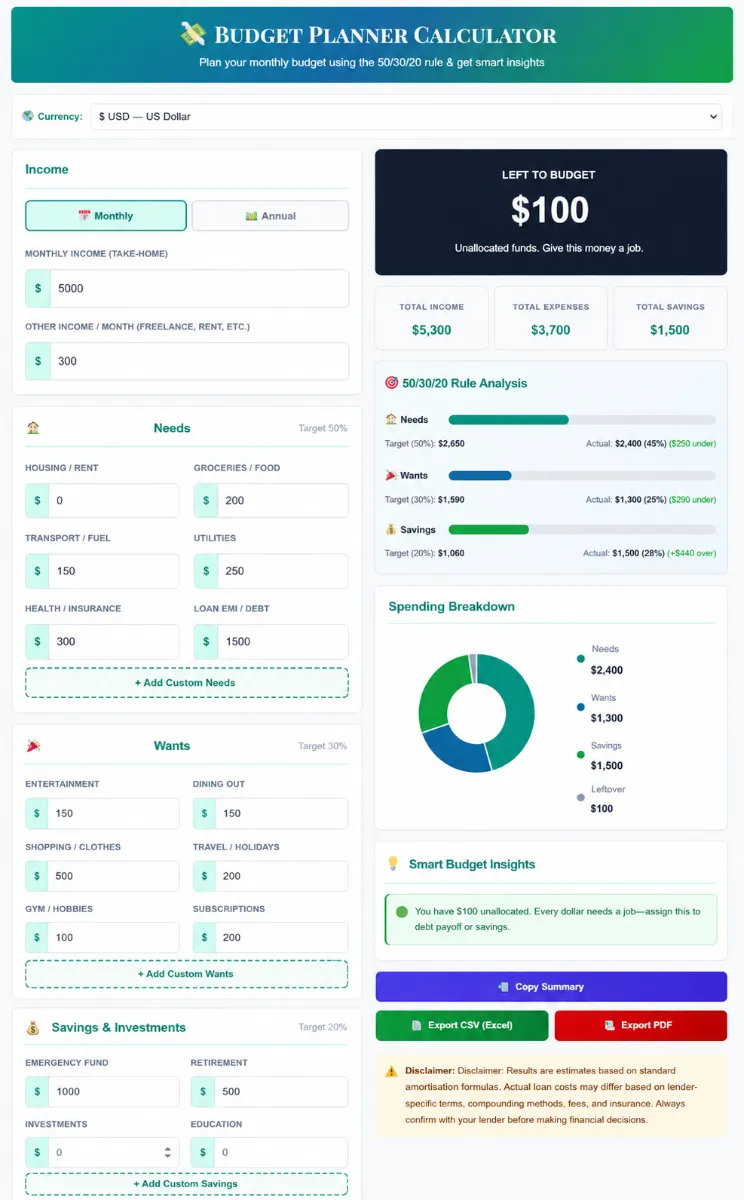
💰 Estimate the Budget Impact with the SaveXpert Budget Calculator
I ran a household scenario through SaveXpert’s Budget Calculator using monthly income and recurring healthcare costs. Even a modest insurance premium can take a noticeable share of monthly cash flow once fixed expenses enter the picture. The real monthly cost of coverage — premiums, deductibles, potential out-of-pocket maximums — is a separate planning question from whether you can enroll. Model your own income and health-cost figures to see where a Marketplace plan or the premium tax credit could fit in your budget before you apply.
Educational note: This calculator models budget scenarios for educational purposes. For official eligibility determinations, visit HealthCare.gov. For Premium Tax Credit rules, see IRS FS-2025-10.
The Bottom Line: 5-Step Coverage Action Plan
What should you do right now if you missed 2026 open enrollment? Here’s the research-backed sequence, in order:
1. Check whether a qualifying life event occurred — and when:
Loss of job-based coverage, a move to a new coverage area, marriage, birth, adoption, or gaining eligible immigration status are common triggers. The HealthCare.gov SEP list covers all qualifying circumstances. If an event happened within the past 60 days, an SEP may still be available. If it happened longer ago, the window may have closed.
2. Go to HealthCare.gov — not the IRS — for enrollment eligibility:
The IRS handles the Premium Tax Credit. HealthCare.gov handles enrollment. These are different agencies with different functions. Start at the Marketplace for any enrollment question.
3. Check Medicaid and CHIP eligibility regardless of the Marketplace calendar:
HealthCare.gov accepts Medicaid and CHIP applications year-round. If your income has changed since the last eligibility check — or if you’ve never checked — do it now. These programs don’t require a qualifying life event.
4. Understand that enrollment and Premium Tax Credit eligibility are separate questions:
Qualifying for a Marketplace plan through an SEP doesn’t automatically mean you qualify for advance PTC payments. The IRS sets those conditions separately — household income range (100%–400% FPL), access to employer coverage, and Medicaid/Medicare eligibility all factor in.
5. If you receive advance PTC payments, report household changes promptly:
The IRS says changes in household income, family size, address, or employer coverage eligibility should be reported to the Marketplace. With no repayment cap for 2026 onward, a large gap between estimated and actual income can create a full repayment obligation at tax time. Prompt reporting reduces that risk.
The biggest finding from the IRS research is also the simplest: missing open enrollment doesn’t automatically mean someone has no path to 2026 coverage. A qualifying life event may still open a Marketplace route. Medicaid and CHIP remain available year-round. But the exact eligibility, timeline, and financial implications all require current Marketplace verification — not just this article.
“When I went through the IRS materials on Premium Tax Credits and Marketplace enrollment, the most important finding for anyone asking ‘can I still enroll in health insurance 2026’ was this: the IRS doesn’t enroll people into plans. It handles the tax-credit side. The Marketplace is where enrollment actually happens. That division of responsibility is where most people’s research gets confused — and where they need to start.”
— Kevin Brown, Lead Researcher at SaveXpert.com
Frequently Asked Questions
Ans: Yes — if you experienced a qualifying life event. According to IRS data, missing open enrollment doesn’t automatically close your window for 2026 Marketplace coverage if a qualifying event — such as losing existing health coverage, moving, or a household change — triggers a Special Enrollment Period. Medicaid and CHIP also accept applications year-round, without requiring a qualifying event. Verify eligibility at HealthCare.gov.
Ans: A Special Enrollment Period provides another opportunity to enroll in Marketplace coverage outside the annual window. According to IRS guidelines and HealthCare.gov’s SEP list, people who undergo specific qualifying life transitions — including household changes (marriage, birth, adoption), residential changes, or loss of qualifying health coverage — may qualify. Not every personal change is a qualifying event. The Marketplace makes the final eligibility determination.
Ans: Generally no — outside of Medicaid and CHIP. The IRS links Special Enrollment Period access explicitly to qualifying life events. Without one, standard year-round Marketplace enrollment isn’t available after the January 15, 2026 open enrollment close date. The next Marketplace open enrollment window for most people is November 1, 2026, for 2027 coverage. Medicaid and CHIP don’t require a qualifying event and accept applications year-round at HealthCare.gov.
Ans: According to HealthCare.gov, most qualifying events allow a 60-day window to enroll — before or after the event, depending on its type. Some events carry different timing. The IRS notes that birth, adoption, and foster placement situations can receive special treatment, with coverage potentially starting the day of the event. Verify your exact window with your state’s Marketplace — the 60-day figure is common but not universal across all qualifying events and state rules.
Ans: Yes. According to HealthCare.gov, Medicaid and CHIP applications are accepted year-round for those who meet eligibility criteria. These programs don’t use the Marketplace’s annual enrollment calendar. Applicants should check current eligibility directly through HealthCare.gov or their state’s Medicaid agency, as eligibility rules and income thresholds are set at the state level.
Ans: The One Big Beautiful Bill Act removed the repayment cap on excess advance Premium Tax Credit payments for tax years beginning after December 31, 2025. The IRS updated its Premium Tax Credit FAQ (FS-2025-10) on December 23, 2025 to reflect this change. In prior years, repayment of excess advance PTC payments was capped. Starting in 2026, the full excess amount may increase tax liability or reduce a refund. Anyone receiving advance PTC payments should report household income and family-size changes to the Marketplace promptly to reduce the risk of a large reconciliation at tax time.